“A woman carries her fear inside of her.”
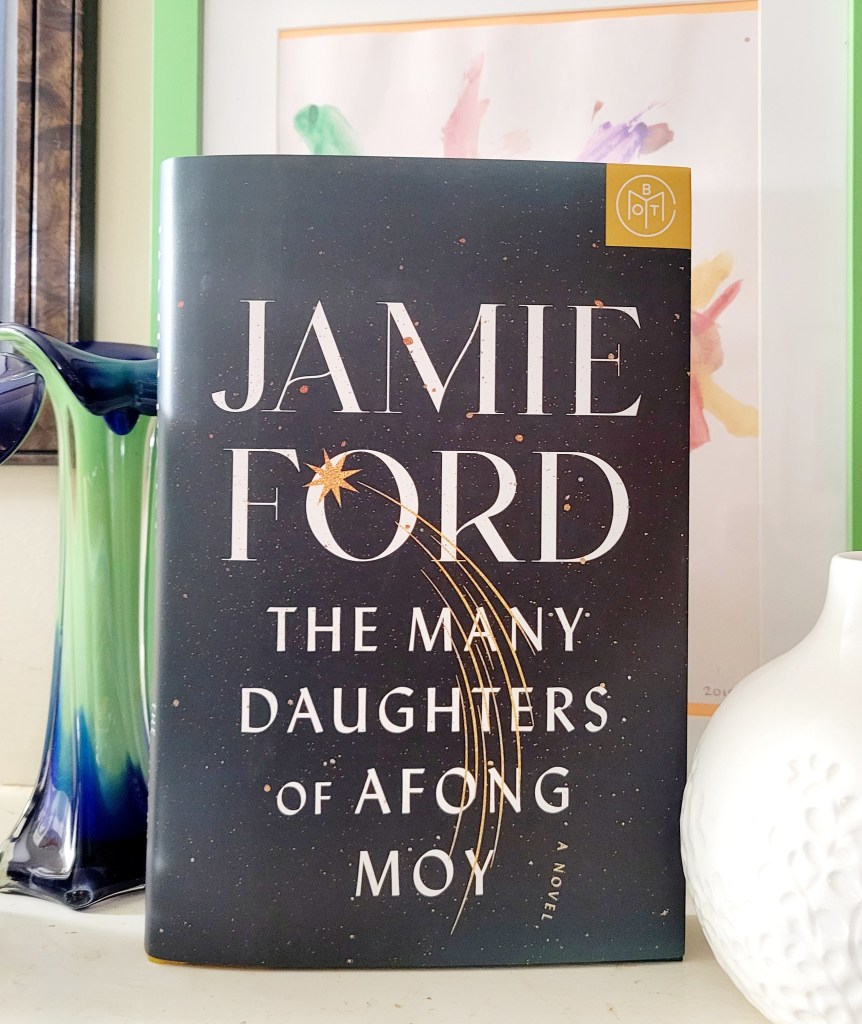
Jamie Ford’s The Many Daughters of Afong Moy (Atria Books 2022) is an intriguing approach to inherited trauma. Epigenetic inheritance is at the core of Ford’s novel, and the science as well as case studies are absolutely fascinating. Set primarily in 2045, but timeline hopping from 1836 forward, the novel follows the women descended from Afong Moy, a historical figure who was exploited and paraded around to the delight of paying Americans. While Ford’s treatment of Moy and her descendants is entirely fictional, The Chinese Lady was very much real – even if her true story has been lost. I adore a generational saga, and I fully expected to adore this novel as it took a format I love and applied some interesting science and a bit of the fantastical – but it fell short.
Conceptually, the novel reminds me a bit of Outlander meets Eternal Sunshine of the Spotless Mind. Dorothy Moy is depressed – the weight of her inherited trauma is pulling her under, and she’s worried her young daughter will face the same fate. Against her toxic partner’s wishes, she begins treatment at an epigenetic center. The treatments will allow her to face the trauma and essentially rewrite history – at least that’s the goal.
The best parts of the novel are not in 2045 with Dorothy, but in the snippets of history and the phenomenal Moy women. In 1836, Afong is sent to America against her wishes and is forced to perform – her bound feet and exotic clothing on display to those willing to pay. The treatment and atrocities she faces are heartbreaking. Her granddaughter, Lai King Moy, ends up orphaned during the bubonic plague that rocked San Francisco’s Chinatown. Her daughter, Zoe, attends Summerhill in England. Summerhill, a real boarding school, has a unique philosophy that allows the students to direct the instruction. There, Zoe finds a love she cannot claim. Her daughter, Faye, is a nurse during WWII. Faye’s granddaughter and Dorothy’s mother, Greta, develops a dating app that earns her a fortune. I wanted more of these sections. Way more.
Love remains always just out of grasp for the women in Afong Moy’s family and tragedy is a constant. Can Dorothy rewrite history and save herself and her daughter from being drowned by the inherited trauma that just keeps getting heavier and heavier? That’s the question that carries the novel, and it’s one I didn’t care for an answer to. I just wanted more of Moy’s daughters and less of Dorothy’s struggles.
It’s a well-written novel with an interesting premise, but the snippets of history were more fascinating than the epigenetic plotline. The Author’s Note and Acknowledgements are effortlessly amazing because Ford is a real deal talent, but this one just didn’t do it for me.
 A Girl Named Tommi