“I love you, Dad. Very much, okay?”
Without meaning to, I’ve been on a reading journey of books about young women in the UK “growing up;” Cassandra in Reverse, The Rachel Incident, and my most recent read, Maame are all “later in life” bildungsromans that make comparisons to Bridget Jones’s Diary a no-brainer – especially when they have humor – albeit different sorts of humor.
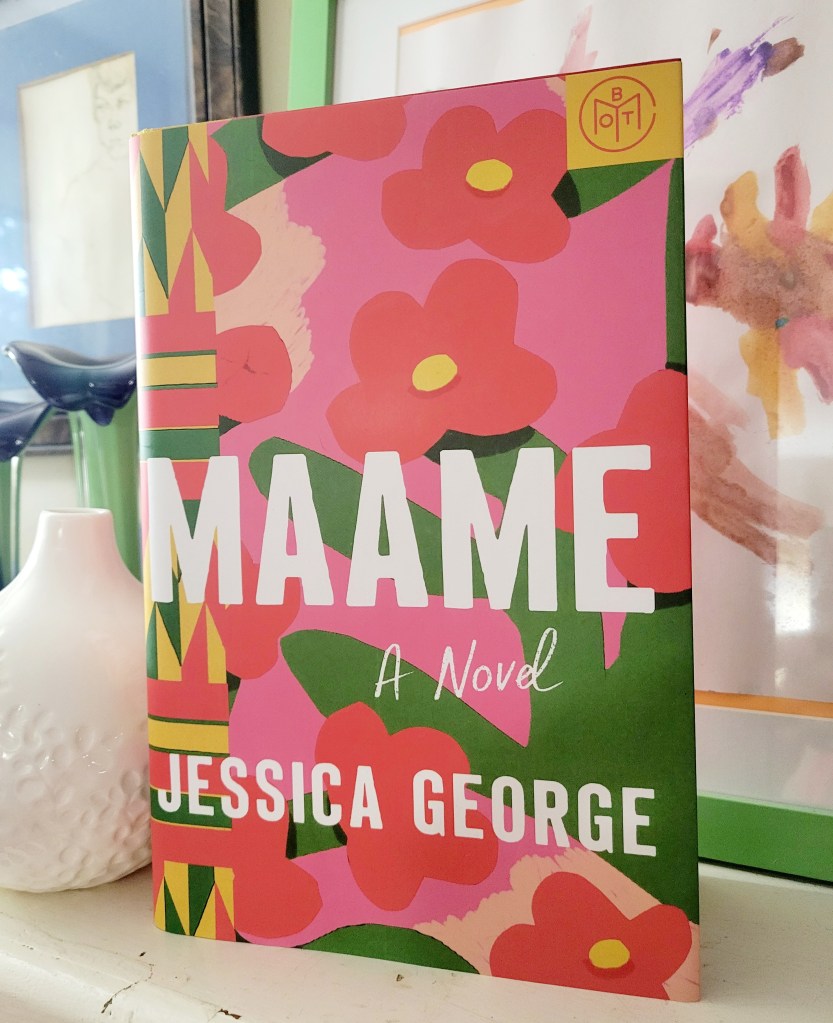
Jessica George’s debut, Maame, (St. Martin’s Press 2023) is about Maddie, the youngest in her family and the one everyone relies on. Maame, which is what her family has always called her, means many things in Twi, but Maddie knows in her case it means “woman,” and she’s been managing her family for years. With her mother spending half her time in Ghana and her brother trying out the music scene, her father and care of the household become her responsibilities when he is diagnosed with Parkinson’s. As his caretaker, Maddie’s life takes a different path than what she had imagined; her social growth is stunted while she’s pushed into adulthood. She is consumed by a loneliness even she can’t name properly, and while she is concerned she may be depressed, she’s been taught by her mother that one shouldn’t talk to strangers about their problems. And Maddie doesn’t. Not to anyone. No one knows how sick her father really is. No one knows that she cries herself to sleep at night. She even lies to the doctor about how she hurt her back.
When her mother (an extremely unlikeable character whose primary concern seems to be money (she charges her daughter rent to serve as live-in caregiver to her own father!) and ensuring Maddie goes to church and finds a husband before she’s too old) returns to England, promising to stay for a year, everything changes. Maddie moves out and relinquishes care of her father to her mother.
What follows is “New Maddie”trying to make up for all the missed experiences and seeking the key to happiness. While centering on filial responsibility, grief, and mental health, the novel also addresses blatant racism and microaggressions in both Maddie’s personal and work lives. It also highlights the nervous condition of someone born to immigrant parents who feels little to no connection to the “homeland,” setting much needed boundaries with family, and the struggles of making lasting adult friendships.
Maddie is floundering, but she is learning that she is the sum of all her pieces and what she does with that moving forward is up to her.
This may not have been the best selection for Father’s Day weekend for a reader who is still reeling from the loss of her dad years ago, but my heightened grief this time of year undoubtedly afforded me a different reading experience, and I’m grateful to George for that – reading should never be just about looking at words on a page (or whatever method you read via); you need to feel them.
Read this book.
 A Girl Named Tommi