“This is grief, Neffy… It is awful and terrible, and it will never truly leave, but you will learn to live with it, and you have to let me help you.”
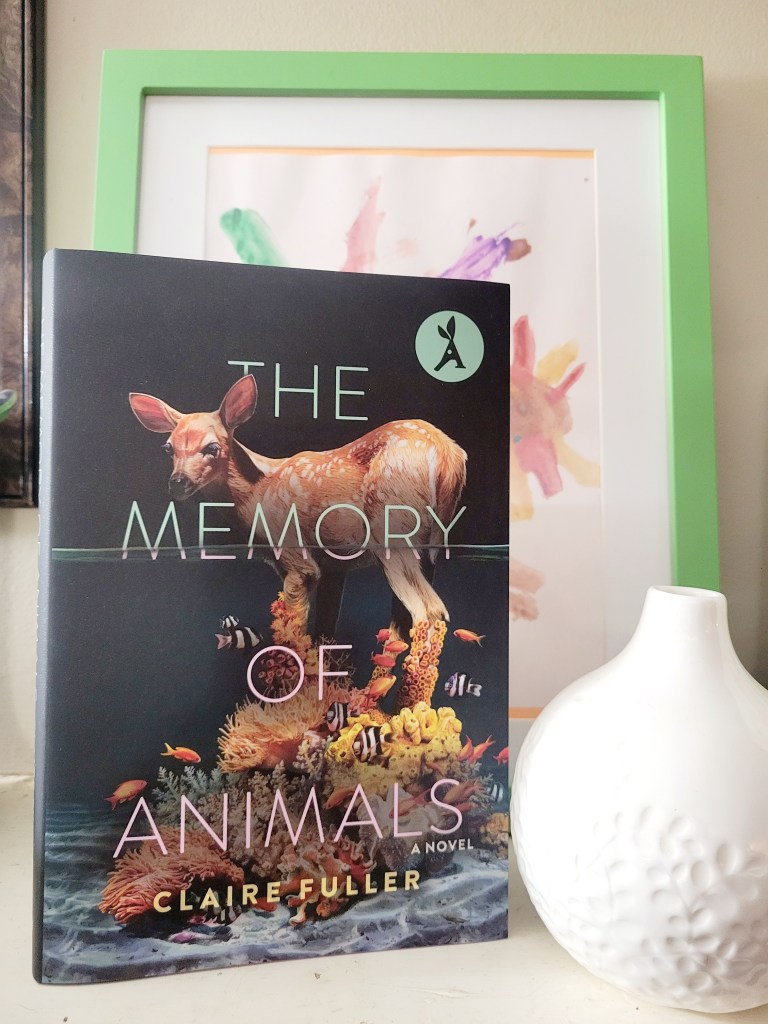
I didn’t anticipate having a pandemic book framed by a woman’s teetering-into-inappropriate relationship with an octopus as one of my top reads of the year – but here we are. Color me surprised. I picked Claire Fuller’s The Memory of Animals (Tin House 2023) as my Aardvark selection because of the cover, and because I wanted to add it to my literary science fiction catalog. (But it was mostly the cover.) It’s my most surprising read of the year. What follows will include spoilers. That’s the only warning I’m going to give.
Last chance.
Marine biologist Neffy has volunteered to be part of the first human trial of a vaccine for a virus that is decimating the world. Fuller wrote at least a portion of the novel while in lockdown, and much of that particularly early Covid fear glimmers in the pages. And while the pandemic is a constant throughout the novel and more than just a plot device, it’s not the heart of the novel or the main plot. This is a novel about memories, about family and love and choices and responsibilities to those we seek to love, to tame, to own.
The bulk of the novel takes place over a little more than two weeks. Neffy is sequestered from the other volunteers and well taken care of. She’s given the vaccine and then given the virus that no one has survived. Neffy becomes extremely ill. Someone is putting food and water in the room, but she realizes something isn’t right. When she wakes, another volunteer is in her room. He explains that the trial stopped following her reaction and all the staff fled along with some of the volunteers. There’s no internet, no cell service, and the electricity is only thanks to the generator. And they’re running out of food. With this virus-stricken and ghost town of a world as the backdrop, Neffy will be forced to make choices that impact not only herself but the survival of the other volunteers who did not receive the vaccine.
Neffy fills her days with writing letters to a wild-caught octopus she’d once cared for during its captivity – the octopus she released into the wild, was terminated for, and the reason she volunteered; she needed the money to pay the debt to the aquarium for the cost of the animal. Between these letters and the memory walking she does through a device developed by another volunteer called the Revisit, we meet Neffy not as the 27-year-old who volunteers, but as all the parts, the jagged and raw ones and the happy ones, that define her. Her memories show her continued guilt and grief over her beloved Baba. Neffy’s father died, and she couldn’t save him. He became sick before the virus. She volunteered to give him a kidney but learned she had only one. There were then discussions regarding using her womb to grow a kidney, an experimental procedure, but her father dies before she tells him she’s agreed to do it. Her grief and guilt tinges everything she does.
While the virus, memories of her father, and her relationships with marine life might seem disjointed to some, I found the novel snuggly held within the powerful and fragile arms of an octopus – the arms that feel, and taste and regrow. How Fuller weaves Neffy’s story is brilliant, and Neffy – the heartbroken girl who couldn’t save her father, and who maybe saved or maybe killed an octopus, finds the courage to save herself and quite possibly the world.
The novel jumps forward a couple of years before ending on year 54 following Neffy’s receipt of the vaccine. It ends with hope. And jazz. And memories.
Read this novel.
 A Girl Named Tommi