“Times are bad, the radio says so, and the newspapers. No, things aren’t getting any better, far from it.”
Current installment of Tommi Reads the World – we’re in the Bs.
Country: Belgium
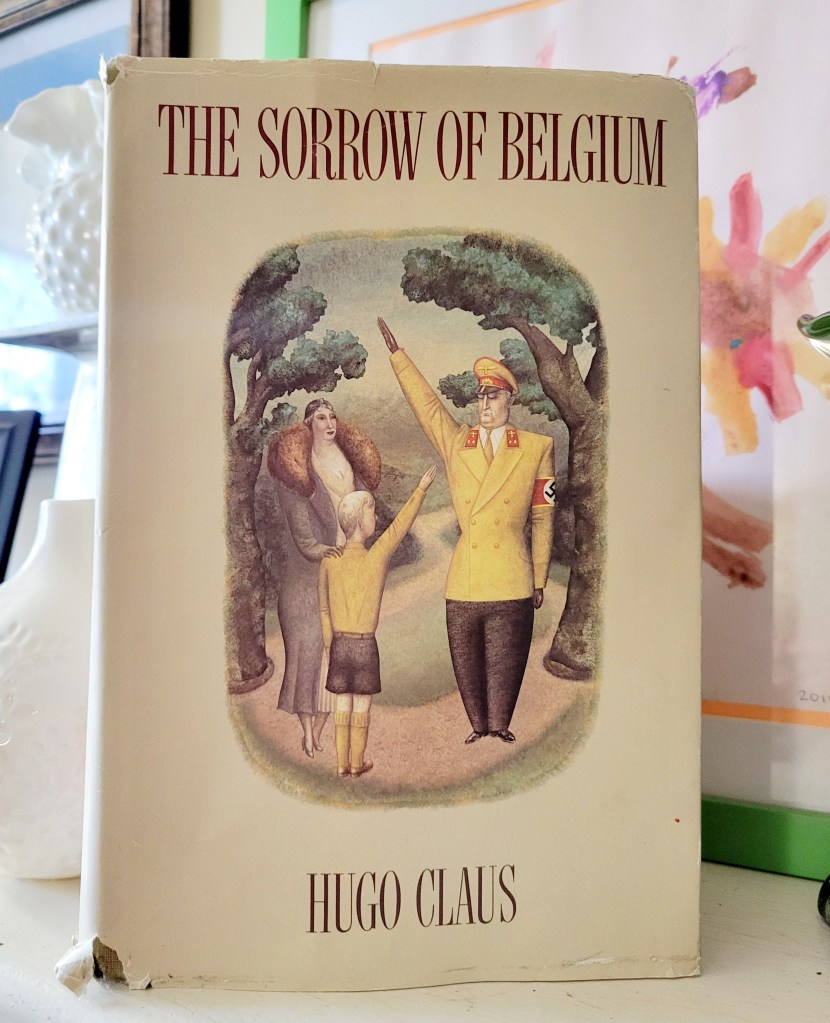
Title: The Sorrow of Belgium
Author: Hugo Claus
Language: DutchTranslator: Arnold J. Pomerans
Publisher: First published in Dutch as Het Verdriet van Belgie by De Bezige Bij in 1983, translation first published by Random House in 1990.
I hate to say it, but this well-renowned novel was 603 pages of a story I didn’t want to read – a story I forced myself to finish. While I think some things may have gotten lost in translation, especially as it relates to the use of the French versus Dutch language and the combination of the two, that’s not why this book was such a chore to read. The novel is structured into two parts, with the first section having chapters and form and the latter morphing into a chaotic stream of events. (The second half is actually when our protagonist Louis “writes” the first half.) This annoyed some readers. I wasn’t bothered by it, and I actually preferred the chaotic second half to the first. For me, it was the story itself and its entirely unlikeable cast of characters that made this work such a slug.
The struggle for identity in Belgium, being torn between the French and the Flemish, during the second world war as seen from the eyes of an eleven-year-old boy sold me on getting this chunker as my Belgium selection. Oh, how I wish I hadn’t. I lost count of the number of sexual assaults in the novel – both on Louis and by Louis. At the age of eleven, we know he’s been molested by a man who works for his father. We watch him molest two classmates (one he’s in love with) and a nun who has gone a bit senile. He forces himself on a female friend more than once, with the reader getting lengthy descriptions of what her “opening” looks like. (This particular part of the female anatomy is described quite frequently.) He is raped as a minor by his aunt, in great detail, and later by another much older woman. His issues with his mother are straight from Freud’s findings. Add in some racism (including a scene where his mother cooks pork when her brother in law, a Jewish man, is in the home to ‘test’ just how ‘Jewish’ he is), suicide, suicidal ideation, a miscarriage, adultery, madness, sexual abuse, emotional abuse, and physical abuse and you’ve got the sorrow of this novel.
I did not enjoy this book.
 A Girl Named Tommi