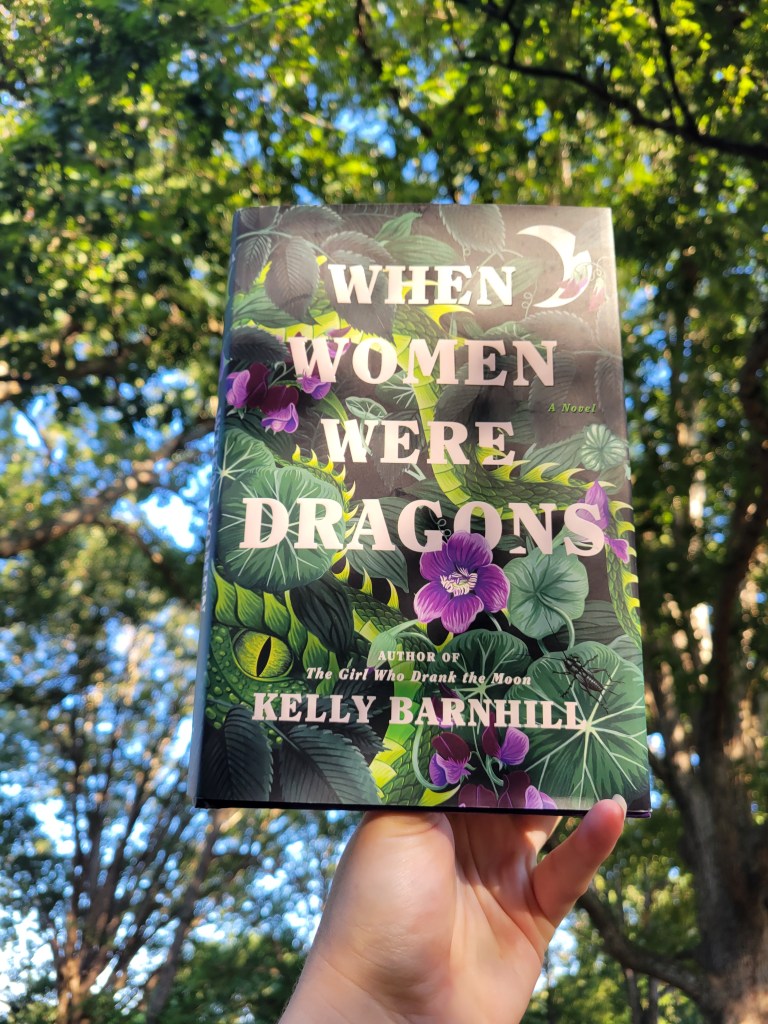
WHEN WOMEN WERE DRAGONS – Kelly Barnhill

“Beatrice and I walked home in the snow, pulling the weight of my mother’s memories behind us.”

“There is a limit to how much we can hold, and how much we can keep in this world. It’s not a good idea to cling to the things you can’t bear to lose. That’s how we break, you see?”

“There are memories that we carry that are not our own.”

“I was four years old when I first saw a dragon.  I was four years old when I first learned to be silent about dragons.  Perhaps this is how we learn silence -an absence of words, an absence of context, a hole in the universe where the truth should be.”

Kelly Barnhill tugged at my heart with her middle grade novel The Girl Who Drank The Moon, but her first adult novel, When Women Were Dragons (Doubleday 2022) was like a hug from a night sky or being kissed by flames – it roars with a fierce love for women, including women by birth and women by choice.  The novel is dedicated to Christine Blasey Ford, whose testimony “triggered this narrative.”

The novel starts with Alex’s first memory of a dragon.  She was four.  This was before the Mass Dragoning of 1955, and at a time when Alex’s mother had disappeared and her aunt Marla was caring for her.  As she grew up, Alex realized her mother was in the hospital battling cancer, but these months without her mother, and her mother’s fragile return, and this dragon are burned in Alex’s memory.

Aunt Marla is far too big for the box society is trying to put her in, yet she gets married and has a child because it’s what is expected of her.  (The greatest love of her life was a woman she flew planes with during the war.  Marla was supposed to dragon with her, but she didn’t – she held on to her skin for her sister.) Marla’s daughter, Beatrice, becomes the thing Alex loves most in the world.  After Marla dragoned during the Mass Dragoning of 1955, Alex’s mother never spoke of her again.  History was rewritten to erase Marla’s existence and to make Alex’s cousin Beatrice her sister.  But Alex never truly forgets.

In one of the more heartbreaking scenes (and there are several), Alex is playing with her only friend, Sonja.  Alex loves Sonja without being able to fully identify that love.  When her father encounters them during a sweetly intimate moment of discovery, he pulls them apart.  To further harden his daughter’s heart, he buys the house Sonja’s family is renting and evicts them. With Sonja gone, it’s just Alex and Beatrice again.  Alex quickly learns that the box society has created for women is not one she’s going to fit in, at least not quietly. She is adamant on the use of her masculine nickname and that she will go to college; her destiny will not mirror her mother’s.

The novel is a bildungsroman wrapped in magical realism and a history that oft forgot the women.  Chapters are broken up with scientific journals, letters, Congressional hearings, etc. related to the “dragoning phenomenon” that no one was allowed to speak of openly, at least not until the women returned and refused to be silenced or ignored.

It’s a novel about mothers and sisters and daughters.  Love and loss. Memories and mistakes.  Standing up and letting go.  Secrets and truth.  And dragons, it’s about dragons.

Read this book.

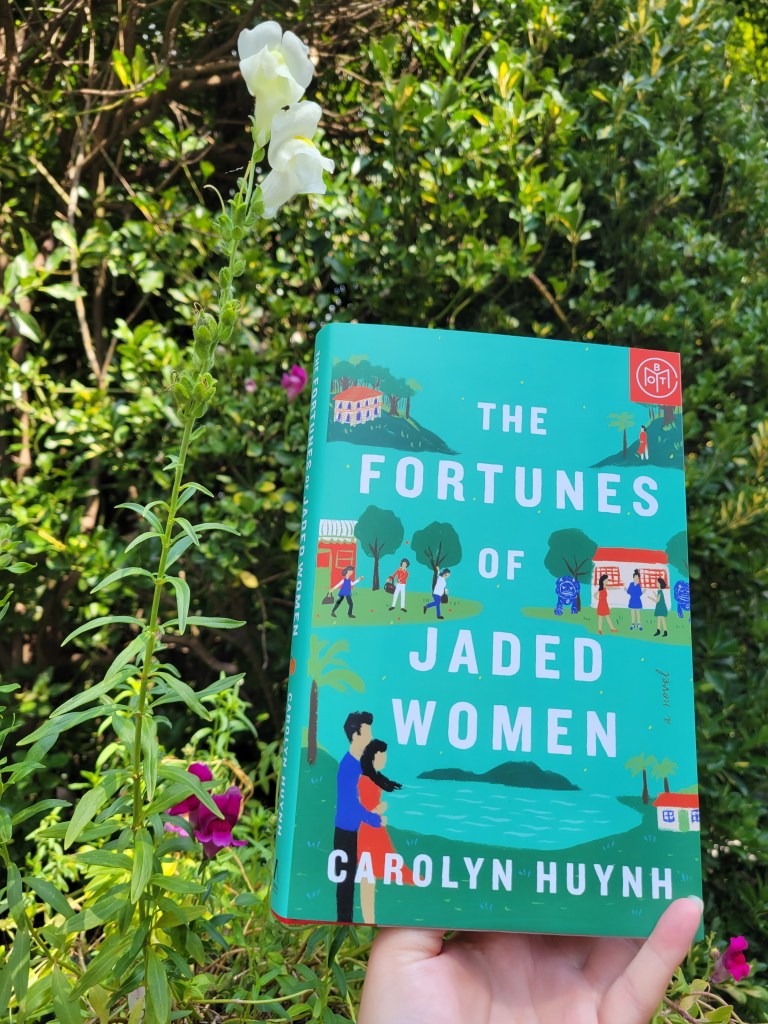
THE FORTUNES OF JADED WOMEN – Carolyn Huynh

“Because there was nothing wrong with having Vietnamese daughters. It was how the world treated them that turned it into a curse.”

Carolyn Huynh’s The Fortunes of Jaded Women (Atria Books 2022) was a highly anticipated release for me.  Magical realism, historical fiction, Asian diaspora, a matrilineal family saga… I was sold. Now that I’ve finished, I feel a bit like I was duped; it just doesn’t deliver.

I was truly anticipating more Peach Blossom Spring, The Mountains Sing meets The Kitchen God’s Wife.  Instead, it’s giving more of a less decadent Kevin Kwan vibe. Don’t get me wrong – it’s a cute read, but it’s far more candy & cozy than I expected. 

Expectations aside, it would have benefited from less characters and/or significantly more development.  I couldn’t connect with any of the characters because they were presented in bursts of plot lines that jumped forward months.

At the novel’s core, is the curse.  The family was cursed when Oanh Du’o’ng left her husband for another man.  Her ex-mother-in-law sought out a witch to curse the family to only have daughters – no sons or grandsons or great grandsons in the family tree.  Since only men can invite the ancestors into the homes and the curse also included bad luck in love, the curse was intended to keep the women unhappy in both life and death.  Every generation was met with daughters, unhappiness, and bitterness.

But a psychic in Hawaii, a traditional herbalist, and the death of a matriarch might just provide enough magic to break the curse, bring a splintered family together, and call the ancestors home.

I wish there were more character development, particularly in the eight granddaughters.  There is some great stuff there, but it’s barely scratching the surface, and this novel had ample room to grow – it’s not even 300 pages.  It’s cute, but just a bit empty.

MAPS OF OUR SPECTACULAR BODIES – Maddie Mortimer

“That the peace aches more than the misery.”

My ninth read of the 2022 Booker Prize longlist was Maddie Mortimer’s debut novel, Maps of Our Spectacular Bodies (Scribner 2022).  Much like many of the other books on the longlist, Maps is rather a unique story.  Mortimer elects to use font and format to provide an enhanced reading experience, which works well – at least most of the time.

The novel is centered around Lia, who is dying of cancer.  Memories of her life, tortured conversations with her estranged mother and a toxic first love, are written on her body.  But so is the good.  The swell of her stomach when she was pregnant. The moment she fell in love with her husband. Moments with her daughter.  Laughs with Connie.  In flashes, her life unfolds – narrated in part by the cancer that is eating her.

Her memories reside inside her body, and her loved ones try and fight the cancer from within: Raven (her father) and Dove (her mother).  Gardener with daisies in his eyes (her husband), Yellow (her bright daughter), Velvet (her beloved friend) and Fossil (her first love). Red, the boy on his bike, is the chemo treatment that courses through her body.

With Death approaching Lia, her husband finds himself despairingly contemplating life without her, leaning into a possible affair and battling jealousy over that first love that has so marked her life.  Her daughter, Iris, in that fragile time between girl and teen, is struggling the most.  She finds herself caught in a middle grade “mean girls” situation where secrets are currency. Lia’s mother, Anne, is trying desperately to right the wrongs made oh so many years ago.

The Cancer is a malevolent character, thriving on chaos, brokenness, and destruction, who enjoys breaking Lia’s spirit as much as her body.

Like unexpected fireworks in the night, Maps hits with an unexpected BOOM! followed by brilliant colors full of life, and leaving the faint but not unpleasant smell of gunpower and whispers of smoke in the blue-black sky.

Read this book.

Booker Count: 9 of 13.

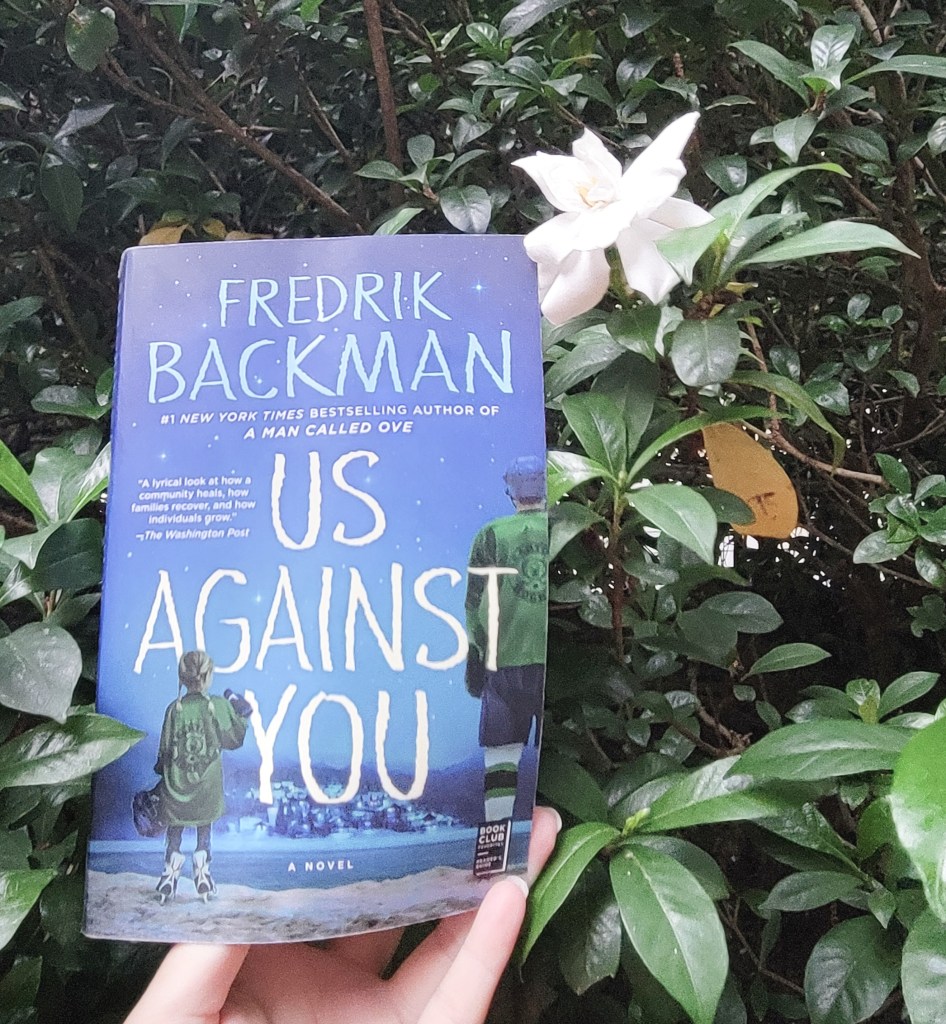
US AGAINST YOU – Fredrik Backman

“People we love will die.  We will bury our children beneath our most beautiful trees.”

“On the hilltop stand two girls, watching the car disappear.  They’ll soon be sixteen. One of them is holding a guitar, the other a rifle.”

Fredrik Backman is easily one of my top five contemporary authors.  The following is quote from my review of Beartown.

“I’ve said before that Backman is a “heartbeat author” and that “his books are hugs, eyelash kisses, and belly laughs.” But he’s also a “heartbreak author” and his books, especially Beartown, are tinged with anger, grief, and despair.  His characters and communities are so perfectly imperfect, and his storytelling style, the love and humor and warmth, is what makes a book about a rape in hockey town so fantastic.”

Backman takes us back to Beartown in Us Against You (Atria 2018, English translation by Neil Smith. Originally published in Sweden by Bokforlaget Forum 2017), and the town is still reeling from the events that left it in ruins.  Before the town can rise, it must fall even further.  What unfolds is a violent, fiery and bloody story of resilience, family, loyalty and loss:  Beartown Against the Rest.

With Beartown on the cusp of losing its hockey club, a politician gets involved – using the town and their love of the sport as pawns on his chessboard.  The A-team is young and scrappy, but full of heart. They’re also backed by the dangerous but loyal Pack – the very group of “hooligans” whose presence the GM has been instructed to remove from the game. With a female coach, a goalie with a criminal record and an intensity that leans into violence, and a captain whose damaging secret has been revealed to the town – maybe, just maybe, they can beat Hed.

Hearts and noses will break, friendships will be tested, families will falter, and tears will fall.  Beartown didn’t need to be a trilogy, but I’m so glad it is; I’m not ready to be done with this town.  The final installment will be released later this month, and I just hope my heart heals before then so Backman can break it again.

Read this book.

GET A LIFE, CHLOE BROWN – Talia Hibbert

Disclaimer: I don’t typically listen to audio books because it’s not my preferred way to read.  In fact, until today, the only audiobook I’ve read was Alison Smith’s Name all the Animals and that was back in 2005.  (Fantastic memoir.  If you haven’t read it – check it out!)  Talia Hibbert’s Get a Life, Chloe Brown (Avon 2019) is a far cry from that coming-of-age memoir narrated by the author, but I couldn’t hit pause on it.  It’s bloody fantastic.

(I should note that I didn’t care for the narrator.  She was much older than the characters in the novel, her tone and inflection detracted from some scenes, and her voice for Evie was horrendous, especially considering there’s a line that says all three sisters sound the same.)

Chloe Brown is positively endearing. Her wit and charm, deadpan humor, and inner voice are all brilliant.  A chronic pain sufferer, Chloe has been abandoned by most of her friends who don’t understand how to interact and/or respond to her fibromyalgia.  This has forced Chloe to develop a very hard shell, and she doesn’t like to let people in. Following a near death experience where a drunk driver narrowly misses her, she decides it’s time she “get a life.”  She makes a list of things to do, which includes a drunken night, camping, and riding a motorcycle.  As part of her “new” life, she moves out of her family’s home and into a reasonable flat.

Red is  and artist and the new superintendent at her apartment.  He comes with his own baggage, having been emotionally and physically abused by a high society girlfriend in London.  Drowning in self-doubt and imposter syndrome, he disappears from the art world and takes the gig as super.  Chloe, with her posh accent, reminds him a bit of his ex and his guard is up around her.

After an incident with a cat in a tree, a tentative friendship develops. Chloe enlists Red to help her with her list, offering her services as a designer to create a website for his art in exchange.  An easy and teasing relationship develops while both fight against the attraction they feel.  The chemistry is explosive long before the first touch.

Hibbert’s characters ooze with personality, largely developed through hilarious inner monologues.  One of my favorite lines is early in the novel when Red hears Chloe and says her voice sounds expensive, “like someone taught a diamond to talk.”

It’s a feel-good novel with extremely likable characters that you root for.  As is typical with the genre, there is a misunderstanding that threatens their HEA, and the intensity of that scene as they both struggle with the left-over trauma of past relationships is heartbreaking and realistic; it’s hard to knock down walls.

I loved it. It’s an excellent romance with significant depth to the characters.  It has a bit of spice, and I would not recommend listening to certain chapters with the windows rolled down.  This is one of three, and I’m curious to see if I’ll love the other Brown sisters as much as Chloe.

I’m late to the game, but read this book.

NIGHTCRAWLING – Leila Mottley

My eighth read of the 2022 Booker Prize longlist (and my last read before the shortlist is announced tomorrow) was Leila Mottley’s Nightcrawling (Alfred A. Knopf 2022).  Mottley, a poet, was 17 when she started this novel, and there is a vibrance and urgency of youth that hums through the poetic prose.  The words are pretty, but the story is horrific; it is one of the more difficult reads I’ve read this year.

With her father dead and her mother in prison, seventeen-year-old Kiara is struggling to survive. Her older brother, Marcus, is busy chasing a pipedream, longing for the same fame and fortune that their uncle stumbled upon, and Kiara is burning the candle at both ends struggling to make ends meet.  When a stranger mistakes her for a prostitute, she doesn’t realize what’s happening until too late – until he’s finished pressing into her and pushes crumbled bills in her hand.  Then she knows that if she is to survive, if she’s to pay rent and feed herself and the son of a frequently MIA neighbor, she’s going to have to start nightcrawling.

But Oakland isn’t Los Angeles and Kiara’s not Julia Roberts; she finds herself a plaything of a bunch of crooked cops.  Cops she can’t refuse when they call.  Cops who sometimes pay sometimes don’t.  Cops she knows by badge number, not name.  Some are soft, almost apologetic.  Some are monsters. An unexpected event exposes the scandal, and her name is released.  She becomes the star witness in a highly publicized investigation of the Oakland Police Department. (FYI – the scandal is real and Mottley addresses the inspiration in her note.  Interestingly enough, she doesn’t mention Jasmin Abuslin, the sex worker involved in the scandal who was awarded just under a million dollars.)

The novel is a bruise.  It’s a scream, ripped from deep within, and hurled into the night. It’s the barrel of a gun. It’s blood on the bathroom floor. It’s sirens and sex and scars.  But it’s also hope.  It’s Sunday Shoes and belly laughs. It’s pancakes.  It’s the thump of a basketball on a court, the swish through the net. It’s her thumbprint on his skin and his arms holding her safe.

It glitters.  Like broken glass, not diamonds.  But it glitters all the same.

Read this book.

Booker Count: 8 of 13

GLORY – NoViolet Bulawayo

My seventh read of the 2022 Booker Prize longlist was NoViolet Bulawayo’s Glory (Viking 2022).  Coming in at 400 pages, it’s considerably longer than the last Booker book I read and at my sweet spot for size.  Bulawayo is also not new to the Booker Prize, her debut was shortlisted in 2013.

Postcolonial literature is one of my favorite genres in part because of what Rushdie dubbed so many decades ago as “the empire writes back,” and Glory delivers with that vengeance Rushdie was talking about; it’s George Orwell’s Animal Farm but in Zimbabwe.  Centered around the 2017 forced resignation of Robert Mugabe, Glory uses a beast fable as a political allegory to tell a story that otherwise history might chew up and spit out differently.

The novel is set in the fictional postcolonial Jidada. Old Horse has been ruling for decades and is said to control the sun.  His reign is marked with violence and corruption.  As he becomes a bit senile, his wife, Dr. Sweet Mother (a donkey), seeks her own glory and to rule.  The Comrades, his soldiers (and always dogs), hatch a plot with his VP, Tuvy to put Tuvy in the seat of power and force Old Horse to resign.  They are successful and a charade of an election ensues.

Destiny and her mother, Simiso, are bookends to two violent attacks – one in 1983 and one in 2008. Destiny disappeared in 2008 without a peep.  But she returned when Old Horse was removed from power because she thought, hoped, prayed it would mark a positive change.  The prodigal daughter returned; she will become the voice of a revolution.

“Isn’t it something, Destiny, how sometimes stories will raise the dead, as if they are not dead at all but alive in our mouths, only waiting to be animated by our tongues?”

I lost count of the number of times “glory” was referenced and in so many different contexts. Some parts of the novel are slightly repetitive, giving the cadence of an oral story-telling tradition.  Other phrases or words are repeated over and over, creating a chant that floods the reader’s ears.  It’s a powerful storytelling format.

I loved this novel, but it’s a hard read.  But tholukuthi it’s worth it.

Read this book.

Booker count: 7 of 13

SMALL THINGS LIKE THESE – Claire Keegan

My sixth read of the 2022 Booker Prize longlist was Claire Keegan’s Small Things Like These (Grove Press 2021).  This slim novella is the shortest entry in Booker history (I think), and it’s easily read in one sitting.   Set at Christmas in 1985 Ireland, it’s best read during the winter months, ideally with snow on the ground.  Instead, it’s summer in North Carolina and the heat and humidity did impact how the words fell.

Keegan’s writing is delicate and purposeful, and the result is gorgeous.  But (you knew there would be a but), the ending is just too easy.  With a history of young girls who were held against their will, forced to work and give up their babies, I suppose Keegan wanted to save at least one.

The novel is a slice of life centered around a good guy.  Bill Furlough is an honest, hard-working man.  He’s a good husband and father.  And he was a good son.  His mother was like the women who wound up at the convent, but her employer let her stay on and they all helped raise Bill.  He’s the better man for all his life experiences.  And those experiences give him pause when he first meets Sarah, barefoot and terrified in the coal-house.

Dedicated to “the women and children who suffered time in Ireland’s mother and baby homes and Magdalen laundries,” the novel seems a quiet, unassuming apology for the “small things” so many were never able to experience.

It’s worth a read.

Booker count: 6 of 13

THE TREES – Percival Everett

My fifth read of the 2022 Booker Prize longlist was Percival Everett’s The Trees (Graywolf Press 2021).  I read it in two days, devouring each hilarious and devastatingly brutal word. I didn’t have a funny novel about lynchings and racism on my bingo card but thank goodness the Booker longlist put this novel in front of me; it’s a belly laugh and a “fuck all y’all” in the same breath.  Kill Bill meets Jordan Peele barely scratches the surface of what the experience of reading this novel is.

I live not far from where the woman who falsely accused Emmett Till currently resides. While I was reading this novel, the grand jury declined to indict her on the warrant that was recently found. What does that have to do with Everett’s novel?  Everything.

Set in racist Money, Mississippi, the novel opens at Carolyn Bryant’s home.  It’s 2018, and she’s having some regrets.  Then the murders start. With each white body, the body of a Black man who looks eerily like Emmett Till is found.  The black body keeps disappearing only to show up at another murder. Two detectives from the Mississippi Bureau of Investigation are brought in to investigate. The town isn’t exactly welcoming to the two Black detectives, and they really don’t like it when the Black woman FBI agent shows up.  But there are murders to solve and bodies to find.

But it’s not just Money.  Across the US, racists are being murdered. And the bodies of long dead people of color are found with them. It’s not just retribution for the murder of Emmett Till – it’s retribution for the murder of all those who were lynched.  While the dark comedy of a revenge fantasy carries the novel, the pages listing the names of lynched suck the air from the room.  It’s a plot point that feeds into the fantasy, but these are real names.  Real people.  It’s a stark reminder of a bloody history.

“When I write the names they become real, not just statistics. When I write the names they become real again. It’s almost like they get a few more seconds here.  Do you know what I mean? I would never be able to make up this many names. The names have to be real. They have to be real. Don’t they?… When I’m done, I’m going to erase every name, set them free.” 

“Carry on, child,” the old woman said.

This novel isn’t for everyone. It’s bloody and gruesome. It’s extremely dark humor centered on black trauma and racism.  But what a brilliant and blazing novel of revenge it is.

Read this book.

Booker count: 5 of 13

OH WILLIAM! – Elizabeth Strout

My fourth read of the 2022 Booker Prize longlist was Elizabeth Strout’s Oh William! (Random House 2021).  Despite being the third in a trilogy, Oh William is crafted such that it can be read as a standalone.  Written as a fictional memoir, the novel scratches at some things I typically dislike in fiction. Not surprisingly, I wasn’t wowed by Oh William.  For this type of writing to work for me as a reader, I must fall in love with the narrator.  And, while it’s a very unpopular opinion, I did not care for Lucy Barton.  Maybe if I read the first two of the trilogy, I’d have a different opinion of her, but the Lucy Barton telling us her story in Oh William is not someone I care about.

Lucy, a 64-year-old recently widowed novelist, explores grief, love and loneliness in this brief “fictional” memoir of a novel.  There is a comfortable familiarity with her ex-husband, William.  Despite being a philandering pompous jerk, she still sees him as her only “home.”  They’ve been divorced for years, and he’s on third wife, but they’ve maintained a friendship over the years.  When her second husband dies, Lucy finds a welcomed diversion in William’s struggles.  His third wife has just left him, and he’s just learned that he has a half-sister.  When he asks Lucy to join him on a trip to Maine to uncover more information about his German POW father and his half-sister his mother had left behind, she accepts.  The trip forces her to face her impoverished and traumatic childhood, her unhealthy marriage to William, and the continued struggles in her heart and mind.

In perhaps my favorite scene, Lucy is having a panic attack.  William, not exactly sympathetic, asks her why she’s having a panic attack.  She tells him his khakis are too short and it “depresses the hell out of [her].”

The novel is well-written, and Lucy is wonderfully developed and complex as a character, I just didn’t like her. Imagine getting seated next to an older woman, one who is slightly drunk and sad, on a long flight. It’s fun for a bit, but by the time you land you just want to give her your therapist’s number.  I’m pretty sure Strout recognized there may be a low threshold for tolerating Lucy – the novel is only 237 pages.

Should you read it?  It’s a quick read by a talented author.

Booker count: 4 of 13