GET A LIFE, CHLOE BROWN – Talia Hibbert

Disclaimer: I don’t typically listen to audio books because it’s not my preferred way to read.  In fact, until today, the only audiobook I’ve read was Alison Smith’s Name all the Animals and that was back in 2005.  (Fantastic memoir.  If you haven’t read it – check it out!)  Talia Hibbert’s Get a Life, Chloe Brown (Avon 2019) is a far cry from that coming-of-age memoir narrated by the author, but I couldn’t hit pause on it.  It’s bloody fantastic.

(I should note that I didn’t care for the narrator.  She was much older than the characters in the novel, her tone and inflection detracted from some scenes, and her voice for Evie was horrendous, especially considering there’s a line that says all three sisters sound the same.)

Chloe Brown is positively endearing. Her wit and charm, deadpan humor, and inner voice are all brilliant.  A chronic pain sufferer, Chloe has been abandoned by most of her friends who don’t understand how to interact and/or respond to her fibromyalgia.  This has forced Chloe to develop a very hard shell, and she doesn’t like to let people in. Following a near death experience where a drunk driver narrowly misses her, she decides it’s time she “get a life.”  She makes a list of things to do, which includes a drunken night, camping, and riding a motorcycle.  As part of her “new” life, she moves out of her family’s home and into a reasonable flat.

Red is  and artist and the new superintendent at her apartment.  He comes with his own baggage, having been emotionally and physically abused by a high society girlfriend in London.  Drowning in self-doubt and imposter syndrome, he disappears from the art world and takes the gig as super.  Chloe, with her posh accent, reminds him a bit of his ex and his guard is up around her.

After an incident with a cat in a tree, a tentative friendship develops. Chloe enlists Red to help her with her list, offering her services as a designer to create a website for his art in exchange.  An easy and teasing relationship develops while both fight against the attraction they feel.  The chemistry is explosive long before the first touch.

Hibbert’s characters ooze with personality, largely developed through hilarious inner monologues.  One of my favorite lines is early in the novel when Red hears Chloe and says her voice sounds expensive, “like someone taught a diamond to talk.”

It’s a feel-good novel with extremely likable characters that you root for.  As is typical with the genre, there is a misunderstanding that threatens their HEA, and the intensity of that scene as they both struggle with the left-over trauma of past relationships is heartbreaking and realistic; it’s hard to knock down walls.

I loved it. It’s an excellent romance with significant depth to the characters.  It has a bit of spice, and I would not recommend listening to certain chapters with the windows rolled down.  This is one of three, and I’m curious to see if I’ll love the other Brown sisters as much as Chloe.

I’m late to the game, but read this book.
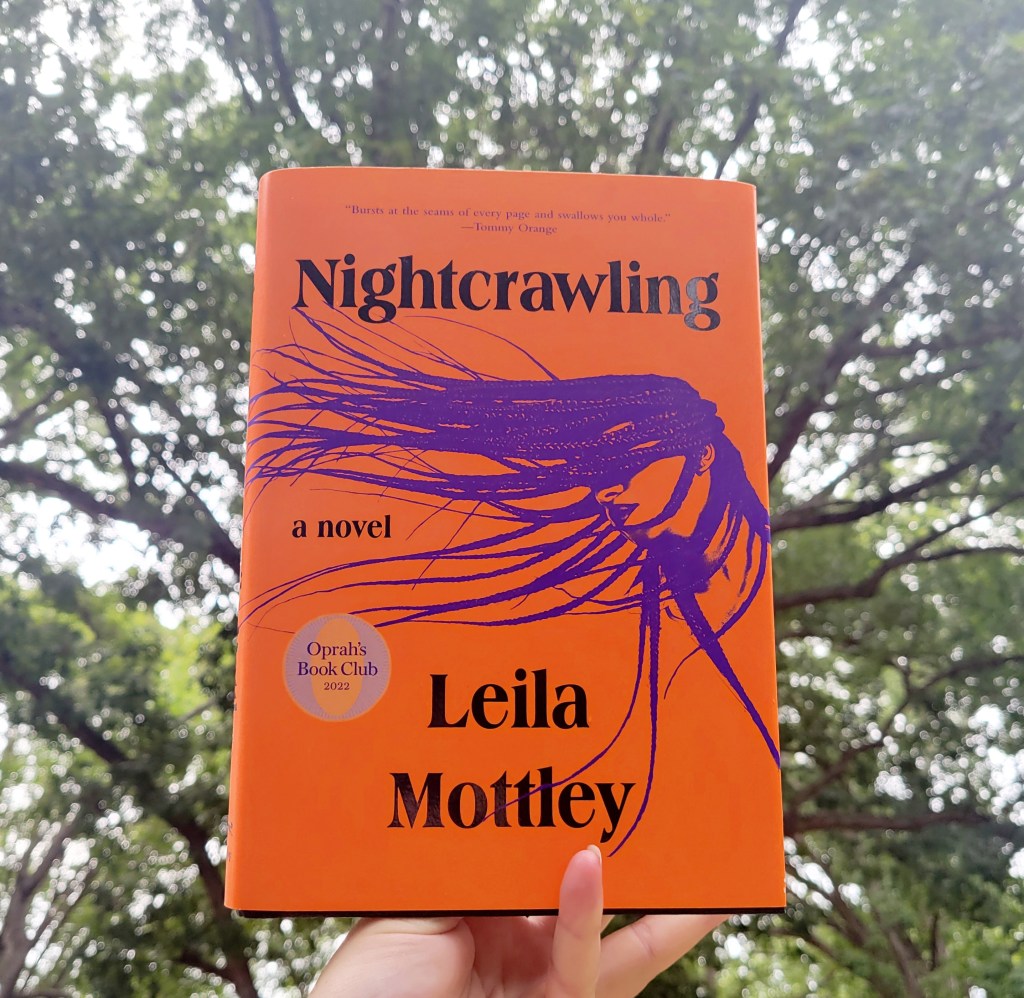
NIGHTCRAWLING – Leila Mottley

My eighth read of the 2022 Booker Prize longlist (and my last read before the shortlist is announced tomorrow) was Leila Mottley’s Nightcrawling (Alfred A. Knopf 2022).  Mottley, a poet, was 17 when she started this novel, and there is a vibrance and urgency of youth that hums through the poetic prose.  The words are pretty, but the story is horrific; it is one of the more difficult reads I’ve read this year.

With her father dead and her mother in prison, seventeen-year-old Kiara is struggling to survive. Her older brother, Marcus, is busy chasing a pipedream, longing for the same fame and fortune that their uncle stumbled upon, and Kiara is burning the candle at both ends struggling to make ends meet.  When a stranger mistakes her for a prostitute, she doesn’t realize what’s happening until too late – until he’s finished pressing into her and pushes crumbled bills in her hand.  Then she knows that if she is to survive, if she’s to pay rent and feed herself and the son of a frequently MIA neighbor, she’s going to have to start nightcrawling.

But Oakland isn’t Los Angeles and Kiara’s not Julia Roberts; she finds herself a plaything of a bunch of crooked cops.  Cops she can’t refuse when they call.  Cops who sometimes pay sometimes don’t.  Cops she knows by badge number, not name.  Some are soft, almost apologetic.  Some are monsters. An unexpected event exposes the scandal, and her name is released.  She becomes the star witness in a highly publicized investigation of the Oakland Police Department. (FYI – the scandal is real and Mottley addresses the inspiration in her note.  Interestingly enough, she doesn’t mention Jasmin Abuslin, the sex worker involved in the scandal who was awarded just under a million dollars.)

The novel is a bruise.  It’s a scream, ripped from deep within, and hurled into the night. It’s the barrel of a gun. It’s blood on the bathroom floor. It’s sirens and sex and scars.  But it’s also hope.  It’s Sunday Shoes and belly laughs. It’s pancakes.  It’s the thump of a basketball on a court, the swish through the net. It’s her thumbprint on his skin and his arms holding her safe.

It glitters.  Like broken glass, not diamonds.  But it glitters all the same.

Read this book.

Booker Count: 8 of 13

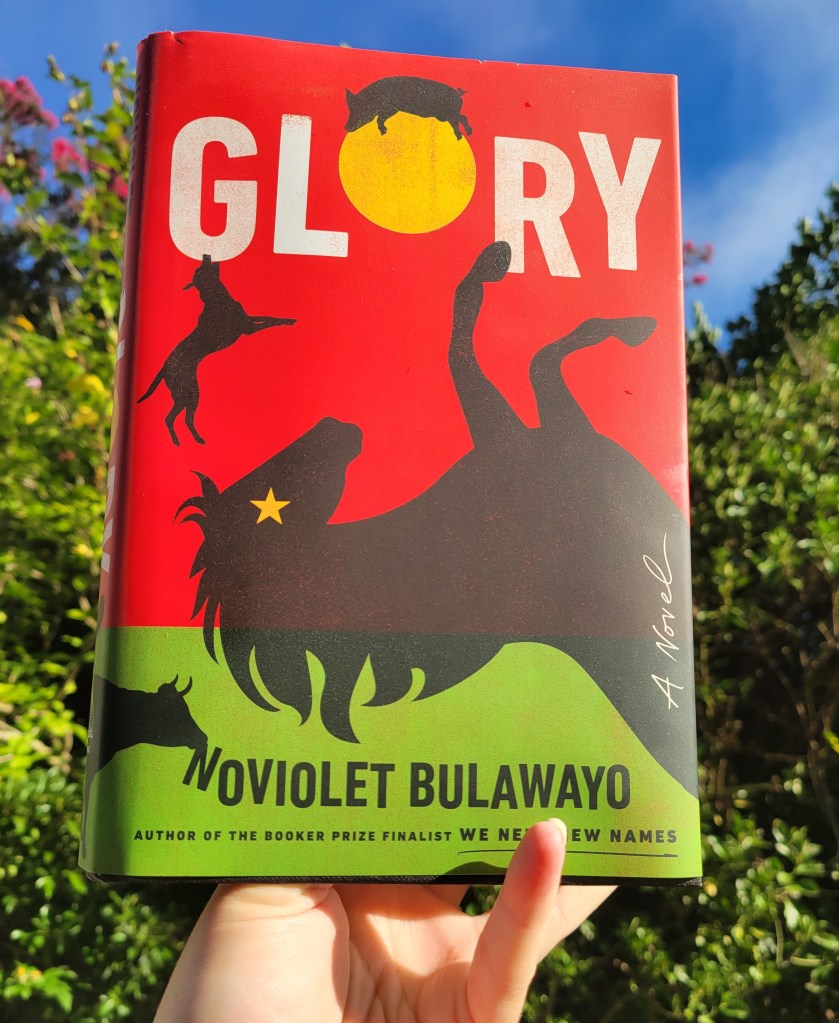
GLORY – NoViolet Bulawayo

My seventh read of the 2022 Booker Prize longlist was NoViolet Bulawayo’s Glory (Viking 2022).  Coming in at 400 pages, it’s considerably longer than the last Booker book I read and at my sweet spot for size.  Bulawayo is also not new to the Booker Prize, her debut was shortlisted in 2013.

Postcolonial literature is one of my favorite genres in part because of what Rushdie dubbed so many decades ago as “the empire writes back,” and Glory delivers with that vengeance Rushdie was talking about; it’s George Orwell’s Animal Farm but in Zimbabwe.  Centered around the 2017 forced resignation of Robert Mugabe, Glory uses a beast fable as a political allegory to tell a story that otherwise history might chew up and spit out differently.

The novel is set in the fictional postcolonial Jidada. Old Horse has been ruling for decades and is said to control the sun.  His reign is marked with violence and corruption.  As he becomes a bit senile, his wife, Dr. Sweet Mother (a donkey), seeks her own glory and to rule.  The Comrades, his soldiers (and always dogs), hatch a plot with his VP, Tuvy to put Tuvy in the seat of power and force Old Horse to resign.  They are successful and a charade of an election ensues.

Destiny and her mother, Simiso, are bookends to two violent attacks – one in 1983 and one in 2008. Destiny disappeared in 2008 without a peep.  But she returned when Old Horse was removed from power because she thought, hoped, prayed it would mark a positive change.  The prodigal daughter returned; she will become the voice of a revolution.

“Isn’t it something, Destiny, how sometimes stories will raise the dead, as if they are not dead at all but alive in our mouths, only waiting to be animated by our tongues?”

I lost count of the number of times “glory” was referenced and in so many different contexts. Some parts of the novel are slightly repetitive, giving the cadence of an oral story-telling tradition.  Other phrases or words are repeated over and over, creating a chant that floods the reader’s ears.  It’s a powerful storytelling format.

I loved this novel, but it’s a hard read.  But tholukuthi it’s worth it.

Read this book.

Booker count: 7 of 13

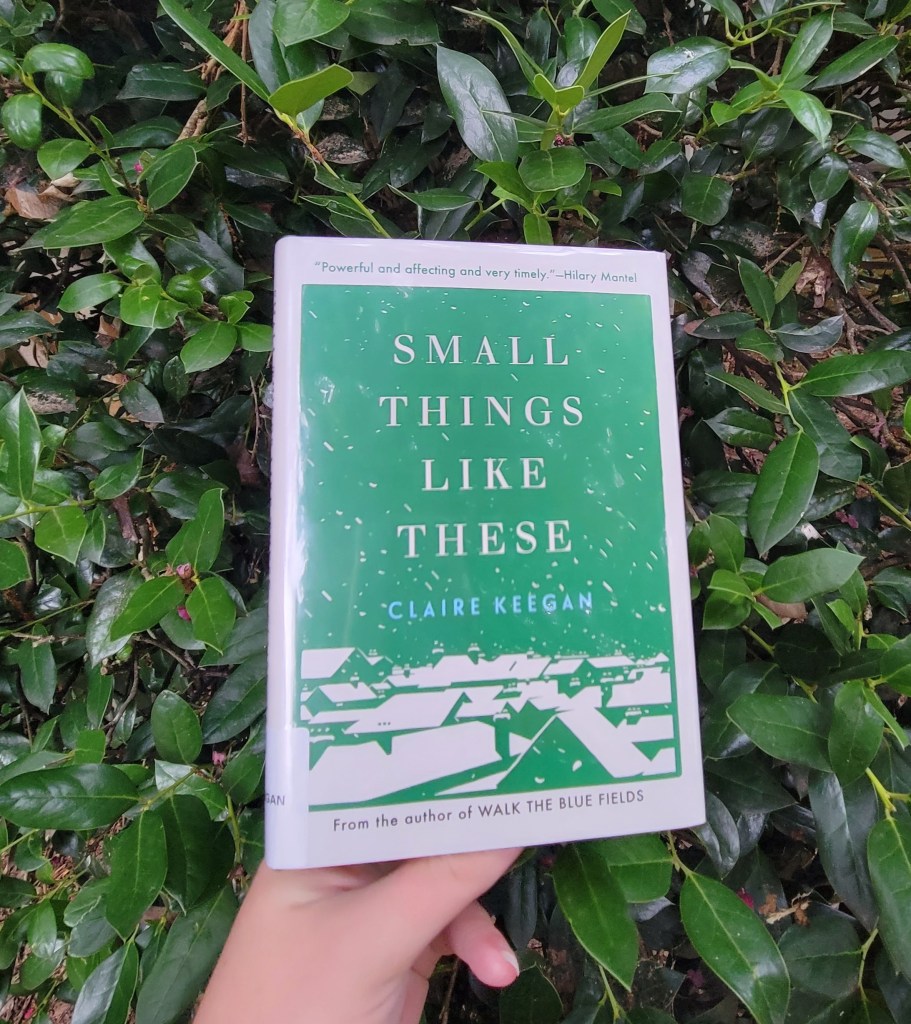
SMALL THINGS LIKE THESE – Claire Keegan

My sixth read of the 2022 Booker Prize longlist was Claire Keegan’s Small Things Like These (Grove Press 2021).  This slim novella is the shortest entry in Booker history (I think), and it’s easily read in one sitting.   Set at Christmas in 1985 Ireland, it’s best read during the winter months, ideally with snow on the ground.  Instead, it’s summer in North Carolina and the heat and humidity did impact how the words fell.

Keegan’s writing is delicate and purposeful, and the result is gorgeous.  But (you knew there would be a but), the ending is just too easy.  With a history of young girls who were held against their will, forced to work and give up their babies, I suppose Keegan wanted to save at least one.

The novel is a slice of life centered around a good guy.  Bill Furlough is an honest, hard-working man.  He’s a good husband and father.  And he was a good son.  His mother was like the women who wound up at the convent, but her employer let her stay on and they all helped raise Bill.  He’s the better man for all his life experiences.  And those experiences give him pause when he first meets Sarah, barefoot and terrified in the coal-house.

Dedicated to “the women and children who suffered time in Ireland’s mother and baby homes and Magdalen laundries,” the novel seems a quiet, unassuming apology for the “small things” so many were never able to experience.

It’s worth a read.

Booker count: 6 of 13

THE TREES – Percival Everett

My fifth read of the 2022 Booker Prize longlist was Percival Everett’s The Trees (Graywolf Press 2021).  I read it in two days, devouring each hilarious and devastatingly brutal word. I didn’t have a funny novel about lynchings and racism on my bingo card but thank goodness the Booker longlist put this novel in front of me; it’s a belly laugh and a “fuck all y’all” in the same breath.  Kill Bill meets Jordan Peele barely scratches the surface of what the experience of reading this novel is.

I live not far from where the woman who falsely accused Emmett Till currently resides. While I was reading this novel, the grand jury declined to indict her on the warrant that was recently found. What does that have to do with Everett’s novel?  Everything.

Set in racist Money, Mississippi, the novel opens at Carolyn Bryant’s home.  It’s 2018, and she’s having some regrets.  Then the murders start. With each white body, the body of a Black man who looks eerily like Emmett Till is found.  The black body keeps disappearing only to show up at another murder. Two detectives from the Mississippi Bureau of Investigation are brought in to investigate. The town isn’t exactly welcoming to the two Black detectives, and they really don’t like it when the Black woman FBI agent shows up.  But there are murders to solve and bodies to find.

But it’s not just Money.  Across the US, racists are being murdered. And the bodies of long dead people of color are found with them. It’s not just retribution for the murder of Emmett Till – it’s retribution for the murder of all those who were lynched.  While the dark comedy of a revenge fantasy carries the novel, the pages listing the names of lynched suck the air from the room.  It’s a plot point that feeds into the fantasy, but these are real names.  Real people.  It’s a stark reminder of a bloody history.

“When I write the names they become real, not just statistics. When I write the names they become real again. It’s almost like they get a few more seconds here.  Do you know what I mean? I would never be able to make up this many names. The names have to be real. They have to be real. Don’t they?… When I’m done, I’m going to erase every name, set them free.” 

“Carry on, child,” the old woman said.

This novel isn’t for everyone. It’s bloody and gruesome. It’s extremely dark humor centered on black trauma and racism.  But what a brilliant and blazing novel of revenge it is.

Read this book.

Booker count: 5 of 13

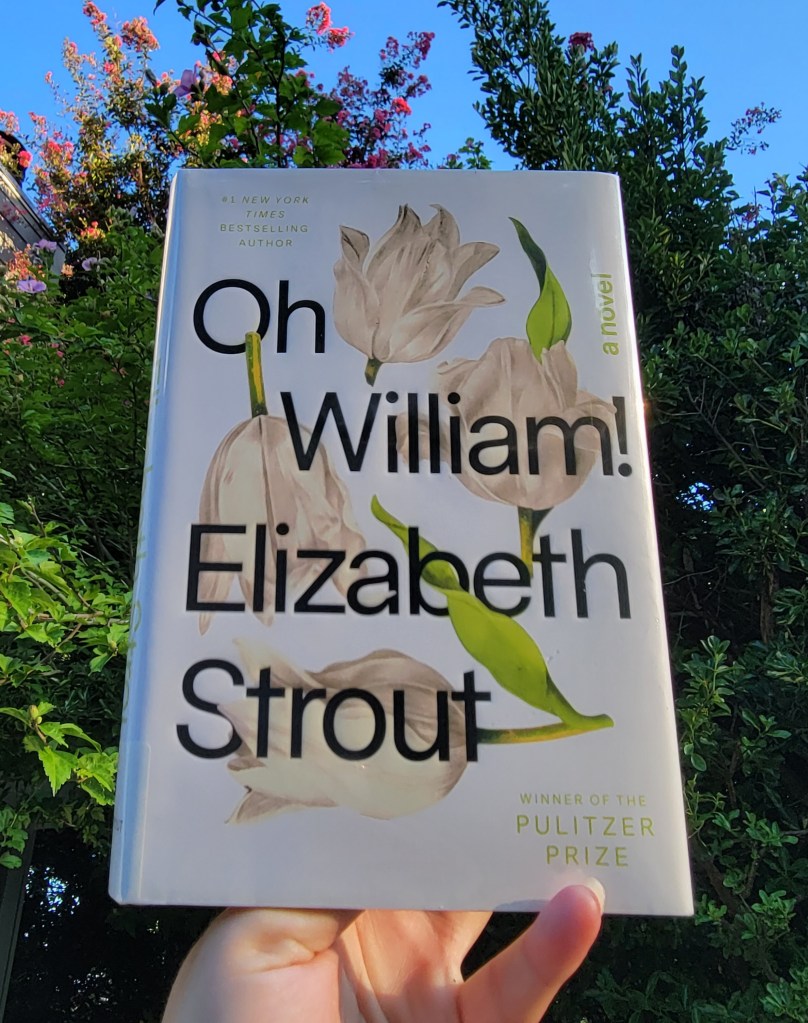
OH WILLIAM! – Elizabeth Strout

My fourth read of the 2022 Booker Prize longlist was Elizabeth Strout’s Oh William! (Random House 2021).  Despite being the third in a trilogy, Oh William is crafted such that it can be read as a standalone.  Written as a fictional memoir, the novel scratches at some things I typically dislike in fiction. Not surprisingly, I wasn’t wowed by Oh William.  For this type of writing to work for me as a reader, I must fall in love with the narrator.  And, while it’s a very unpopular opinion, I did not care for Lucy Barton.  Maybe if I read the first two of the trilogy, I’d have a different opinion of her, but the Lucy Barton telling us her story in Oh William is not someone I care about.

Lucy, a 64-year-old recently widowed novelist, explores grief, love and loneliness in this brief “fictional” memoir of a novel.  There is a comfortable familiarity with her ex-husband, William.  Despite being a philandering pompous jerk, she still sees him as her only “home.”  They’ve been divorced for years, and he’s on third wife, but they’ve maintained a friendship over the years.  When her second husband dies, Lucy finds a welcomed diversion in William’s struggles.  His third wife has just left him, and he’s just learned that he has a half-sister.  When he asks Lucy to join him on a trip to Maine to uncover more information about his German POW father and his half-sister his mother had left behind, she accepts.  The trip forces her to face her impoverished and traumatic childhood, her unhealthy marriage to William, and the continued struggles in her heart and mind.

In perhaps my favorite scene, Lucy is having a panic attack.  William, not exactly sympathetic, asks her why she’s having a panic attack.  She tells him his khakis are too short and it “depresses the hell out of [her].”

The novel is well-written, and Lucy is wonderfully developed and complex as a character, I just didn’t like her. Imagine getting seated next to an older woman, one who is slightly drunk and sad, on a long flight. It’s fun for a bit, but by the time you land you just want to give her your therapist’s number.  I’m pretty sure Strout recognized there may be a low threshold for tolerating Lucy – the novel is only 237 pages.

Should you read it?  It’s a quick read by a talented author.

Booker count: 4 of 13

BOOTH – Karen Joy Fowler

My third read of the 2022 Booker Prize longlist was Karen Joy Fowler’s Booth (Putnam 2022).  While Fowler is no stranger to the Booker Prize (she was shortlisted in 2014), this is my first novel by her.  While reviews are relatively mixed, I found it a fascinating, well researched and executed historical saga about the Booth family.  Some of the criticism is that the novel has too much of the family, but that’s the entire point – this isn’t a novel about the man who assassinated President Lincoln, it’s a novel about the Booth family, American theatre, and a snapshot of a period in United States history; I couldn’t put it down.

“Are there ghosts?  How could there not be.”

In 1822, a famed Shakespearean actor leases farmland northeast of Baltimore to raise his family.  His first born is named after him, Junius Booth, or June.  Nine other children follow, with the second to the last being the one history remembers the most.  After June comes Rosalie, then the four children who would become childhood ghosts, then Edwin, Asia, John, and Joe.  Their father is a talented actor, unpredictable alcoholic, and a bit of a madman.  The family is secret because their father is still married to his first wife.

Despite their father’s attempts to keep the children away from acting, it’s in their blood.  So is a hunger for alcohol and a touch of madness.  From 1822 to 1893, we see the rise and fall and recreating of narratives of the Booth family.  Each sibling craves fame, glory, and most importantly, to be remembered.  They struggle with demons both real and imagined.  They suffer losses, shame, hunger, and failure.  Rosalie and Asia, the oft forgotten women of the family, complete opposites of each other, are the bookends struggling to hold the family together.

War draws nearer.  Loyalties of the family become divided.  But one constant is the call of the stage.  As the world begins to burn around them, Junius Booth’s sons continue to take the stage, all still battling the ghost of their now dead father.  They are theatre royalty; the Booth name means something, and the Booth children are chasing the same but different legacies.

Booth is a chunk of a novel, but it is far from a slog of a read. 

Read this book.

Booker count: 3 of 13

THE COLONY – Audrey Magee

My second read of the 2022 Booker Prize longlist was Audrey Magee’s The Colony (Farrar, Straus and Giroux, 2022).  While it clearly drips with Booker-type, it didn’t work for me because of an intense hatred or general indifference for the characters (excluding James and his mother).

During the summer of 1979, while Ireland is rocked with violence, an English artist and a French scholar descend upon a remote island in Ireland where the few inhabitants cling to a dying language and dying way of life.  Mr. Lloyd has arrived in the hopes of breathing new life into his drab art after his wife left him for someone more talented.  He claims he’s there to paint the cliffs and promises not to paint the people.  It’s a promise he never intended to keep, and the people immediately become his subjects.  Mr. Masson has channeled his inner demons of growing up with a French father and an Algerian mother (who had to give up her language) into studying and encouraging preservation of the Irish language spoken on the island.  Both men use the inhabitants as a means to their end of perceived glory and renown, and they’re both awful.

James is the youngest inhabitant of the island.  His father drowned while fishing, and James is adamant that he will get off the island and never he a fisherman.  Mr. Lloyd tolerates the teen, and James is the first inhabitant he draws.  James has a talent for art and shows Mr. Lloyd how his birds are wrong and how he hasn’t properly captured the light in the ocean.  Mr. Lloyd takes his tips and improves his work, promising the boy he is going to take him back to London with him and they’ll have an art show.  Their banter, while Lloyd is a selfish little man, peppers the novel with a bit of cheek and humor.  Ultimately Lloyd steals James’s art concepts, copying his work and incorporating it into his own with no intention of giving the boy credit or of taking him to London.  In the most heartbreaking scene of the novel, Lloyd paints over an image of James holding paint brushes and rabbits, replacing them with fish – making the boy the one thing he never wanted to be – a fisherman on the island.

So much of the novel is from the perception of the outsiders, but there are passages where neither the Englishman nor the Frenchman are present. These few but beautiful sections give barely a taste of who these people actually are – so much of the perception of James and his mother, let alone the others, is just colored by the interactions with Lloyd and Masson.  This was an intentional choice, but it just didn’t work for me.

The novel is broken up with news sections recounting the violence throughout Ireland.  As the novel progresses, the inhabitants discuss the attacks, and those sections join the thread of the story. This works extremely well.

The prose is beautiful, but it gets a bit murky sometimes.  The rhythm and cadence are such that you can hear the water lapping at the currach, the cry of the terns, the charcoal scratching on paper, the unfurling of long red hair, a woman slipping out of her clothes, a man sighing.

I didn’t like this book, but it was extremely well done.

Booker count: 2 of 13

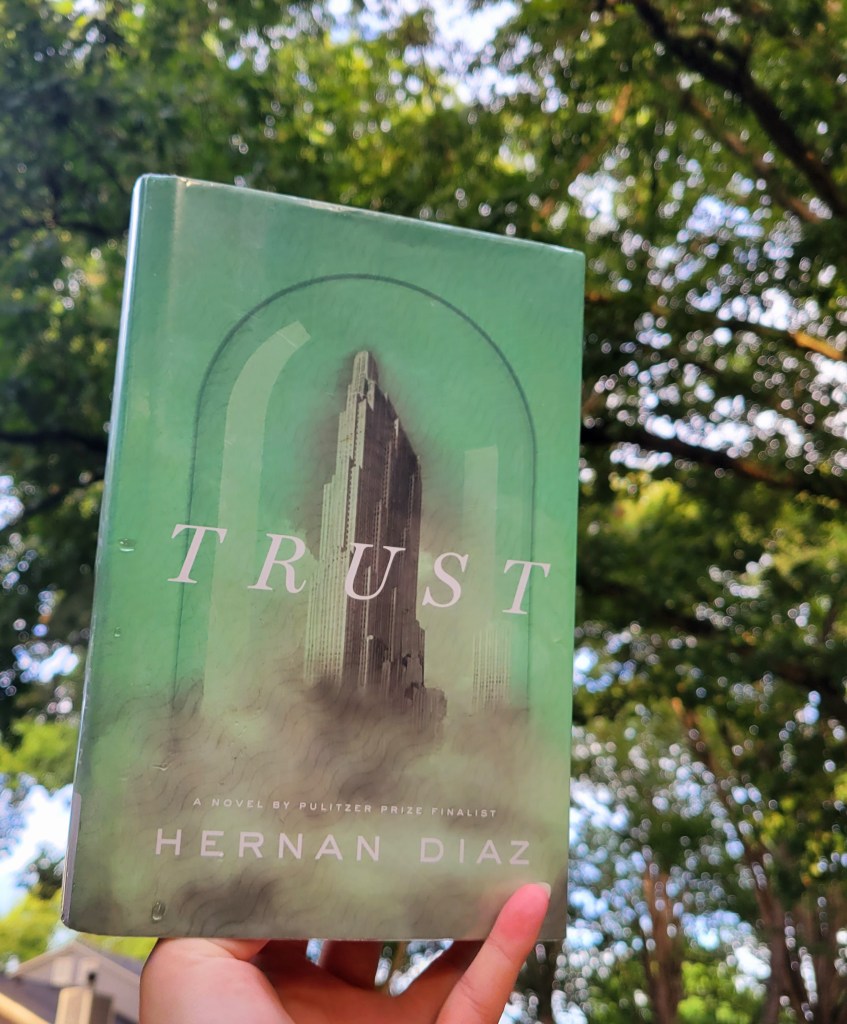
TRUST – Hernan Diaz

The Booker Prize longlist was announced last Tuesday, which means my Booker countdown has officially started. I began the baker’s dozen of books with Hernan Diaz’s Trust (Riverhead Books, 2022), a cocky and bold literary experience about truth and memory, trust and fiction. The novel is told in four separate parts by four separate fictional characters. (I was quickly reminded of Lawrence Durrell’s The Alexandria Quartet.)

The first section is Bonds, a fictional novel by Harold Vanner.  The second is a rough, work-in-progress autobiographical sketch of Andrew Bevel. The third is a memoir by Ida Partenza, and the fourth is the diary of Mildred Bevel.  How Diaz works these four very different styles and voices into one cohesive and breathtaking novel is indicative of his literary genius, and why I anticipate this novel to make it to the shortlist.

Bonds was a work of fiction that was extremely well-received and read by everyone in New York.  Telling the story of the eccentric and filthy rich Wall Street tycoon, Benjamin Rask, and his equally eccentric wife, Helen Rask, the novel chronicles Rask’s rise to near godlike status in the financial industry, soaring even higher during the market crash that he profited from, and his wife’s cocktail parties, support of the arts, and eventual fall into madness.  Benjamin and Helen Rask were fictional, but clearly based on Andrew and Mildred Bevel. (I’m pretty sure Truman Capote inspired Vanner’s character, who we never actually see.)  Andrew decides to write his own story to erase the history provided by Vanner. He hires a young Italian woman, Ida Partenza, to write it while simultaneously using his power and influence to destroy Vanner and erase Bonds from the world.  In his version, Mildred is a delicate and feminine wife who succumbs to cancer. Ida quickly realizes that Mildred likely falls somewhere between how Vanner wrote her and how Andrew wants her remembered.  Decades later, the Bevel papers become open to the public.  Ida has been riddled with shame, guilt and curiosity for her efforts in rewriting a history and misremembering a woman, so she finally seeks the truth.  She finds the slim volume titled Futures in the collection – it’s Mildred’s final diary.

Trust is one hell of a cleverly executed ride that shows not only how power and money can rewrite history, but how strong and intelligent women are treated and remembered (and forgotten) by the men in their lives.   We see this not only with Andrew and Mildred, but also with Ida and her jealous boyfriend, Jack.

Read this book.

Booker count 1 of 13.

INFINITE COUNTRY – Patricia Engel

Patricia Engel’s Infinite Country (Avid Read Press, 2021) is a brief but bittersweet snapshot into the lives of a mixed-status Columbian family divided by borders.  While the novel is well-written and a very important read, it was a disappointing display of missed opportunities for this reader. As some of you know, I was an immigration attorney and worked primarily with undocumented individuals. I still lose sleep over some of my clients, their beautiful families, and the Orders of Removal I could not stop. In many ways, this novel was triggering because the family’s situation mirrored so many of the case files I had wept over and still think about years later.  Pushing that visceral reaction aside, the main missed opportunity is in the two sisters – Talia, born in the US but raised in Columbia, and Karina, born in Columbia but raised in the US.

We get a lot of Talia.  When the novel opens, Talia is being held at a facility for teen girls as part of her sentence for an assault.  She orchestrates her escape, and the novel charts her return to Bogota and her father; she has a flight to join her mother and siblings in the US, and she can’t miss it.  This escape and journey home is complex, with layers of resilience, fear, determination, and a disjointed feeling of belonging but not belonging.  These were my favorite sections.

While we get some Karina, it’s not nearly enough. Karina was born in Columbia and entered the US with her parents under a visa.  When the visa expired, they overstayed and became ghosts.  The slightest indiscretion could have them deported.  Karina remembers when her father was deported and what that did to her mother.  Karina would be eligible for DACA, but that isn’t permanent, and she didn’t apply because she was afraid to reveal her undocumented existence for fear of exposing herself and her mother and being deported.  (This was a valid fear under certain administrations.)  Like Talia, their brother, Nando, was born in the US and will be able to petition for their mother when he’s 21, but Karina’s options are limited.  She’s undocumented in the only country she knows, and a stranger to the country she risks being sent back to. Her story is part of why immigration reform should be a no-brainer, and her sections, while limited, drip with resilience, fear, determination, and a disjointed feeling of belonging but not belonging.

“Don’t tell me I’m undocumented when my name is tattooed on my father’s arm.”

In short, I think it’s an important novel, but I may have been too close to the subject matter. The mythology is beautiful, and I would have loved to have seen more of it. I would have liked more flesh on Talia’s experiences growing up with her grandmother while her father becomes sober and knowing her mother and siblings are in the US. And I certainly wanted more Karina.

Should you read this novel? Yes.

Will the people who need to read this novel the most ever pick it up?  Doubtful.