MIDNIGHT AT THE BLACKBIRD CAFE – Heather Webber

Heather Webber’s Midnight at the Blackbird Café (Tor-Forge 2019) is Southern magical realism novel of family and second chances that is as sweet as tea should be.  If you liked The Book Charmer (Karen Hawkins, Dove Pond series), you’ll love this.  It’s that same type of candy read, set in a sleepy Southern town with just a bit of magic and mystery.  (Hart of Dixie meets Practical Magic.)

It’s a comforting sort of read because you know that everything is going to work out in the end.  Broken hearts will mend.  Prodigal daughters will return.  Fragmented families will reconnect.  And animal familiars will get things back on course.

Anna Kate Callow knew about Wicklow, Alabama, but her mother insisted she never set foot there.  Her grandmother’s death, however, forces her to the place her mother had once called home.  There, she confronts a town that had fiercely loved her grandmother.  Anna Kate had intentionally been kept a secret from Wicklow, and especially the Lindens, and the town is rattled to learn of Zee’s heir.

Zee owned and operated the Blackbird Café.  There, she baked pies with just a hint of magic.  The blackbirds would sing messages into the pies, carrying messages from the dead to their loved ones in their dreams.  She left the café to Anna Kate, with a couple of strings attached. Anna Kate is in town for just a couple of months to clear it up before medical school back up North.

Natalie Linden Walker has returned to her hometown after the death of her husband.  Filled with rage for the man she’d loved and battling a lifetime of dealing with her cold, demanding mother, she needs answers and healing.  With just a few years separating them and despite a lifetime of being told not to trust the Callows, Natalie forms a friendship with Anna Kate.

Birders have flocked to the town because word of the blackbirds has piqued their interest.  They’re sitting up lawn chairs, tent cities, and breathing new life (and money) into the formally dying town.  

Alternating between Anna Kate and Natalie, with brief sections of interviews with the town folk regarding the birds, the novel has an undeniable charm and ease.  It smells like zucchini bread and fresh baked pies, and it feels like a hug and someone telling you to sit down and stay awhile.

It takes you home, and you’ll want to stay.

Read this book.

THE LOST QUEEN – Signe Pike

Signe Pike’s The Lost Queen (Touchstone 2018) is the first in a trilogy following Languoreth, twin of the man who’d inspire the legends of Merlin and forgotten queen of sixth-century Scotland.  The first of series opens when she is 10, just after the death of her mother and ends when she’s 32 and standing dead center of a war between a tyrant king (her father-in-law), and her brother alongside the Dragon Warriors.

The historical novel is full of powerful, feminine energy, highlighting the silent strength of the women who worked behind the scenes of powerful men. Languoreth’s father had embraced and fostered the wild ways of his only daughter, even more so after the death of her mother.  He allowed her to be trained in ways oft forbidden of women.  Despite cultivating an independent streak, her father never shielded her from what her future held; as his only daughter, she would marry and marry into a noble family.

When she’s 14, she meets the man who will claim her heart.  Not long after, she finds herself betrothed to the son of a Christian king.  The marital alliance is a business transaction intended to protect her people and the ways of their ancestors.  Her husband is a kind but quiet sort, and he’s been playing the long game to ensure his father will name him as successor.  Languoreth must bite her tongue and bend to fit into the space she’s been given, or all would be for naught.  She must become Queen; she’s given up everything for her family, her people, her ways, and she will play her part until her husband is named king.

It’s a bittersweet love triangle laced with magic and visions and soaked in blood and betrayal. History largely forgot Languoreth and the power she wielded, making her a footnote in history as an adulterous queen who was “saved” by Saint Mungo. Her brother was remembered as being a “madman” before becoming immortalized in the tales of Merlin. But this novel of faith, fealty and family gives voice to a child who grew to one of the most powerful women in Scotland during a turbulent and chaotic time. 

Carefully crafted, the novel is both fragile and forceful; just as likely to pepper the pages with sweetness as blood spatter.  The Lost Queen is a mouthful of a novel, the kind you savor, and I will be here until the last beautifully rendered page of the trilogy.

Read this book.

JUST FOR YOU – Jennifer Ann Shore

Jennifer Ann Shore writes some of my favorite candy books.  With a comforting and familiar writing style and characters that ring both real and unique, her YA works are quick, delicious reads.  Her latest, Just For You (Indie published, 2022) is no exception, and it proved the perfect read for a stormy summer night.

Violet is in her senior year of high school. College applications have been submitted, and she and her friends are in that waiting stage where senioritis hits the hardest. Her two best friends, Kara and Erica, had a falling out with each other, and Violet tries to split her attention between the two.  It makes things a lot easier since Kara goes to a different school.  Kara is on her school’s varsity hockey team, and Violet is her biggest fan even though the team is her school’s rival and Erica’s boyfriend is on that team.  While at one of Kara’s games, she meets Penn Westbrook, and she can’t deny the attraction.

As if juggling two friends who don’t get along and a first love interest in one’s senior year isn’t enough, Violet’s absentee father is trying to rekindle a relationship with her because he wants her to be part of his new family.

Shore doesn’t write pretty but empty wallflowers; her female characters are bold, intelligent, determined, and fierce.  They’re flawed and figuring things out in that difficult not-quite-an-adult time, but unlike so many romances, they’re not defined by their love interests and they don’t have to change how they look or act to win the guy.  There are characters who fit that mold, Erica being one, but what Shore does with them is noticeably different than her heroines.

Shore depicts realistic chaos with characters full of heart.  The relationships that Violet has built tend to be healthy, and those that aren’t are relationships she’s working on setting boundaries with.  Her relationship with her stepfather is possibly my favorite part of the novel.  (Well, other than when Penn brings her a succulent instead of flowers and when Kara throws a punch.)

Penn’s kiss and Violet’s baked goods aren’t the only things that taste like sugar; this novel is sweet but not in a way that’ll leave you with a tooth or tummy ache. 

Read this book.

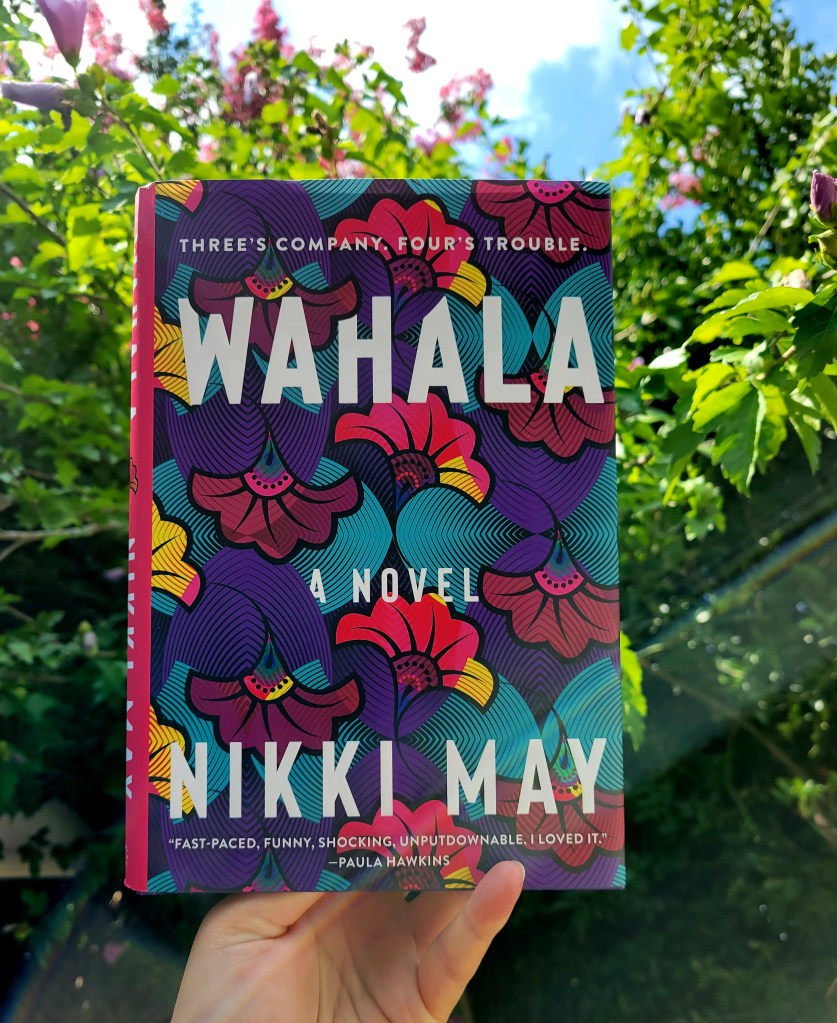
WAHALA – Nikki May

Nikki May’s Wahala (HarperCollins 2022) is Sex in the City meets Working Moms meets a psychological thriller. The novel, set in England, revolves around a group of three Anglo-Nigerian friends whose worlds are shattered when a fourth joins. It’s vibrant, colorful, and enough to make you hungry.  (There are even recipes at the end. I would love to try my hand at moin-moin or jollof rice, and I’m hungry just thinking about it.)

Ronke is my favorite. She is a caregiver with the personality of a warm hug.  She’s who you call to take care of your kids.  She’s the one you call when you’re sick and hungry.  She’s the one you call when you’re sad and lonely. She’s dependable and loyal. She wants to get married and have kids, but her picker is a little broken.  Her current boyfriend, Kayode, is a sore spot with her friends.  They don’t think he’s good enough for her.

Boo is my least favorite. She’s married to a Frenchman and is the only one of the group with a child.  She’s insufferable. She’s dissatisfied with her life, which makes her susceptible to being manipulated when Isobel joins the group.

Simi came from money, but her family lost it when she was young.  She’s spent significant time trying to bridge what her life was like before and what she’s successfully built it up to. She’s married to Martin and life is golden.  Only he thinks they’re trying for a baby, but she doesn’t want kids.  Isobel is one of her childhood friends, from when Simi was filthy rich, who has suddenly reappeared.

Isobel is extremely wealthy and privileged.  She manages to weasel her way into the group with her charm and chameleon-like personality.  The other women, especially Boo, embrace her and welcome her into the group – well, except for Ronke, who keeps her at arm’s length.

Wahala means trouble, and this book is full of it. As Isobel gets her hooks into the women, secrets tumble forth and lives are forever changed.  Can their friendship survive Isobel?

This a brilliant debut.  It’s fast-paced, intoxicating, and positively delightful. And a TV series is already in the works from BBC. I can’t wait.

Read this book.

CROOKED HEART – Lissa Evans

Lissa Evans’s dark comedy Crooked Heart (2015 HarperCollins) made me think of Helen DeWitt’s The Last Samurai, a 2000 novel that doesn’t get nearly the hype it should. While Evans’s novel is considerably shorter, there are striking similarities in the dark humor and in their young protagonists. 

Ten-year old Noel Bostock is being raised by his godmother, Mattie, as WWII starts creeping closer to London.  As the threat increases, Mattie falls deeper into dementia.  When she dies, Noel is evacuated from London due to the war. Vera, a 36-year-old widow who really can’t afford another mouth to feed, notices his limp and sees the possibility. Plus, she gets money for caring for him.

Vera is the queen of swindles, and Noel becomes her most lucrative one.  Noel is not like other children his age.  He’s well-educated, confident and self-sufficient. When he realizes that Vera is using him to get donations, he improves upon her scheme.  He maps out locations, helps her identify what organizations they will be collecting for, and plays lame and slow as needed. Together, they make a team.

While out one day, they meet a mentally frail older woman. She reminds Noel of his beloved Mattie, and grief seizes his heart. He seeks this woman out for the comforting memories her dementia settles upon him. When she is robbed following a bombing, Noel seeks vengeance.

Vera isn’t the only schemer in the bunch – her adult son with his bad heart is running his own wartime scam; Donald charges to take the heath tests for those called to fight.  Vera’s man-child of a son isn’t a likeable character, and his actions put the family in more danger than Vera’s scam and Noel’s attempts at justice.

This war novel had me laughing aloud as Vera and Noel navigate German bombardments, dishonest officers, and their own crooked hearts.

BIG LIES IN A SMALL TOWN – Diane Chamberlain

Diane Chamberlain’s Big Lies in a Small Town (St. Martin’s 2020) is fantastic, page-turning thriller of a candy book. Chamberlain is a North Carolina author, and the novel is set in sleepy Edenton, which is not far from where I grew up.  One of the characters is even from Cary, which is where I currently live. I do love a book set in NC.

The mystery of the novel unfolds in dual timelines.  Anna Dale is painting a mural in 1940 and Morgan Christopher is restoring that same mural in 2018.  As Anna paints and Morgan restores, secrets, lies and a dead body tumble forth.

Anna is from New Jersey, and Edenton is so very different from what she’s accustomed to.  When she entered the national contest to paint murals for post offices, her choice was not Edenton. It wasn’t anywhere in the South. But she was selected and given the opportunity to paint the mural in the quaint, waterfront town.  She needs the money, so she accepts.  There are some hiccups. She’s an unchaperoned Northerner who wears pants and fraternizes easily with Jesse, a young Black man, and his family.  There’s also some bitterness because the town’s resident painter lost the contest, and to a woman from New Jersey at that. 

Morgan Christopher is in prison following being convicted of her third DUI, this time seriously injuring a young woman. She’s been sentenced to a minimum of one year and a maximum of three.  At the one-year mark, two strangers show up with a proposition that would grant her freedom.  The former art major is asked to restore a mural in Edenton, NC. She had been named specifically for the project in the will of a well-known artist from the town. Morgan, a recovering alcoholic, battles her demons, makes friends, and uncovers a bombshell of a mystery buried since 1940.

I don’t like that Morgan wasn’t actually driving the car and took the fall for her boyfriend. (That’s not a spoiler.)  I felt like that was a missed opportunity.  That’s really my only quibble. The dual timeline was crafted beautifully, and the pace is perfect. The characters are compelling, and the writing is tight and focused.  Overall, it’s a gripping novel that will keep you turning the pages to find out what secrets the mural holds, and what Morgan’s connection to the mural and Edenton is.  It’s delicious candy.

Read this book.

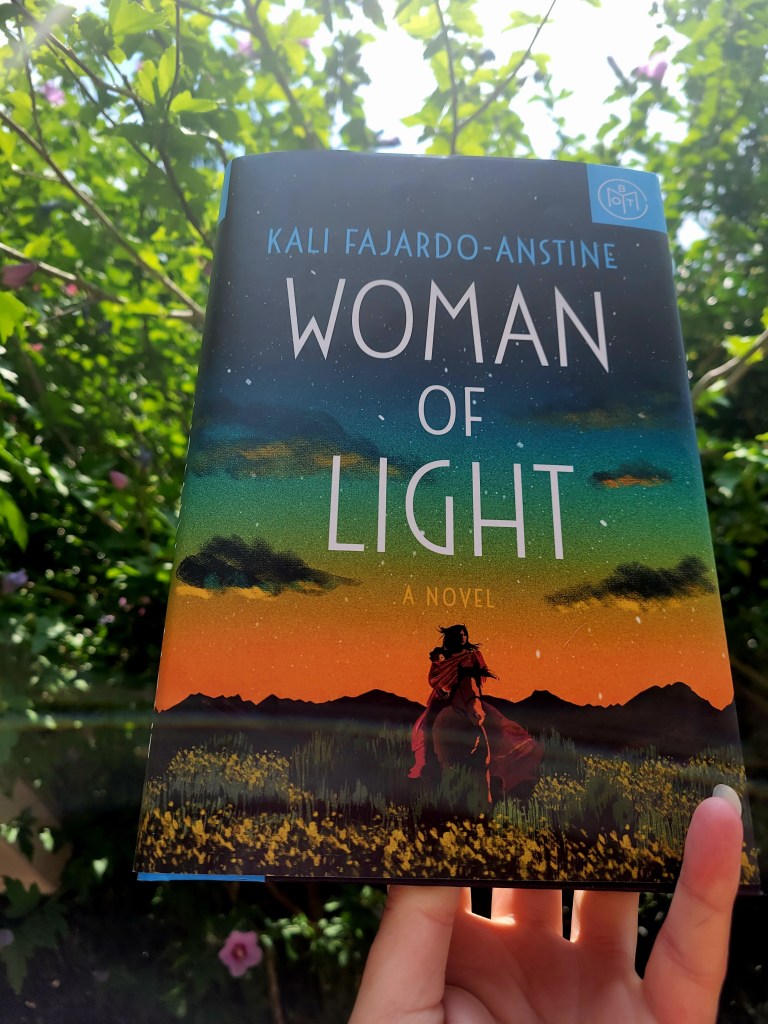
WOMAN OF LIGHT – Kali Fajardo-Anstine

Kali Fajardo-Anstine’s Woman of Light (One World, Penguin Random House 2022) was a highly anticipated read and yet another example of where my expectations for a book are unrealized.  One could argue that it was over-hyped and that’s why it fell short, but I’d argue that its failings are due to not providing enough flesh to cover the bones of the plot.  The premise?  Fantastic.  The writing? Gorgeous.  The story-telling aspect?  Woefully lacking in certain areas.

The novel follows five generations.  It primarily focuses on Luz in the 1930s in Denver, but it does time-travel between 1868 and the 1930s.  This fragmented way of story-telling works well with Fajardo-Anstine’s writing style and the story of this family.  The time-jump sections are my favorite parts of the novel, but they are areas that I felt needed more flesh to give a stronger heartbeat to the novel; This is ultimately a family saga that is missing a bit of the umph of a real saga.

We’ll get to Luz in a minute, but I want to start with the prologue.  A woman, Fertudez Marisol Ortiz, abandons her baby to be found by the Sleepy Prophet in the Land of Early Sky, or the Lost Territory.  Fertudez tells her son “Remember your line.”  The baby is left with a bear claw.  The ghosts of four dead priests tell the Sleepy Prophet that the child’s name is Pidre.

Pidre is readily embraced by the town and the Sleepy Prophet’s line becomes his line.  (Oh, how I wish we had more on his mother.)  The bear claw and the connection to Pidre returns when he falls in love with Simodecea, the most interesting female character in the novel.  She’s a sharpshooter who killed her first husband during a performance when a caged black bear broke free and attacked her. She only signed up with Pidre’s show because he said there would be no bears.  They fall in love and have two daughters, Sara and Maria Josefina. But the bear will have Simodecea pulling the trigger again – this time, an unexpected “bear.”  Sara and Maria Josefina are left to make their own ways.

Both women fall in love with men who don’t deserve them.  Sara gives birth to Luz and Diego, and Maria Josefina, without her consent or knowledge, is given drugs to kill the baby growing inside her. She loses all interest in men at this point.  Sara goes a bit mad when her no-good husband leaves, and Maria Josefina takes in both Luz and Diego. Maria Josefina is the most reliable and steady of figures in Luz’s life.

Luz can read tea leaves.  Diego can tame rattlesnakes and have them do his bidding. (Never thought I’d care so much about two snakes.) The novel is primarily about Luz, “Little Light,” and her transition from girl to young woman in a racist and xenophobic Denver where the Klan marches and brown bodies are regularly beaten and broken by the white police.

I found this novel lacking because it left me wanting, but it fills a void in the literary world as it follows an Indigenous Chicano family in the American West. The novel focuses primarily on the women – their strength, their sins, their secrets, and their magic.

For that alone, read this book.

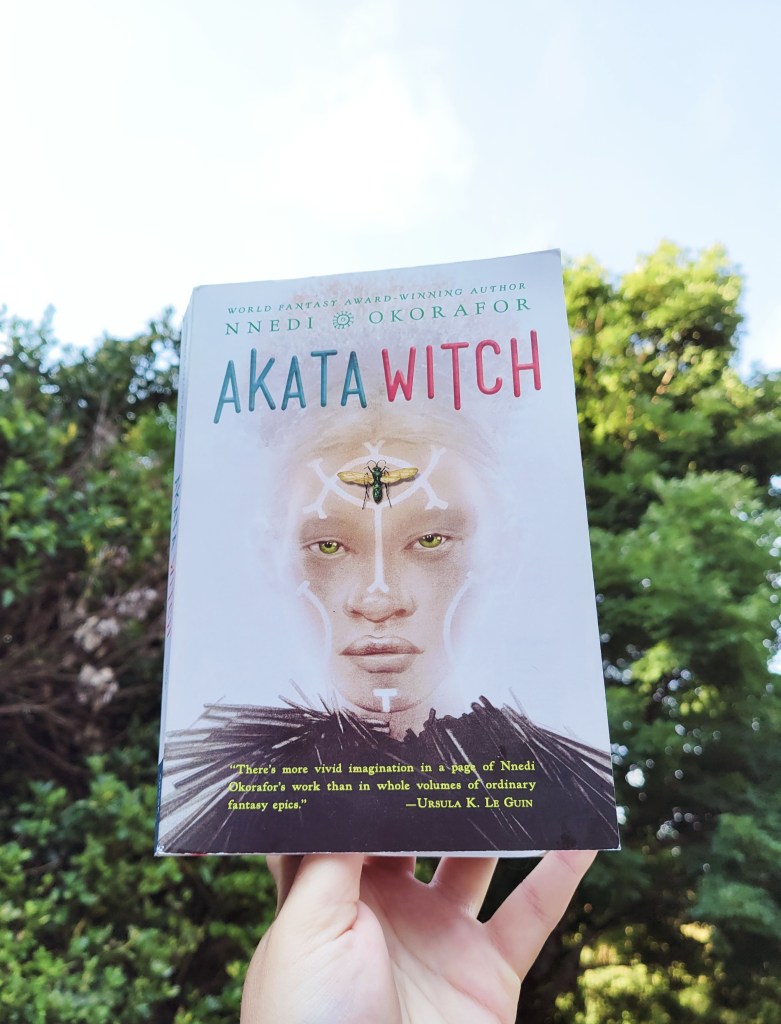
AKATA WITCH – Nnedi Okorafor

I’m steadily reading my way through my TBR cart.  (Though it would appear I am adding more than removing.  My cart needs its own cart!)  I picked up Nnedi Okorafor’s Akata Witch (Viking 2011) because I wanted a bit of middle grade fantasy.  Akata Witch is the first in The Nsibidi Scripts series.  Akata Warrior is sitting on that cart and I’m waiting for Akata Woman to be released in paperback so they’ll match.  The series has been dubbed “the Nigerian Harry Potter,” but that really does it a disservice – the writing is sharper and rawer, the characters are diverse and vibrant, the stakes are much higher, and there’s an intensity that Rowling didn’t capture until more than half-way through the series.  Sunny’s Oha coven, a quartet that is admittedly very reminiscent of the Gryffindor trio, stands firmly apart from other magical friends.

Sunny was born in America to Nigerian parents.  She moved back to Nigeria when she was 9.  She’s albino and struggles with bullying and fitting in.  Her parents are harsh, particularly her father, and their relationship is a loving, but conflicting struggle throughout the novel.  Sunny learns she is a Free Agent, a magical being born to nonmagical parents.   She is under a charm that will not allow her to discuss the Leopard People or magic with them, driving even more of a wedge. 

Sunny lives a fractured existence.  She’s American, but Nigerian.  She’s black, but albino. She’s magic, but in a non-magic home. This first novel of the series shows significant growth in Sunny as she learns to see herself as she really is and to find her place in the world.

The plot of this novel is that there is a serial killer on the loose called “Black Hat.”  Black Hat murders and maims young children. Sunny and her three friends who form the unexpected coven are tasked with extinguishing the threat, saving two young children, and preventing Black Hat from unleashing a monster on the world.  All the while, Sunny must keep up with her magical studies and her human studies.

It’s a well-done middle grade fantasy that pulls from West African settings, legends, lore, and family dynamics.   Don’t brush it aside as a Nigerian Harry Potter – Sunny is no Harry and Leopard Knocks is no Hogwarts.  Akata Witch is a powerful novel about finding your true face and the power you hold.

Read this book.

TAKE MY HAND – Dolen Perkins-Valdez

In 1973 Montgomery, Alabama, Minnie Lee and Mary Alice Relf, sisters both under the age of fifteen, were sterilized without their consent. The procedure was ordered and performed by a federally funded agency. Their social worker reported it to a local attorney, who filed a lawsuit.  Relf v. Weinberger brought to light the thousands of poor women of color, including minors, across the entire country who had been sterilized without consent by such federally funded programs. Dolen Perkins-Valdez’s Take My Hand (Berkley 2022) is loosely based on their story.

Without question, this is one of the best historical based-on-actual-events novels I’ve read.  And with the recent SCOTUS leaks and the continued disparity in medical care, especially reproductive care, this novel couldn’t be timelier.

Civil Townsend is a highly educated black nurse.  Her father is a doctor, and she was raised in a different world than the poor Black families living just miles away in the country.  Recognizing the importance of nurses in reaching certain communities, her activism led her to the Montgomery Family Planning Clinic.  She was one of eight nurses who saw patients at the clinic as well as doing house calls.  Her first house call was to give 13-year-old Erica and her special needs 11-year-old sister, India, birth control shots.  India had yet to start her period and neither girl had ever even kissed a boy, yet they were on birth control shots.  When Civil learns that the shot hasn’t been FDA approved and there have been studies indicating the drug causes cancer in beagles and monkeys, she stops giving them the shot.  She lies on the records and says they’re on the pill.

When the supervisor, a white woman, learns of Civil’s deception, she orders that the girls be sterilized.  She takes a Black nurse to the home, tells the family she’s taking them to the hospital for their shots, and has Mace, the girl’s father, and his mother make their marks on the consent forms they cannot read.  Civil is too late; the girls are sterilized.

What follows is a wonderfully crafted tale of the sins of the fathers and the hopes of the daughters. The legal drama aspect is captivating, especially with the treatment of the judge and his bias. The naiveté of both Civil and the young white attorney handling the case is woven so carefully and decidedly into the plot that you know, even while rooting for them, that victory will never be as sweet as they hope.  The pain of the family, especially the two sisters, and Civil’s guilt makes this novel bleed and weep and scream.  But there’s a light that shines.

It’s a heartbreaking, agonizing read with its title coming from Martin Luther King, Jr.’s alleged last words: “Ben, make sure you play “Take My Hand, Precious Lord” in the meeting tonight. Play it real pretty.”

“Precious Lord, take my hand
Lead me on, let me stand
I am tired, I’m weak, I am worn
Through the storm, through the night
Lead me on to the light
Take my hand, precious Lord
Lead me home”

It’s not lost on me that I’m posting this on Juneteenth.

Read this book.

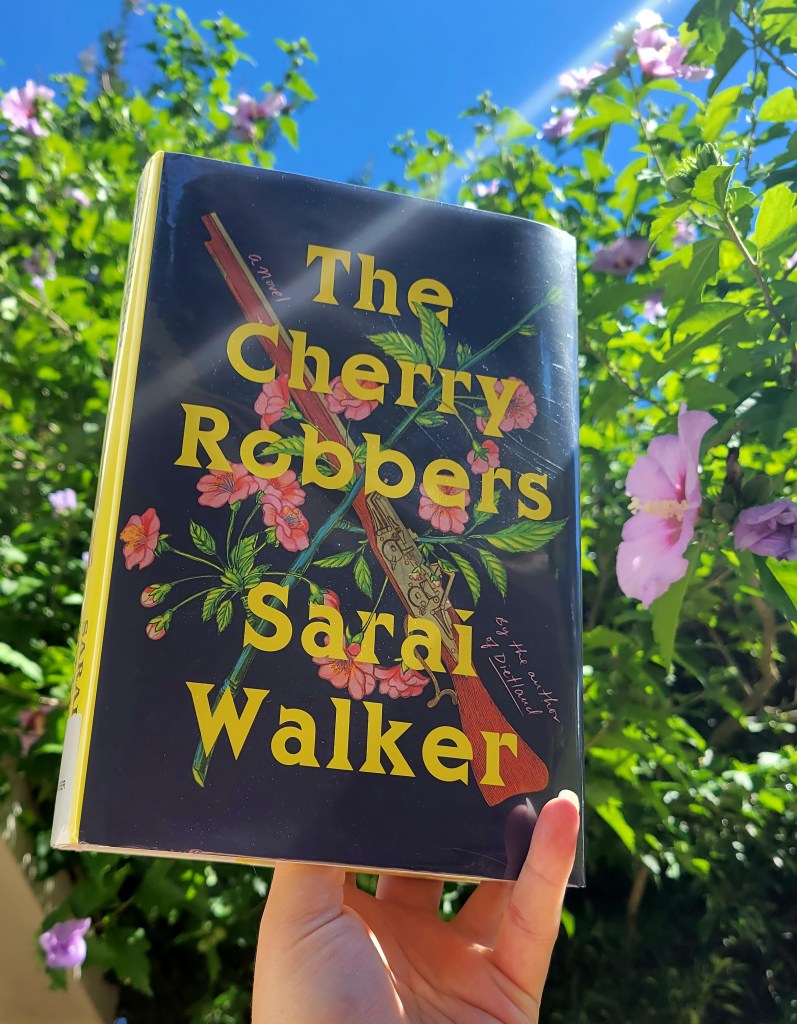
THE CHERRY ROBBERS – Sarai Walker

Sarai Walker’s The Cherry Robbers (Harper 2022) is a slow burn of a classic Gothic ghost story that just misses the mark.  I wanted to love it, and there are some fantastically crafted sections, but the overall feeling I was left with was “meh.”  That is due in large part to the lackluster and unsatisfactory ending and the wicked slow beginning.  Gothics have a slower pace, but the beginning of this novel is just painfully slow.

I don’t like the title.  I’ve read the D.H. Lawrence poem Walker is referring to and there is so much unrealized potential. We get there somewhat with cherry blossoms and a young sex scene and in a shade of lipstick, as well is in the female ghosts and there is, of course, the virginity of the girls that is a huge plot point, but… I don’t know.  I think I’d like to have seen more with the birds.  Belinda’s stuffed wren could very well have been a throstle or song thrush.  There are three dead birds in the poem and five dead sisters in the book.  A title could have been pulled from the works of Tennyson, a poet used throughout the book, or from “The Goblin Market,” which is also referenced and would have been perfect with its emphasis on sexuality and the leap between girlhood to womanhood.  The title is catchy, but it doesn’t work with the text.

I expected so much from the plot, and I know me well enough to know that’s why I’m disappointed.  Iris Chapel is one of the six Chapel heiresses to the Chapel firearms fortune. The family’s fortune comes from blood money, from the firearms that took many a life.  Iris’s mother, Belinda, with her own traumatic past, is forced to marry or be homeless.  Luck of the draw, she ends up marrying into the Chapel family and moving into the huge “wedding cake” of a Victorian home that becomes her cage. Belinda’s husband repeatedly insists that she fulfill her wifely duties, and she gives birth to six daughters, losing a bit of herself each time he touches her and dying a little with each pregnancy.   Belinda’s own mother died giving birth to her, and that trauma serves as a bridge connecting Belinda to the spirit world.  Those who died by Chapel firearms haunt her. I wish her story had been more prominent.

Belinda has a premonition that something horrible will happen to Aster if she marries.  Iris is the only one who believes her, and young Iris tries to delay the wedding by destroying wedding favors and wedding gifts.  The day after her wedding, Aster dies a horrific death after returning to the wedding cake Chapel home.  “The Chapel sisters: first they get married then they get buried.”   After Aster, comes Rosalind.  Then Calla.  Then Daphne, whose death is just a bit different.  Iris and Zelie try to outrun the curse, but Zelie falls in love with a man.  Then there’s just Iris, trying to outrun a ghost and the family curse.

Best scene: The sisters watching their father dig Aster’s grave.

Worst: When Walker writes “blood splatter” instead of “blood spatter.”  It would have been a great sentence if she’d used spatter. (It’s nitpicking, I know.)  It actually would make a great title for a different non-gothic book –  Blood Spatter and Pastry.

Do I recommend it?  Meh.