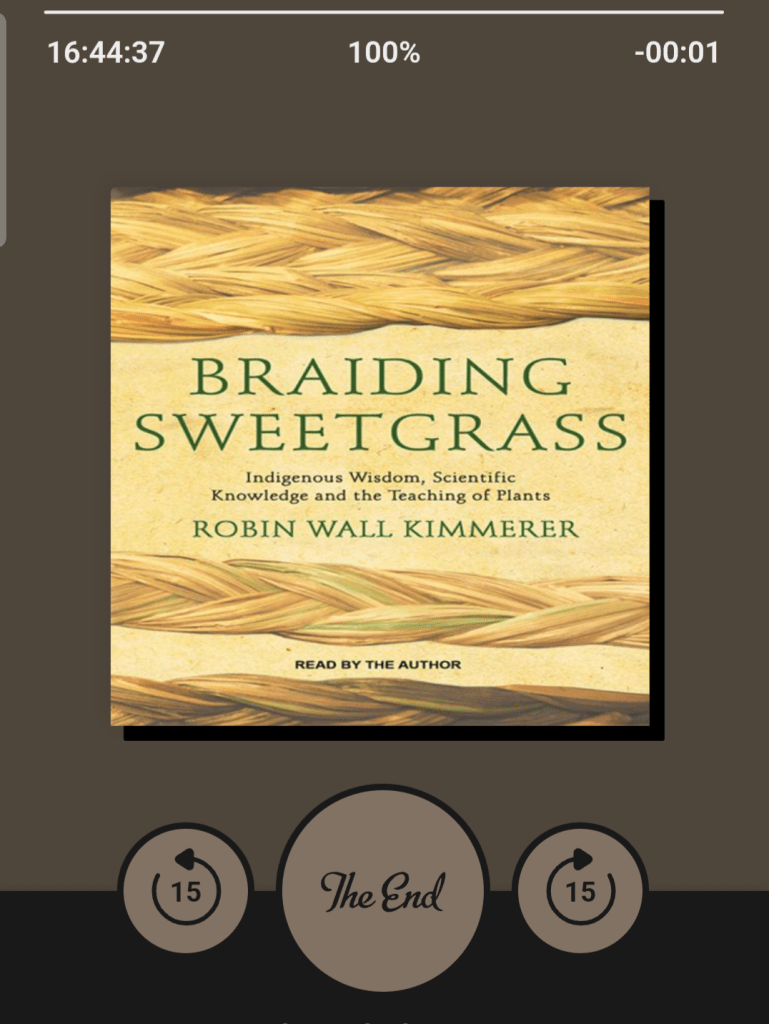
One of my 2025 resolutions is to read more non-fiction and to use mundane tasks as opportunities to be more intentional with my time. Enter audiobooks (and laundry!). My first read of the year was Robin Wall Kimmerer’s 2013 release, Braiding Sweetgrass: Indigenous Wisdom, Scientific Knowledge, and the Teachings of Plants (Milkweed Editions). Kimmerer, a poet and scientist, uses language, personal experiences, generational trauma, science, and oral traditions to echo a call to protect nature that has resounded since man decided to destroy it. The audio was narrated by Kimmerer, the warmth of her voice pulling the listener close, like children snuggled in bed awaiting fairytales or lit by the glow of a campfire breathlessly listening to ghost stories. And Braiding Sweetgrass certainly has its share of ghosts, villains, and heroes. The question it raises, however, is what role you will play as the future of the planet is written in the destruction and desolation of the past and the indifference and continued devastation of the present.
Never overly preachy though at times redundant, Kimmerer reminds us that we are stewards of the land and not owners, differentiates between gifts and commercialism and how gifts can impact society, and stresses the importance of a good and thankful harvest – this is an area I would like to improve upon in my life. I want to nurture the earth and grow things that in turn nurture me. I was raised to be grateful and thankful for the deer and fish that graced my table growing up as well as the butter beans in the pot and the hands that had shelled them. I was also taught the importance of sharing the harvest. That food was always far more delicious than what came from supermarket shelves. My thankfulness and appreciation were wrapped in faith and kissed by rural NC, but the concepts have the same sweetness.
My favorite section of the collection was “Witch Hazel,” which is a recollection of one of Kimmerer’s daughters about their time in Kentucky and Kimmerer’s friendship with a woman named Hazel. The descriptions of the abandoned home, with remnants of the lives that thrived there, and the connections with the people that were nurtured for years in that unspoken give and take of community were just beautifully depicted.
This is a call. A call of salamanders, geese, maple trees, and wild berries. A call to neither be a participant in the destruction nor a passive witness. Remember, there is no planet B.
Read this book.
 A Girl Named Tommi