“Remembering is an act of brilliant opposition.”
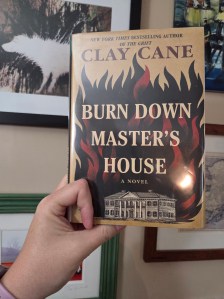
Clay Cane’s Burn Down Master’s House (Kensington Publishing Corp.) will make you extremely uncomfortable. Spoiler alert – it’s supposed to. No matter the attempts to erase the horrors of slavery from this country’s past, to whitewash the repeated crimes against black and brown bodies, the truth remains – and the truth is ugly. Cane isn’t hiding the ball here – he tells us exactly what this novel is and why it’s important. He breathes life into stolen lives and stories, pushing back against a narrative that folks continue to advance because it makes them “feel better” about this tainted past. Get uncomfortable.
The novel is based on true stories of enslaved peoples, and it follows their resistance and hope. As dreadful as it is, it barely scratches the surface of how horrific a life of a slave truly was. The novel opens with Henri, a young man who is sold to Magnolia Row, a plantation in Virginia, because he is unable to “perform” and impregnant another slave. (This concept of “breeding” slaves was common.) What follows is a rise to resistance and an uprising long remembered.
The next section of the novel follows Josephine, a young woman who ends up at another plantation after Magnolia Row is burned down. I think we all know how female slaves were used. She has fire in her eyes, and she spearheads another resistance.
Through Josephine, we meet Larkin, a former slave who is now a blacksmith in Gettysburg. Through him, we are introduced to Charity, a slave from Maryland who becomes his wife and tries to use PA law to advance her freedom. After years of a legal battle, Charity is “returned” to the man who claims ownership of her life and her offspring. It is through their children that another resistance is born.
The novel ends with Nathaniel, a Black slave owner. As he faces a swift justice for his own horrific crimes, a former slave from Magnolia Row, one involved in that initial uprising, shows up with the army.
And a fire still burns.
Read this book.
 A Girl Named Tommi