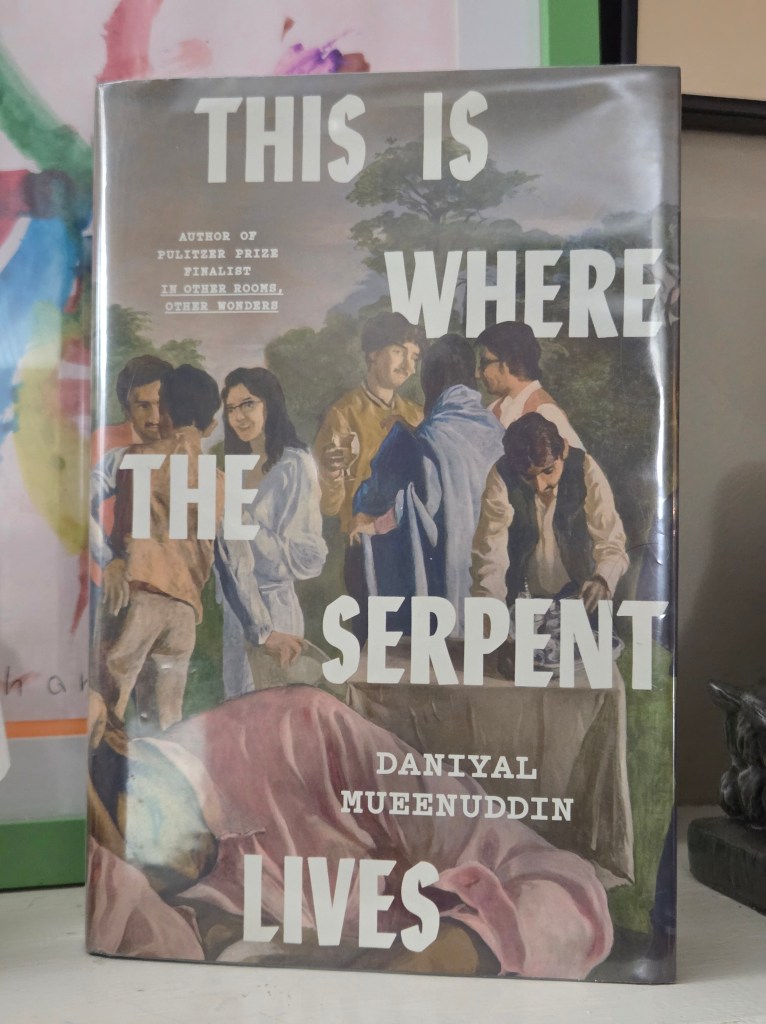
Daniyal Mueenuddin’s This is Where the Serpent Lives (Knopf 2026) reads like Chekhov wrote a Dickens’s plot. This highly anticipated debut novel by Mueenuddin, whose short story collection was a finalist for the National Book Award and the Pulitzer (among others), is likely to be a strong contender come awards season. Will it make the Booker longlist? I think it’s likely.
Consisting of essentially four interconnected novellas, This is Where the Serpent Lives spans 1955-2013, showcasing the feudal attitude of the elite, and the entitlement and influence they wielded while also centering the servants who run their homes, know their secrets, and clean up their messes. Yazid, found on the streets as a small boy and raised in a tea shop, is the anchor of the four novellas, though he is not the focus.
The opening novella “The Golden Boy” is Yazid’s story, and likely my favorite. Yazid reminded me a bit of Szalay’sIstvan, particularly in how Yazid holds the reader at arm’s length and handles his emotions. The second novella “Muscle” is my least favorite. It follows the American-educated Rustom who has to enlist his own thugs to protect his stronghold from a neighbor who has the authorities in his pocket. “The Clean Release” is the backstory of Rustom’s cousin, Hisham, and how he stole his wife from his brother. Yazid has been “passed down” to Hisham and is his servant, though Hisham does have issues with boundaries when its convenient for him. This was likely my second favorite of the four. The titular novella follows Saqib, the son of Hisham’s family’s gardener who has become a trusted servant and a bit of Hisham’s wife’s “pet.” As he comes more trusted, he begins to “cook the books,” siphoning off money until he’s caught and reminded that he will never be “one of them.”
The novel opens with an orphaned boy holding his shoes, a life starting over, and ends with a broken young man putting on his shoes, a life starting over. The shoes stuck with me for both.
It’s a remarkable novel, but the arm’s length approach combined with interconnected novella form kept me from being fully invested. I admire what Mueenuddin has done, but I didn’t love the novel.
 A Girl Named Tommi