“Yes, there will be violence. Yes, there will be tenderness. Yes, there will be rape.”
“Me tired of this. Me tired of running. Me tired of fighting, too.”
“We covering our tracks so good that even we can’t find the way back home.”
“So him just abracadabra and vanish or somebody disappear him?”
“This is how you do it. This is how you disappear completely. It’s not that you vanish, it’s that you make yourself into the kind of person nobody wants to see.”
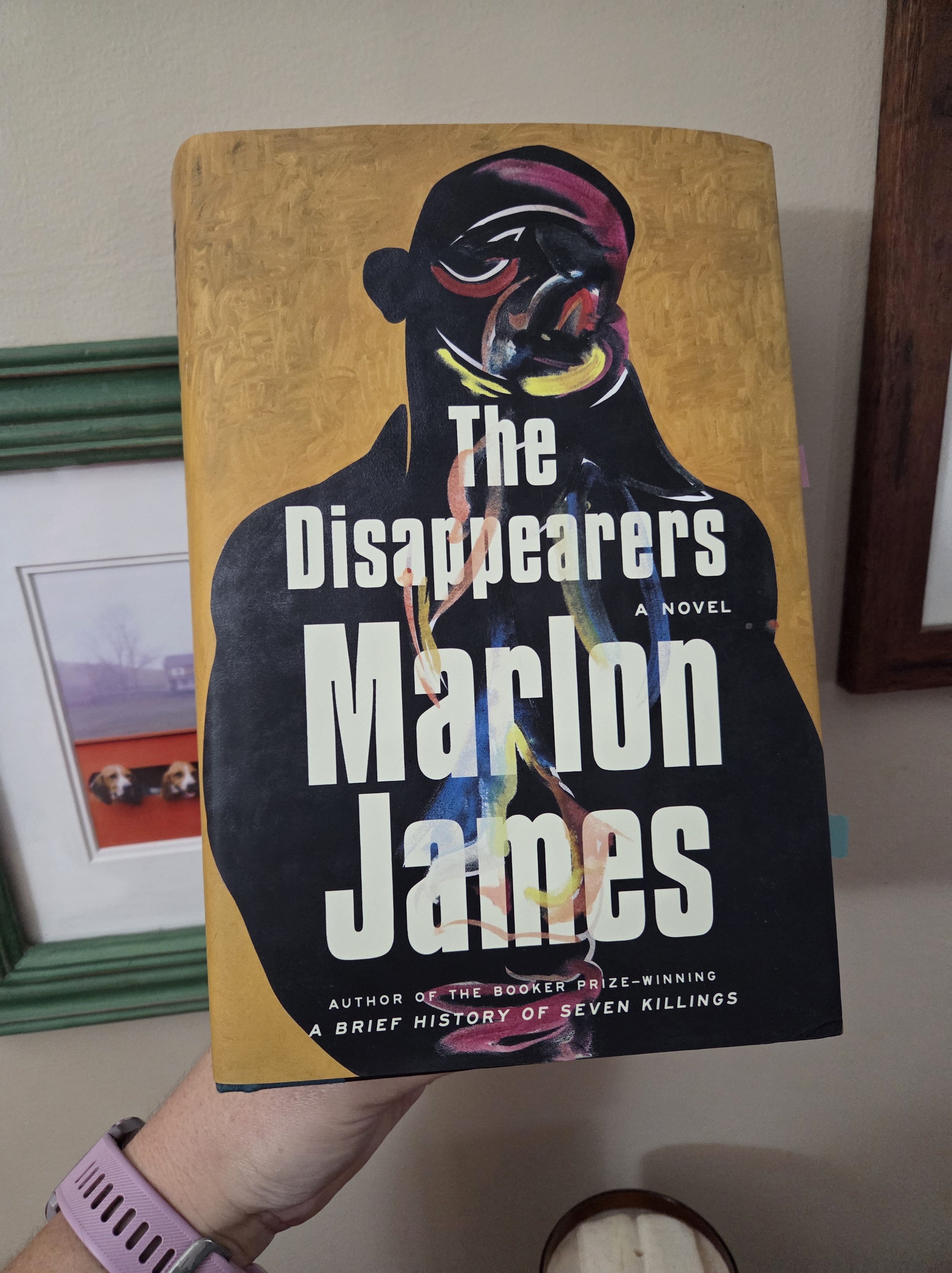
The longest book of the 2026 Booker longlist is also the hardest to read. Marlon James’s The Disappearers is extremely graphic in its violence and sex, quite often those two are overlapping. It is a teeth barred, LOOK AT ME approach that says “I am here. You will see me.” And man, is it effective. It’s not “fun” to read, I can’t imagine people enjoy reading about brutal attacks on young men, but how James writes, his craft in framing the story, is enjoyable for someone who loves literature.
And loving literature is at the heart of this novel and not just because it’s about a group of men who join together to put on a play – I lost count of the literary references. Eddy’s favorite book is Bret Easton Ellis’s Less than Zero (as someone who does not like the literary brat pack, I won’t hold it against him), but we also have Toni Morrison show up (both Beloved and Song of Solomon), Stephen King, Dickens (the A Christmas Carol reference ticks my Christmas nod. All but 2 from the longlist have a Christmas reference.) Wide Sargasso Sea (one of my favorite books ever), the Bronte sisters, Shakespeare, James Joyce, Joyce Carol Oates, The Count of Monte Cristo, and the Wilfred Owen poem “Dulce et Decorum Est.” A man dying from AIDS recites from “The Rime of the Ancient Mariner,” These are just a handful. This book loves literature. (And music.)
The novel opens with a 19-year-old boy’s journal. And then goes into brief, bold snippets of hate from those who attacked those who had gathered for the play. What follows are interviews with two of the actors. The next section is epistolary, featuring letters from the director of the play. The last section is divided into two parts. The first is in first person and the second is in second. It features two victims and how the trauma continues to impact them – both of them falling into madness. The novel spans 1988 – 2005.
There is much to be said about this novel that won’t fit in a caption, but I’ll simply close by saying I loved this novel. Read it. And then read it again.
For more of my thoughts, you can check out the other two posts about The Disappearers.

