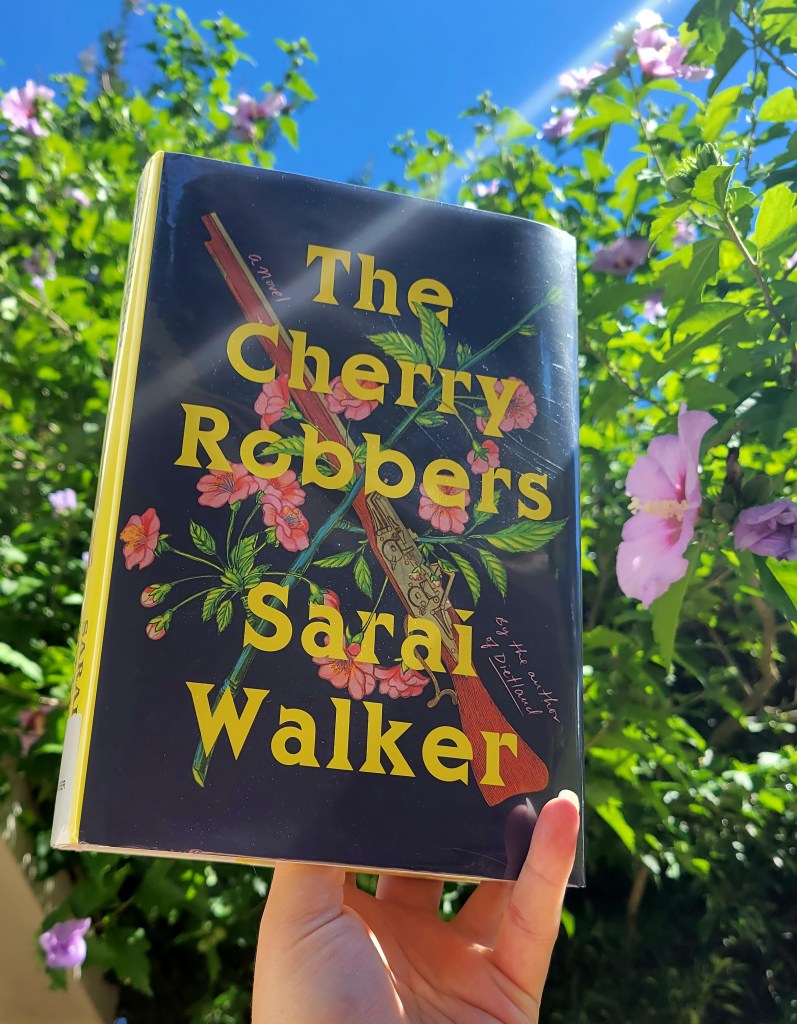
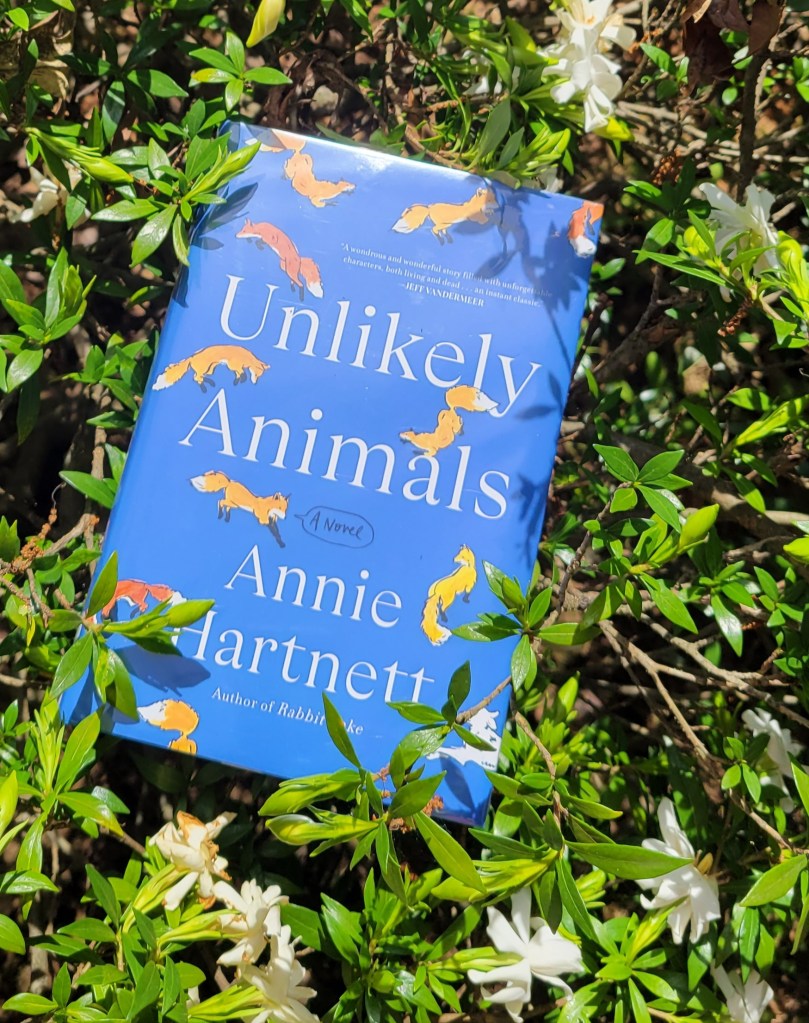
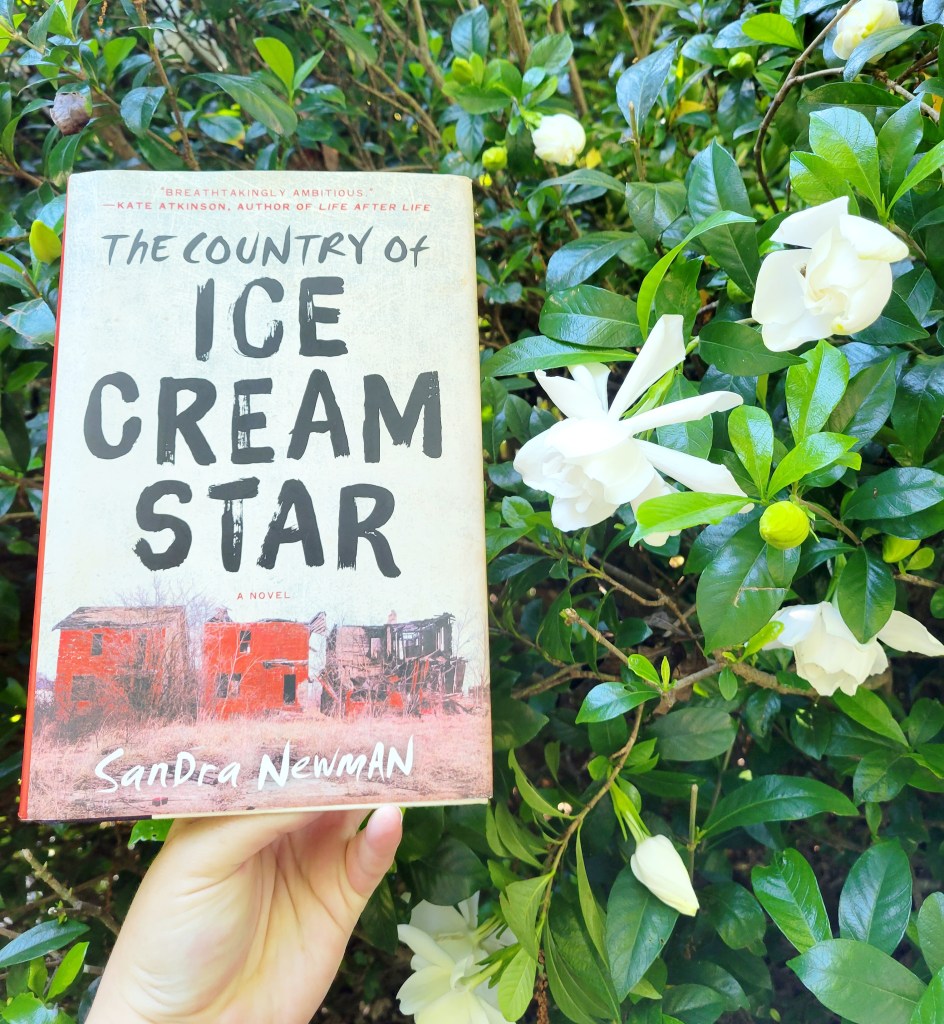
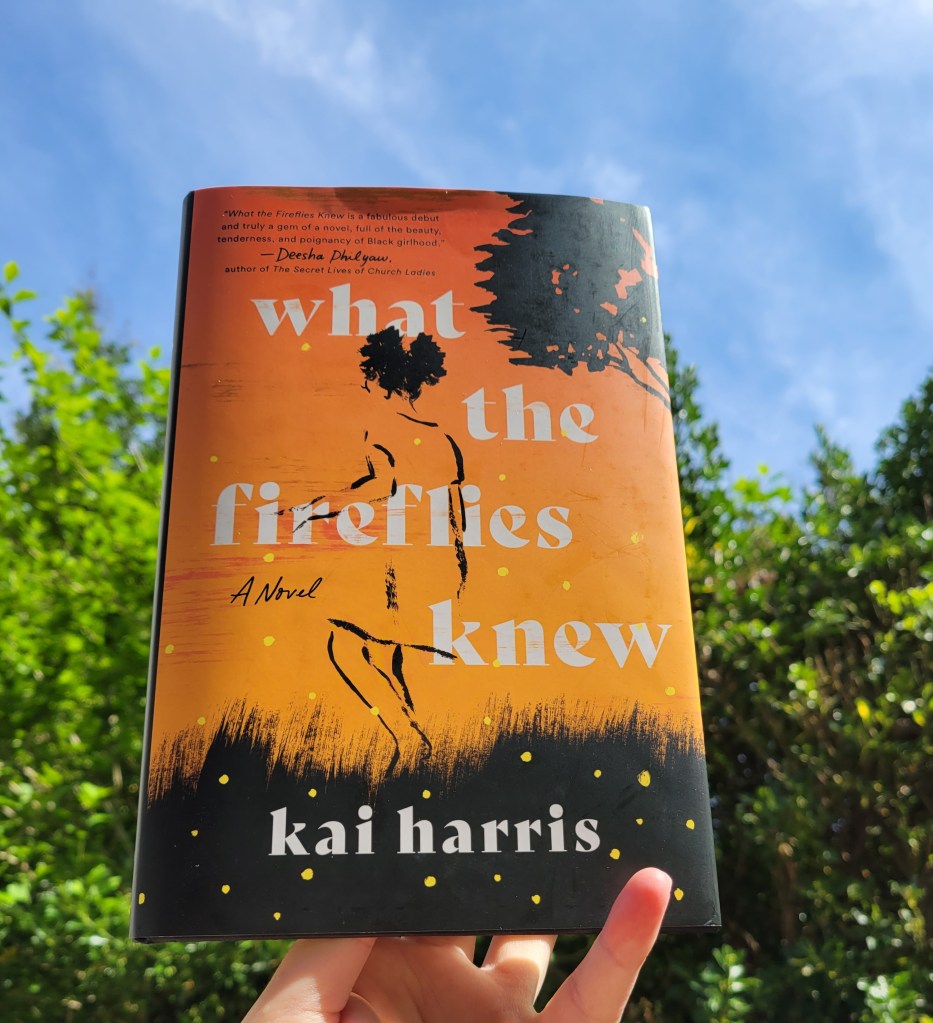
YOUNG MUNGO – Douglas Stuart

“He was Mo-Maw’s youngest son, but was also her confidant, her lady’s maid, and errand boy. He was her one flattering mirror, and her teenage diary, her electric blanket, her doormat. He was her best pal, the dog she hardly walked, and her greatest romance.”

Douglas Stuart’s follow-up to the Booker Prize-winning Shuggie Bain was a bit of a letdown.  Young Mungo (Grove Press 2022) is beautifully and tragically written, and it certainly cements Stuart as a talented voice, but Mungo is just another version of Shuggie, and I wanted to see something different.  When I read the initial blurbs about the love story between a young man named for a Saint known for restoring life to a bird and the young man who keeps doves, I was sold.  And while there are some sweetly nuanced firsts between these two, it doesn’t carry the novel.  The novel is carried, much like Shuggie, on a booze-soaked bruise that just keeps spreading.  It’s harsh and violent; the sweet and light so painfully limited.

SPOILERS AHEAD

When Mungo’s brother, Hamish, catches him in a compromising position with James, he chooses violence against his brother and especially against his brother’s young love.  Hamish tells their mother and sister what he’d witnessed.  Their mother, booze-addled and likely one of the worst fictional maternal figures in recent memories, allows two strange men from AA to take Mungo on a camping trip to make him a man.  Both men are pedophiles with rap sheets, and the nightmare of a “camping” trip is spread out throughout the novel, the harsh rapes a stark contrast to the depictions of young exploratory love between him and James. 

Hamish is a gang-leader and drug dealer who will always choose violence and family before anything else.  Jodie, the sister, is one of Mungo’s closest confidants, but she is eyeing her escape.  While her affair with the teacher and subsequent pregnancy (and abortion) were an interesting additions to the family dynamics, the fact she was given several POV chapters is jarring.  Perhaps if Hamish and James had sections, it would have fit a bit better.

Much of the pages seem pulled from Shuggie’s cutting room floor, and I couldn’t shake that feeling.  Even sweet James and his doves weren’t enough to dislodge the memory of Shuggie and his own drunk mother.

Based on reviews, this is a very unpopular opinion.  But I couldn’t love this one.  I just couldn’t.

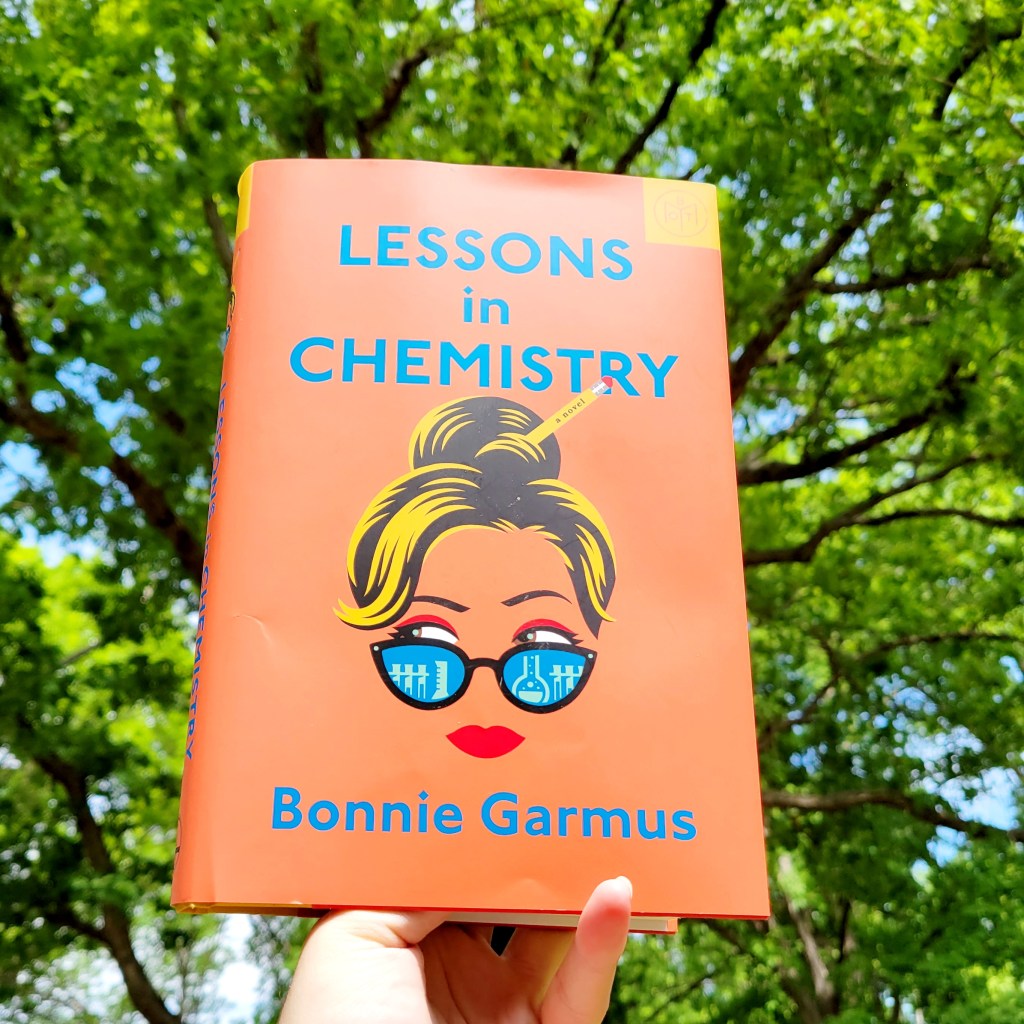
LESSONS IN CHEMISTRY – Bonnie Garmus

Bonnie Garmus’s Lessons in Chemistry (Doubleday 2022) proved to be quite a timely read considering the recent SCOTUS leak – not because it features an abortion, but because it is wrapped in the confines of discrimination that have long held women hostage.  I work in a male-dominated field.  I frequently have clients assume I’m the secretary/paralegal.  I’ve had male colleagues talk over me and present my legal analysis as their own.  I’ve been told that women belong in the kitchen, not a courtroom.  I was told in law school that only “pretty” attorneys should be trial attorneys.  Needless to say, I related to Elizabeth Zott quite a bit even though Garmus’s novel is set in the 1960s and is about a chemist.  

Elizabeth is one of the most memorable characters I’ve read in a while.  She’s quirky.  Independent.  Fierce. Intelligent. And a survivor.  The novel is full of horrific scenes: rape, sexual assault, intense sexual harassment in the workplace, etc., but there is a lightness in the grit that makes this novel phenomenal.  The storytelling element, and the voices, remind me quite a bit of Fredrick Backman, and I know that is a huge part of why I loved this novel so much.

Elizabeth Zott is a chemist who loses her job when she gets pregnant.  She struggles to make ends meet as a single mother after a tragic accident claims the love of her life.  Desperate, she swallows her pride and asks for her job back.  Despite her expert knowledge, she is discredited, and her work stolen. When an opportunity arises that pays more, she takes it even though it’s everything she is against.  And that is how Elizabeth Zott becomes the reluctant star of Supper at Six.

There are some interesting characters and friendships that develop, but the most charming of characters is the dog.  Six-Thirty was a bomb-sniffing dog who failed and was abandoned as useless.  Elizabeth sets out to teach him as many words as possible.  Named for the exact time he entered their lives after a misunderstanding, Six-Thirty is devoted to his family.  (The dog does NOT die.) Elizabeth’s daughter is also named following a misunderstanding.  Elizabeth didn’t realize she was being asked the name when she responded “mad,” but Mad Zott the name became. 

The novel is quirky and gritty, a cutting and charming slice of life that is certainly in my top reads.

Read this book.

SEEKING FORTUNE ELSEWHERE – Sindya Bhanoo

Two short story collections in one month?  Who am I?!?!

Short story collections are underrated.  The tight writing and one-sitting reads make them perfect to get out of reading slumps and to serve as palate cleansers.  I really should add more to my TBR.  Catapult sent me Sindya Bhanoo’s collection, Seeking Fortune Elsewhere (2022), and it was exactly what I needed to end the month on a high note.

The eight story collection opens with “Malliga Homes,” a story about a senior living community in Coimbatore, India.  The narrator, a widow whose daughter lives in the US, wears a mask of contentedness that slips just a tad when she watches one of the resident’s die.  She remembers how it used to be – how children cared for their parents when the time came, how families cared for each other. But the younger generation has left India, for bigger and better – America, Australia, Europe – seeking their fortune elsewhere, leaving their parents alone. She is alone.

The hollowness and feigned happiness echo through the rest of the collection; many of the characters are kissed with a bit of unease and regret as they realize the grass isn’t always greener, and the fortunes are sometimes just cheap trinkets. 

I found “Nature Exchange” the most exquisitely painful of the collection as it deals with the loss of a young child and the different ways we process our grief.  “Amma” and “Buddymoon” were also favorites.  The first dealt with a bullied child who becomes a famous actress and then political figure – the story is told from the POV of one of the classmates who struggles with guilt.  “Buddymoon” focuses on a woman who’d given her husband custody following their divorce; the story is set at her daughter’s wedding.

The stories are delicate, the emotions coaxed to just below the surface.  They’re fragile reads, easily bruised if care is not taken, but they are powerful.

Read this book.

BLACK CAKE – Charmaine Wilkerson

Spanning more than half a century, Charmaine Wilkerson’s Black Cake (Ballantine Books 2022) is a sprawling family saga about family legacies, secrets, and treasures all wrapped up in those ties that bind.  There’s a slow burn of a mystery that vibrates on the surface, but the heart of the novel is in the delicate threads of family spidering out from Covey.  It’s a good novel to enter blindly, so here’s your warning.

The novel opens with two estranged siblings brought together by their mother’s attorney after her passing.  She’d recorded a message for them.  Benny and Bryon learn not only that they have another sibling, but that their mother and father had been living under assumed identities.  The overriding mystery is who killed Covey’s first husband on their wedding day.  Covey, who fled the ceremony and was presumed to be dead, was the main suspect.  She left the island, wrapped in a cloak of fierce love and loyalty, and was given a new life.  Covey would face another “death” and again, love would wrap around her and provide yet another life, this time with a familiar face.

There are a lot of relationships in the novel, but my favorite is Bunny and Covey.  While I know it wasn’t the hook of the novel, I wish there had been less Benny and Byron and far more Bunny.  Their relationship reminded me of Idgie and Ruth from Fried Green Tomatoes, and I craved more of that bond.

The novel POV-jumps and dances around a timeline, and some of the transitions aren’t as smooth as I would like, but Wilkerson writes in such a comforting and familiar manner that you don’t lose the thread.  What I find the most problematic is the sheer number of different triggering events spanning the many characters.  There’s rape, domestic violence, child abuse, police brutality, a few assaults, human trafficking, workplace discrimination and sexism, racial discrimination, post-colonial/diaspora issues, suicide, depression, infertility, etc.  This goes back to me saying I wish there’d been less Byron and Benny.

That said, it’s a solid debut.

Read this book.

A TOWN CALLED SOLACE – Mary Lawson

I set a goal last year to read all the 2021 longlisted Booker Prize books.  The delay in US publishing meant my goal spilled over into 2022, but I’m still chipping away.  After Mary Lawson’s A Town Called Solace (Knopf Canada 2021), only one remains from the list, and I’m curious to see if I end on a better note than I started.  (I hated Second Place.)  Had I saved A Town Called Solace for last, the reading experience would indeed have been book-ended with two books I did not enjoy. I cannot fathom how A Town Called Solace made the list, unless it was nostalgia for a work that was nominated but did not win in years past.  I can tell from reviews this is an unpopular opinion, but this was not an enjoyable book; it has an identity crisis.

The novel takes a wholesome and sweet small town, ripe for a cozy mystery, and implants unlikeable and sinister characters. While blurring the lines between the two is an interesting concept, it reads as disjointed and not intentional in this work.

Stop now if you don’t want spoilers.

The novel alternates between Cara, Elizabeth, and Liam.  Elizabeth’s POV could have been entirely removed from the novel.  Her sections are jarring and out of the timeline.  (She’s already dead in Liam’s and Cara’s sections.)  More disturbing is that she’s a caricature of a child-stealing infertile woman grown old.  She’s unreliable and unlikeable.  Her role in the plot could have readily been reduced to Liam being left the house and remembering her and wondering what had happened.  A well-placed article. An angry conversation with his mom.  There were lots of ways to get there.

Liam himself is an unpleasant character.  He didn’t initially seem that way, but there is an unexpected shift in his sections.  There is also a significant amount of fatphobic and sexist language in his sections, and his redemption arc is more of a squiggle.

Cara is the most likeable character, and she’s an eight-year-old whose older sister has run away and whose parents aren’t telling her anything – including when Elizabeth dies.  Cara has been feeding the cat, Moses, and her parents say nothing.  Not even when Liam moves into the home, and Cara begins sneaking around to ensure Moses gets taken care of. They don’t even tell their new neighbor that their daughter has been feeding the cat or that there even is a cat.

What happens to Cara’s sister, Rose, is horrific, but the sex trafficking is reduced to a couple of sentences, and her return is overshadowed by Liam’s decision to stay.

The more I think about this book, the more I dislike it.

FEVERED STAR – Rebecca Roanhorse

“We are but fevered stars… Here a little while, bright with promise, before we burn away.”

I preordered Rebecca Roanhorse’s Fevered Star (SAGA PRESS 2022) after reading Black Sun.  Much like the first of the series, Fevered Star, the second in the Between Earth and Sky series,is full of strong female characters, magic, politics, and prophecies.  I adored Black Sun, and while Fevered Star is an acceptable follow-up, it fell just a bit short; it seemed like a series of rushed steppingstones to get to a third installment.  That said, it was still fantastic.

The novel opens just after the events of Black Sun.  It still follows Serapio, who has become a god.  He has been taken in by the Carrion Crow following the events that should have destroyed him. There is a wound in his side that will not heal, but his magic and strength grow.

Naranpa, the dethroned Sun Priestess, also managed to survive.  She has been “god touched” and her powers are unexpected and fierce.  She is becoming a god.

The other clans are rallying – seeking an overthrow and complete control.  They’re trying to figure out how to yield Serapio and Naranpa, once her powers are revealed, as weapons of war .  This struggle sits just beneath the struggle between shadow (Serapio) and light (Naranpa) – a war of the gods that would drown out the cries of the people.

Xiala the Teek and Iktan the former Knife are a surprising pair.  In Black Sun, Xiala journeyed over water with Serapio and developed a strong bond with him.  In Fevered Star, she journeys over land with Iktan and equally develops a bond with xir.  Through their friendship, we learn more about Teeks, including their weaknesses and their Song.

Based on the ending of Fevered Star, I anticipate the third novel to focus primarily on Xiala and the Teeks, Spearmaidens, and the Sorcerers as secrets are revealed and war continues to brew.

Roanhorse’s writing is sharp, and the rich and layered world she’s built is distinctly unique.  I’m in this one for the long haul. Read this

BEARTOWN – Fredrik Backman

“Late one evening toward the end of March, a teenager picked up a double-barreled shotgun, walked into the forest, put the gun to someone else’s forehead, and pulled the trigger.

This is the story of how we got there.”

With perhaps the most memorable of openings, Fredrik Backman begins Beartown (Atria 2017, English translation by Neil Smith. Originally published in Swedish, Bjӧrnstad 2016) with a bang. This is my fourth Backman novel, and I can say without hesitation that he is one of my top five authors. Your first Backman is always your favorite because he’s such a special writer, and that first experience with his storytelling style settles tight around your heart.  For many, their first was Beartown.  My first was A Man Called Ove, and that remains my favorite simply because it was my first.  Backman is that good.

I’ve said before that Backman is a “heartbeat author” and that “his books are hugs, eyelash kisses, and belly laughs.” But he’s also a “heartbreak author” and his books, especially Beartown, are tinged with anger, grief, and despair.  His characters and communities are so perfectly imperfect, and his storytelling style, the love and humor and warmth, is what makes a book about a rape in hockey town so fantastic.

Beartown is a small forest town in Sweden that lives and breathes hockey, because junior hockey is all they have. If they can just get a successful team, they’ll get sponsors, and hockey money will breathe new life into the struggling town.  The team of young boys is one win away when the daughter of the GM tells her father that the star player raped her.

Lines are drawn. Is hockey more important than a young girl? Sides must be chosen, and it nearly rips the town and team apart.

Beartown is the first of a trilogy, and the final installment is set for publication at the end of this year.  The second, Us Against You, is on my TBR for early fall just because I like to space my Backman reads out.

Read this book. 

A CONSPIRACY OF MOTHERS – Collen van Niekerk

South African. Historical. Magical Realism. 

Colleen Van Niekerk’s A Conspiracy of Mothers (Little A 2021) is a novel of mothers and the lengths they will go to protect their children.  It’s a novel of magic and calling on the ancestors. It’s a novel of Black, coloured, and white.  It’s a novel of forbidden love, violent attacks, and choices. It’s a novel about the sins of the fathers.

It’s a novel of apartheid.

The novel opens in Virginia with a broken woman fighting the demons of her past and the voice of her mother calling her home.  Yolanda fled South Africa after she was attacked and raped by a group of men.  She left behind a young daughter, Ingrid, who was the product of an illegal and dangerous love affair with a Boer.  Yolanda hasn’t been home in 18 years.  But now, her mother is calling her, her voice carried in the night, and Yolanda knows something is wrong.  She must return home.  She will do anything to protect her daughter.

Rachel is sick, but she hasn’t told anyone.  She knows before she dies she has to fix what was broken, to bring Yolanda back to life and back to South Africa.  A resurrection and a prodigal daughter.  She makes the preparations and calls on the ancestors and the magic that vibrates in her old bones.  What life cancer has left her will be the cost for the magic she needs. She will do anything to protect her daughter.

Elsa is Ingrid’s other grandmother.  Rachel’s magic has reached her, and she knows Yolanda is coming.  She hires a dangerous man to take care of the problem.  She will do anything to protect her son.  She’s done it before, and she’ll do it again – no matter the cost.

Ingrid is a young woman in a different South Africa than the one her mother was raised in.  She’d been led to believe both her parents died when she was little.  When her grandmother disappears, leaving the truth in her wake, Ingrid is enraged – both of her parents are alive and her life has been a lie.  Consumed by anger, she turns her back on her mother and seeks out her Boer father.

It is a well-written book that shows the scars and the heartbeats of South Africa during apartheid and up through 1994 with country in political turmoil. It drags just a bit in the beginning as the scene is set, but stick with it.  You won’t be disappointed. 

Read this book.

TRUE BIZ – Sara Nović

I’ve read a lot of books in the past almost four decades, and I can say with absolute certainty that none of them were like Sara Nović’s True Biz (Random House 2022); deaf representation has been woeful absent in my literary canon.  This book is… I’m not sure I can find the words.

Part teenage angst and rebellion, part women’s fiction, part mystery, part YA romance, part history lesson and all love letter to the deaf community – this is an “own voice” novel, and Nović’s experiences, frustration and anger bleed through.

The novel focuses on February, a ‘coda’ who longed to be deaf to the point of shoving a pencil in her ear to stop the noise. She grows up to become headmistress of River Valley School for the Death.  She lives with her wife, Mel, and her deaf mother on school grounds. Her mother is suffering from dementia, a new school year is starting, there are serious budgetary concerns, and an ex is teaching at the school. February is just a touch stressed.

Austin is a legacy kid, with deafness going back in his family tree for generations. His mother had broken tradition and married a hearing man, but the family takes pride in the fact that Austin was born his deaf.  He has been given every accommodation and opportunity to be successful in life.  When a surprise pregnancy gives him a hearing sister, the family must make some difficult choices.

Charlie is a bitter and angry kid.  The cochlear implant her mother had insisted on when she was a toddler has never worked as intended, and her hearing world is a disjointed buzz.  She’s never learned ASL and has spent her life mainstreamed in a hearing world where she is forced to rely on lipreading and failing miserably.  After a custody battle, she is enrolled in River Valley, and February enlists Austin to show her around.

The novel opens with Austin, Charlie, and another River Valley teen missing and February dealing with the police.  What follows is what led up to that moment and the aftermath.

True Biz is ASL slang that roughly translates into “real talk,” “seriously,” “really.”  Nestled between the chapters are lessons from Charlie’s ASL class, lessons from February’s remedial history class on deafness, information provided by Charlie’s roommate on BASL, a social media entry from the popular “mean girl,” and other perfect additions to the story.

This book is a visual and interactive genre-hopping experience that you’re unlikely to forget.

Read this book.

PROOF OF ME & OTHER STORIES – Erica Plouffe Lazure

Erica Plouffe Lazure’s Proof of Me & Other Stories (New American Press 2022) cements her rightful place as one of my favorite southern contemporary short story authors. We studied at ECU together and I’ve been a fan since that first story we workshopped.  I’ve previously compared her work to Bobbie Ann Mason and Flannery O’Connor, and that Southern grotesque wit and charm that they are so known for just oozes from the pages of this new collection.

I’d read some of the stories before because they’d been published in other journals, and “The Shit Branch,” which first appeared in Tahoma Journal is still my favorite thing Lazure has ever written. It’s about family and missing pieces and misunderstandings and missed chances.  And that’s a theme that echoes throughout the series of stories that weave in and out of each other, consistently bringing us home to Mewborn, a small town in eastern NC, and its colorful cast of inhabitants.

I couldn’t get “Annealed” out of my head because it’s cleverly written, but also of how much it reminded me of O’Connor’s “Good Country People.”  But instead of a crooked Bible salesman who steals Joy’s prosthetic, we have the skate-boarding Juniper who steals the narrator’s scabs (and money), but untethers her from cheating husband who has finally left and a life that was weighing her down.

There are Shad queens and affairs. Marching bands and suicides.  Pancake suppers and overdoses.  There are dreams and prodigal sons.  There are baby shower decorations and secrets buried in a family swamp.  The pages are littered with the broken, discarded and lost – from stuffed ducks and Monopoly pieces to innocence and hearts.

Read this collection.