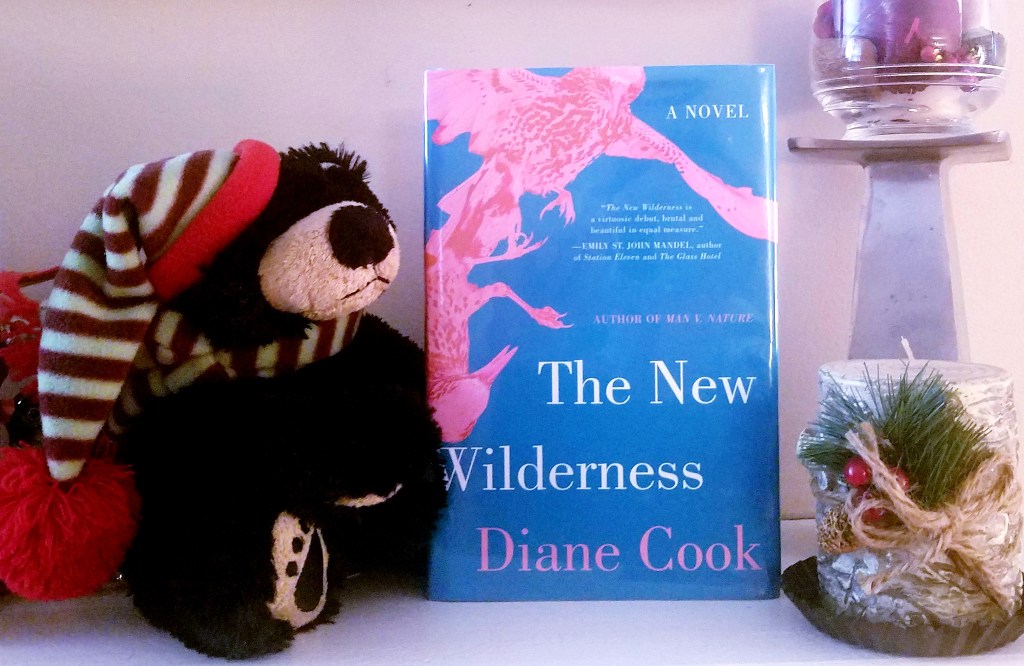
TRISTAN STRONG DESTROYS THE WORLD – Kwame Mbalia

In January of this year, I posted a review of Kwame Mbalia’s Tristan Strong Punches a Hole in the Sky.  In that review, I encouraged everyone to read the book and to it in little hands.  Representation matters, and the literary world needed (and still needs) that “nerdy, black kid from Chicago.”  

In February, I pre-ordered the second installment of the trilogy.  From the lime green cover hidden beneath the dust jacket and the illustrated map to the dedication, “For the stories across the Diaspora, and the elders who carried them,” I was again smitten.

Tristan Strong Destroys the World has the same powerful “punch” as the first book. The POV and Tristan’s voice is consistently fantastic throughout the entire novel, even when the reader is getting a little taste of history or commentary on the current state of affairs.  And that is why it is such a brilliant series; it’s not heavy-handed because it doesn’t have to be.

Tristan Strong Destroys the World is set two weeks after Tristan returns to his world (it’s much a much longer time in Alke).  He is still in Alabama, sent there to deal with the “trauma” he’d suffered when his best friend died and now dealing with the new trauma of his experiences in Alke.

Water spirits show up in the barn, seeking his help.  Tristan thought the hole between the realms had been patched, but there they were. And then the plat eyes come.  And finally, his Nana is stolen by the Shamble Man.  Tristan has no choice but to return to Alke, where destruction and despair meet him at every turn.

Gum Baby is back and as mouthy and fantastic as ever. Ayanna and Anansi continue to have prominent roles. Miss Sarah and Miss Rose, John Henry, Chestnutt, Nayame and even King Cotton make appearances, but we also have new characters and their stories in Keelboat Annie, Lady Night the boo hag, Brer Bear, and Mami Wata.  The African legends carried to Caribbean and the American South and places like Gullah Island, dancing and blending and growing as the stories are told and retold, all find a home in Alke.

“Nana,” I said slowly. “Can a whole bunch of people experience trauma at the same time?”

A sad smile crossed her face. “Of course, baby. Sometimes an evil will rock a community, strip their will and feeling right from them, until they’re raw and bleeding and hurting, inside and out.  Tulsa, Oklahoma.  Ferguson, Missouri.  Oh yes, baby, a whole city can hurt at once.”

“And…how does a city like that – I mean, how do they all heal?”

Nana sighed.  “Well, it’s like I said, just on a larger scale. At some point, it needs to be talked about.”

I thought about the spirits in the barn.  The horror on their faces.  They’d fled from something – something that affected them all.  I clenched my fists. I needed to talk to them.

I was an Anansesem, after all. Finding and carrying other people’s stories was sort of my thing.

Storytelling is the heartbeat for people the world over, and it is a tradition we cannot afford to lose.  Tell the stories.  Let them read. 

THE INVISIBLE LIFE OF ADDIE LARUE – V.E. Schwab

“Because happiness is brief, and history is lasting, and in the end,” he says, “everyone wants to be remembered.” 

“I saw an elephant in Paris.”

V.E. Schwab’s The Invisible Life of Addie LaRue (Oct 2020) certainly received a lot of hype as its publication date approached.  I saw ARCs of this book EVERYWHERE.  It was one of Book of the Month’s October selections, and their adverts were on every media platform.  (And BOTM folks received it before the publication date, which I suppose is a nice little bonus to the subscription.  I am not a subscriber.) Described as the “Most anticipated book of 2020”, I had removed the book from my radar months ago.   I frequently find myself horribly disappointed by over-hyped books, so I wasn’t going to bother.  But something changed.  Maybe it was FOMO.  I’m not sure.  But I placed the pre-order and waited.

And I am ever so glad I did.  Is it my favorite book to come out of 2020?  No.  But it’s damn close, and that is certainly saying something.

The premise is relatively simple – a Faustian bargain is made and a young girl who is so afraid of missing out on life is granted immortality, but the devil is always in the details; Addie LaRue will live forever, but no one will remember her – she can’t even say her own name.  It takes Addie centuries to adjust, but she learns to operate within the confines of the rules of the game the darkness designed.  She steals what she needs, and spends years learning the cities she temporarily calls home.  She leaves no footprints, but she can leave ideas. 

In an argument with Luc, the green-eyed god who answered in the dark and granted her request, she claims they are nothing alike.  “I am a muse, and you are a thief.”  She uses her words as weapons, but it is nearly impossibly to hurt the devil.  She doesn’t realize that he is both a muse and a thief, and so is she.

Their relationship, centuries in the making, is a slow burn that breathes fire and darkness and light, yes light, into the novel.  Luc steals her name, and she gives him his; they each own the other.  The artists and the poets, the lovers and the dreamers, turn to them both.  She leaves stars in their eyes, the galaxy on her face appearing in their work over and over again. Timeless, they call her.  He makes the bargains that realize the greatness.  He puts her in their paths.  He made her the muse; all the while, she thought she was winning.

When she meets Henry, the boy who remembers, she thinks she has a won.  But he’s made his own deal, and he’s living on borrowed time.  He, too, was a gift – after 300 years, Luc’s allowed her name to be spoken, to be written, to be remembered.  Over the centuries, they’ve become nearly matched in the chess game they’ve been playing.

The issues I had with the book were minor.  Henry’s chapters were an unnecessary distraction from what is and always was Addie’s story.  His bargain and the ticking of his clock, as well her use of his hand to tell her story were unsurprising.  The reader didn’t need to see his bargain; Addie’s response to learning of it after the reader long suspected it is certainly sufficient.  Also, having Faust referenced, and not in a conversation between the two people who actually made a deal with the devil, was a bit too on the nose.  Both of these “flaws” are extremely minor, and I find this rather a remarkable book.

Where it soars, however, is not in the plot or the history, but in the writing.  V.E. Schwab’s use of language is positively delicious.  It drips down your chin like a sun-ripened peach.  It melts in your mouth like rich chocolate bonbons stolen from a lady’s bedside table.   I could eat her words all day.

METALLIC RED- Jennifer Ann Shore

“Humans were equal parts fragile and reckless, and they seemed unable to reconcile the two.”

What happens if you mix a little bit of Mean Girls with a bit of Charlaine Harris and a hint of Anne Rice?  You *finally* get the YA vampire book that we’ve all deserved.  Yeah.  I said it, and Metallic Red (2020) by Jennifer Ann Shore is a sweet reminder that traditional publishing doesn’t always get it right.  (Don’t sleep on the Indies.)

Mina Byron is a rarity.  She is the half-human, half-vampire niece of the vampire King of Appalachia.  As his only heir, she’s led a rather isolated existence with little to no involvement with the human world.  In an effort to explore the part of her identity that her parents wish didn’t exist, she convinces her uncle to allow her to attend high school.  Unlike her parents, he’s encouraged her to embrace her humanness, but that doesn’t mean he’s a push over; he sets his own terms and drives a hard bargain.

Mina does her best to go unnoticed on her first day of high school, but she makes the mistake of not only sitting in Brooklyn Winters seat but in catching the eye of Charlie, Brooklyn’s love interest.  Mina’s human-side does very non-vampire-y things when she sees Charlie.  Maybe it’s because it was just October 3rd, but the Mean Girls vibes, especially with Charlie’s hair, were an unexpected delight.

Mina being torn between two identities and two men but still remaining a badass (that metallic red pantsuit! Killer!)  and never once being whiny was also an unexpected delight.  She speaks her mind.  She takes risks. She is not driven by her desire for approval by the men in her life.  And despite not being raised to comprehend human social norms, she adjusts quickly and learns the value of meaningful relationships.  Can we all get an Eloise, please? 

Much like Mina has to reconcile her human-side with her vampire side, blend them so as not to deny one over the over, the reader has to reconcile the high school drama with some serious vampire world plotlines.  The fact that Mina is concerned about the homecoming dance just after an event that literally shakes the vampire world to its core is so bloody realistic; we all remember high school and those questionable priorities of youth. I think forcing the reader to mirror Mina’s split condition is where the book excels.  There are some parts that are a little clunky and some parts that are begging to be fleshed out more, but this novel is a biting success.  I was very excited to see there will be more Mina and hopefully more Eloise.  And Theo.  (A vampire who has just a touch of witch in him?  Yes, please.)

I wanted a vampire book for October, and I randomly selected one.  It did not disappoint.  Get this book in your hands now.

THE WIVES – Tarryn Fisher

We’re all fucked up, every single one of us, I think.”

Warning: This post will contain spoilers. 

Confession:  While I enjoy a good psychological thriller once in a blue moon (there’s a reason I read this in October!), it’s not a genre that really floats my boat.  And I typically hate unreliable narrators.

Bonus Confession: I have never read a single Tarryn Fisher book.  Until now. 

Last chance.  Don’t say I didn’t warn you.

The Wives (2019) is about what you expect it to be – a psychological thriller with an unreliable female narrator whose mania and delusions are apparent rather early on.

Fisher’s writing is sharp and biting, with a quick pace that I find necessary for thrillers.  In a world of Sister Wives and similar polygamist families gracing our screens on “reality” shows, I found the premise at once intriguing.  The premise and writing made for a quick Saturday afternoon read.

Thursday is one of three wives.  Her husband, Seth, is also married to Tuesday (his first wife) and Monday (his third wife who is currently pregnant).  While the women know about each other, they have zero interaction; they don’t even know each other’s names.

But Thursday is an envious and curious creature.  When she finds an invoice with a woman’s name on it, she realizes she’s uncovered Monday’s identity.  Let the stalking commence.  After being able to glean much from social media, she goes to the house at the address on the invoice. In a moment that would require you suspend your disbelief, Monday (who is really Hannah) invites Thursday into her home.  They become friends.  Hannah expresses concerns about her marriage and her husband’s temper, and Thursday sees the bruises on the woman’s arm and face.

Thursday becomes consumed by Hannah, and the intense satisfaction of knowing about that part of Seth’s world is so addictive that she seeks out Tuesday (who is really Regina, an attorney).  She attempts to book a consult with her, but it can’t be scheduled for three weeks.  Accordingly, Thursday does as any warm-blooded woman would do and creates a fake dating profile to catfish her husband’s other wife.

The story Thursday would have you believe is that Seth is from a polygamist family.  That Regina didn’t want children, but he did.  That he brought Thursday into the mix to grow his family.  That she lost their baby quite heartbreakingly and had a medically required hysterectomy.  And he’d married Hannah, who was pregnant with the child Regina didn’t want to give him and Thursday hadn’t been able to give him. 

This is the lie peppered in truths that consumes her entire existence, and the reader realizes rather quickly that Thursday isn’t reliable.  As her mania spirals and the delusions are exposed, I felt a twinge of disappointment; mental health shouldn’t be a cheap plot device, especially a break from reality for which the catalyst was a tragic miscarriage in the second trimester.  But there are ways it can be done and done well. 

Where I think Fisher has elevated her use of the device is in the unreliability and unfaithfulness of Seth and in the unreliability and bitterness of Regina; both intentionally fed Thursday’s delusions and both suffered for how they intentionally manipulated an “unwell” woman. 

The Yellow Wallpaper” is a prime example of how mental health can be used as a plot device that doesn’t feel cheap.  While not a novel and more gothic than thriller, it depicts the “hysterics” of a woman gone mad following giving birth.  (I’m of the opinion the baby died, ‘Mary’ is the Virgin Mary, and the postpartum combined with grief birthed the madness in the nursery that had been meant for the baby.  But that’s a discussion for another time.)  The point is this isn’t a new or novel; the “madness” of women was a common theme in early literature, and it continues to be.  Only now, the “mad” women are out for blood.

HEADHUNTERS ON MY DOORSTEP – J. Maarten Troost

“What did she mean with not very dangerous? ‘Mais faites attention aux requins-marteaux.’ Pay attention to the what now”

The Sex Lives of Cannibals: Adrift in the Equatorial Pacific (2004) and Getting Stoned with Savages: A Trip Through the Islands of Fiji and Vanuatu (2006) have long been my go-to recommendations for self-deprecating but insanely funny travel writing.  When asked what author I wanted to have a drink with, I’d always answer “J. Marteen Troost.”  If I’d only known then.

When Lost on Planet China: One Man’s Attempt to Understand the World’s Most Mystifying Nation (2009) was published, I was giddy.  I love Troost.  I love Asia.  What could possibly go wrong?  Turns out, everything.  I hated it.  Troost came across as a culturally insensitive, white privileged man upset at the world.  I renamed it : “SOS – Lost on Planet China – The Story of One Man Bitching and Moaning his Way Across the World’s Most Mystifying Nation” in my review (which you can find in the archives!).  His next book was supposed to be about India, and he claimed to have loved India.  (He’d hated China.)  The book about India never came; instead, he revisited the South Seas.  With Headhunters on My Doorstep: A True Treasure Island Ghost Story (2013) considered the final installment of the South Seas trilogy, we both agreed to forget about China and the never published book about India. Well, sort of.

Hand to page, I almost DNF’d at about 50 pages in.  This was not the Troost I loved.  This was more the Troost that had been lost in China – only this time he was sober and bitter. Troost’s alcoholism and fall from grace come at the reader with solid punches as he attempts to follow in the footsteps of Robert Louis Stevenson.  This journey may have taken place at his beloved South Seas, but it really was a self-journey.  As such, the blurb and the cover had set him up to set me up for disappointment.  But I kept reading.

The self-deprecating humor is pathetic this time, not comical, but there are glimmers of the Troost who tagged along with his girlfriend so many years ago.  When he talks about the islands, the views, the water, the people – you can see the smile on his face.  Even when the half wild dogs that belong to everyone and no one nip at his heels as he’s running.  And that is his magic.

The book about India will likely never happen due to Random House pulling the plug on the contract and demanding the advance back while still holding tight to the work he’d created.  I’m not going to get into the legalese of it, but he was screwed.  And not in the good way.  Is that why he drank?  No.  But it certainly caused a crisis of faith that had him returning to vodka and eventually resulted in him being broke and on the verge of losing his family to the drink.  So, he quit. 

This trip to his beloved islands was during the first year of sobriety.  Troost himself is the ghost and this is his story.

I’m glad I didn’t stop reading.  Does it give me the same joy as the first two?  No.  But I respect it.  I respect and applaud his journey.  May he find his voice again.  And the joy.  And give swimming with sharks another go.

UNDER THE DOME – Stephen King

“The pink stars are falling,” Aidan said.  “They make lines behind them.  It’s pretty.  It’s scary.  Everyone is watching.  No treats, only tricks.  Hard to breathe.  He calls himself the Chef.  It’s his fault.  He’s the one.”

I was in middle school when I read my first Stephen King novel.  I selected Tommyknockers.  And while many will list Carrie, Christine, It, and The Shining as their favorites, I lean toward Bag of Bones, Insomnia, and The Green Mile.  His catalogue is truly astounding, and there are more King novels that I haven’t read than I have.  He is wordy. 

He is uncomfortable.  He is snarky.  And he is terrifying.

I love him.

The beginning of fall was the perfect time to start Under the Dome – a 1,072-page beast of a novel set in Chester’s Mill, Maine in early October.  One could call Chester’s Mill quaint, but one would be wrong.

Chester’s Mill is a small town with good-hearted residents, crooked politicians, meth-head preachers with no congregation and drug dealing preachers with filled pews, broken hearts and broken homes.  It is home to heroes and villains, and some who are both at the same time. 

Dale Barbara, Barbie, is a drifter and after an unpleasant run in with some of the worst parts of the town, he just wants to get the hell out of Dodge – but someone or something has other plans.  Before he can escape the picturesque town with the gritty underbelly, a structure descends upon the town, trapping its residents and mystifying those inside and outside its walls.

The people panic and a dirty town selectman seizes the opportunity to increase his power and control.  He staffs the police force with unskilled, trigger happy juveniles with a chilling blood lust, including his unstable and unwell son.  By the end of the novel, the body count is nearly as high as the cast of characters.

At times, I had to put the novel away.  Under the dome, law and order vanished, and those who were to serve and protect became far more deadly than the dome.  The treatment of Sammy was one of the most horrific things I have ever read, and a stone grew heavy in my stomach with each page.

The novel steals your hope, over and over again.  It is an extremely uncomfortable read.  And just when you are at the end of your rope, there’s a flash of light and a breath of fresh air.  The reader is a plaything, the book is the dome and the dress.  And King?  He’s Barbie.  He’s Big Jim.  He’s Piper.  He’s the Chef.  He’s one of the leatherheads.

If you love King, you’ll love this novel.  I won’t spoil it; I will, however, let you know that the dog dies.  More than one.

PEONY IN LOVE – Lisa See


“Ghosts, like women, are creatures of yin – cold, dark, earthy, and feminine.”


I’d never read Lisa See before, but a friend consistently sings her praises.  When I saw Peony in Love (Random House, 2007), I snatched it up, and it’s sat patiently in my TBR pile for ages.  Until now.

I knew nothing about the plot when I carefully slipped the dust jacket off and opened to the first page.  Absolutely nothing.  It’s fun to go into a book completely blind.  There’s a trust there.

The novel opens with Peony, just two days shy of 16, bubbling with youth, beauty, and excitement.  Her father is staging a production of The Peony Pavilion, Peony’s most favorite of operas.  The girls and women will watch the 3-night-long production from behind a screen.  Peony could think of no better birthday present. While women aren’t typically allowed to see operas, she has collected eleven of the thirteen printed versions, and she reads them with the mind of a scholar and the heart of poet. 


Privileged Peony has lived a life of luxury and loneliness, kept inside the walls of her family’s villa.  She longs to take a riverboat, to make friends, to have adventures, and to fall in love.  But she’s a “proper” girl and is soon to be married to man she’s never met.  She’s been betrothed to him since she was a baby, and she has no say in the matter.  What is done is done.  And girls must be good daughters and then good wives.  It’s the way the world works.

But Peony, with her poet’s heart, is a bit of a dreamer.  She wants to fall madly and passionately in love, like Liniang in her beloved opera.  Each night of the opera, Peony meets up with a handsome stranger.  They discuss the opera as equals.  Peony’s body ripples with delight – she’s being naughty meeting this man alone and in secret, but this stranger has stirred something deep inside her.  Passion.  Lovelust.  They never touch, but oh how she wants him.

And so, life begins to imitate art and Peony becomes Liniang.  She is diagnosed as being “lovesick” and spends her days locked away, scribbling away in the margins of a new version of her beloved opera – sent by her soon-to-be sister-in-law.  She refuses to eat.  The doctor tells her mother that anger will cure her, so her mother burns the books – all but one volume of the opera, which had been hidden.  Peony learns her betrothed is the man from the gardens, but this knowledge comes too late.  Like Liniang, Peony becomes a ghost.  In her opera, Liniang’s lover brings her back to life.  Peony wants Ren to do the same.  But he can’t.

And this thus becomes a ghost story.  Like Liniang, Peony finds herself stuck in the afterlife as her ancestral tablet was not dotted.  She watches those she loves for years.  When Ren takes a new wife, she is curious, but she becomes furious when she sees he has been matched with the spoiled and hateful Tan Ze.  She learns the power she can have on the living, and she makes herself at home in their walls and in their bed.  She is, after all, Ren’s first wife even if she’d died before the official marriage.  She enters Tan Ze’s body during the “clouds and rain” times, bringing Ren much pleasure despite her host’s objections.  She further controls Tan Ze, forcing her to read the opera, forcing her hand to write commentary that was mostly Peony’s thoughts.  Peony thought if Ren saw it, he would know.  He eventually does see it, but he doesn’t understand.  He is given credit for the scholarly work – no one believes two women could have been so thoughtful or intelligent with it.  Peony continues her control over Tan Ze until there is nothing left of the head-strung, spoiled girl.  She dies in childbirth, the son she’d never wanted along with her.  As she’d died during childbirth, her soul is cast away to the Blood-Gathering Lake where she will be tortured for her failures as a wife and mother. 


Realizing what she’s done, Peony knows she must atone.  She sets her sights on Qian Yi, a young girl who should have been born into wealth and privilege, but the Cataclysm had changed her destiny.  Peony decides her feet should be bound.  Foot-binding was an act of resistance against the Manchus, and the act would place the child in a class above the rest of the family.  She protects the child, teaches the child to read – molding her into the perfect third wife for her beloved Ren.

This time, she protects the family.  She doesn’t drive Yi mad and she doesn’t enter the girl’s body during sex.  But she does whisper in the girl’s ear about the opera.  And so Ren’s third wife also becomes obsessed with the text, writing her commentary.  But Yi is not controlled – she writes in her own hand and even signs her name to her own thoughts.  She convinces Ren that she should be allowed to publish the work, giving voice to Ren’s three wives.

Steeped in the tradition and history of mid-seventeenth century China, Peony in Love addresses the role of women as poets as well as the common condition of “lovesick maidens” thought to have been made sick by writing and literature.  The women, Ren’s three wives, were real.  Their commentary of the opera was real.  The government’s disdain and official ban of the opera was real.  Solidly based in fact, this novel soars as historical fiction.  But it’s the ghost story and the treatment of the dead that gives it wings.

WOLVES OF EDEN – Kevin McCarthy


Kevin McCarthy is an Irish thriller writer, so I was quite intrigued when I read the blurb for Wolves of Eden (W.W. Norton & Company 2019), a novel set in the American West during Red Cloud’s War.  The novel is a war story and a mystery.  It is brutal and brilliant.  And it is decidedly not for the faint of heart.

The book is dedicated to “the memory of the American Indian peoples who suffered and died defending their homeland and the impoverished immigrant soldiers who suffered and died in the U.S. government’s efforts to take it from them.”

The dedication makes clear that McCarthy isn’t going to sugar coat his depictions of actual historical events.  As he indicates in the Historical Note at the close, “the crime for which the brothers stand accused is fictional, though based on similar incidents in other Western forts.  The crimes perpetrated by the government and army of the United States on the indigenous people of the American West are real.  Fiction has nothing on them.”

It’s a hard read.  War is ugly and many of the soldiers sent West to drive out the Sioux, the Cheyenne, and the Arapaho were still struggling with the scars left from the battles they’d fought during the Civil War.  There are bloody flashbacks to the war between the states, and sharp and painful depictions of mutilated bodies (both the innocent and not so innocent) that will turn your stomach.

Captain Molloy tries to drown his war demons by turning to the bottle.  He has an easy way with folks from all walks, but he has little love for the government. Daniel Kohn has been at his side for years, and knows that demons come in many forms.  He is loyal beyond measure to the Captain and his post.  General Cooke orders the pair to Fort Phil Kearny in the Dakota territory to investigate the murder of the sutler and his wife.  It’s a political favor – the dead man is the Secretary of the Treasury’s brother-in-law.  The murders had been blamed on the Sioux in the area, but something wasn’t adding up. The two disagree on the investigation – Molloy has no desire to hang a man over the death of the sutler and his wife – men are dying every day.  Kohn believes in his duty and that orders must always be followed.

The novel alternates between the investigation and Michael O’Driscoll’s written confession.  O’Driscoll is one of two brother’s Kohn has fingered for the murders, and his sections detail some of the more human and heartbreaking aspects of war.  Through O’Driscoll, McCarthy is able to give voice to the many Irish-born cowboys who fought and died for the US in the attempts to “tame” the West.

As the novel gallops forward, watching the two timelines finally converge highlights the fun behind the writing.  McCarthy is clearly a skilled writer and quite the historian.  If you enjoyed Lonesome Dove and more recently Deadwood and Hell on Wheels, give it a read.  If those turned your stomach and/or lost your interest, this probably isn’t your cup of tea.  And that’s okay.

MEXICAN GOTHIC – Silvia Moreno-Garcia


This one is likely going to be long and full of spoilers.  If you intend to read Mexican Gothic (2020 Random House) by Silvia Moreno-Garcia and don’t want spoilers, just tiptoe on out.  I’ll wait.


Okay.


Mexican Gothic was one of the most anticipated reads of the summer, and its gorgeous cover was everywhere; it’s so pretty it hurts.  I’m not saying I ordered it because of the cover, but I’m also not saying I didn’t.  Seriously – how flipping gorgeous is it?  I’ve never read Silvia Moreno-Garcia before, but dark and twisty and multicultural?  Sold.

(Last chance to leave.)


At its heart, Mexican Gothic is (surprise, surprise) a gothic set in Mexico.  I’ve seen some people dismayed that this book with that cover is a horror novel.  Umm… it’s in the title?


Suspense and fear – check


Damsel in distress – check


Creepy setting – check


Anti-hero – check


Male villain with a god-complex – check, check


Supernatural elements – check


Taste of romance – check


Melodrama – check


Nightmares and bad omens – check, check, check


Y’all.  It’s a gothic novel, and Silvia Moreno-Garcia tells you as much in the title. What exactly were you expecting?


Set in the 1950s, Mexican Gothic centers around Noemi Taboada, a flighty socialite who is more interested in pursuing education than pursuing marriage.  She flits through life not only knowing how to get what she wants, but consistently getting it.  When a concerning letter arrives from her cousin Catalina, she is called from a masquerade party where she in dressed as Spring. (Take note.) The letter is disturbing.  Rambling.  Disconcerting.  Her father tells her that he wants her to visit her cousin, to see if she needs psychiatric help.  Noemi doesn’t want to go, but he tells her if she does, he will allow her to pursue her dream of a Master’s degree in anthropology.  She packs her bags with party dresses and cigarettes and heads to El Triunfo and High Place, the very English home of Catalina’s husband, Virgil Doyle.


High Place is a run-down Victorian mansion high in the mountains.  A thick and unnerving mist settles around the house and the English graveyard.  The home is falling apart and mold has taken over the walls, the books, the ceilings.  A dampness clings to the air and Noemi’s skin; she can see how her cousin could go mad in a place like that.

The patriarch of the Doyle family is the decrepit and disturbing Howard Doyle.  Everything at High Place is run to his liking and demand.  He takes a fancy to Noemi, and her first encounter with him involves an uneasy conversation about eugenics.  She should have taken one look at all that blonde hair, blue eyes, and a family tree with seriously crossed branches and ran.  But she didn’t.


Howard looks down upon the locals, despite his former mining success (and his home) having been built upon their backs (and bones).  Mulch.  Nothing more than mulch.  He even brought European soil with him to grow English roses around his very Victorian home.  He brought an English doctor to treat the family as he doesn’t trust the local doctor.  Spanish is not to be spoken in the home; he never bothered to learn it.  He’s an old man when Noemi visits High Place, but she recognizes the darkness of his heart and his power almost immediately.


Noemi quickly learns that the house, with a skeleton in every closet, is alive and she is trapped in its walls.  But the house doesn’t speak Spanish, and Noemi does.  With the help of a living Doyle and a dead one, Noemi might be able to break the curse and free herself and Catalina.


“Open your eyes.”


Not only is Mexican Gothic  a gothic novel, it’s a gothic novel with postcolonial elements and hints of “writing back.”   The “writing back” in this novel, however, is not to the Spanish empire – it is to a Western world and a literary canon that has long denied diversity.  The novel openly evokes popular fairy-tales of the Western world, the Bronte sisters and other Victorian literature, and sprinkles elements of canonical gothic literature throughout (including a heavy nod to Charlotte Perkins Gilman’s “The Yellow Wallpaper”).  The canon is turned on its head, chewed up slowly and with careful consideration by Silvia Moreno-Garcia, and spat out as a remarkable and very Mexican gothic.


THE CUBAN AFFAIR – Nelson DeMille

Nothing is off limits when it comes to my shelves, but “military thrillers” aren’t really on my radar. As such, it’s not really surprising I’ve never read Nelson DeMille before. A library book sale, a bright cover, and a husband who likes thrillers brought The Cuban Affair into my home. 

As with all thrillers of this sort, Daniel “Mac” MacCormick is a veteran. He is brave and confident, easy on the eyes, with a quick wit that makes this a quick, exciting jaunt of a read. Mac is a charter boat captain in Key West, finding a freedom in that life that is well-deserved. He names his boat The Maine, after his home, but many think he’s named her for the USS Maine, which sank in the Havana Harbor in 1898. 
 Set in 2015, the novel focuses on the start of the Cuban thaw – as relationships begin to improve between the US and Cuba. As part of that “thaw,” a fishing tournament is organized – Pescanado Por la Paz — Fishing for Peace. The tournament provides the perfect cover for a covert mission to retrieve steamer trunks of money and documents belonging to those who had been forced to flee so many decades ago.
Mac can say no to neither a pretty girl nor adventure, so he accepts Sara Ortega’s offer. If all goes well, he’ll walk away with 3 million and likely a few sweaty, hot naked moments in Havana. He could also be killed, but he lives with the “we’re all on borrowed time” mentality. 
The Cuban Affair is a thriller so much of the beauty of Cuba doesn’t make its way to the pages. But there’s plenty of sweat, guns, treasure, and Cuba Libres to keep you turning the pages.