LOBIZONA – Romina Garber

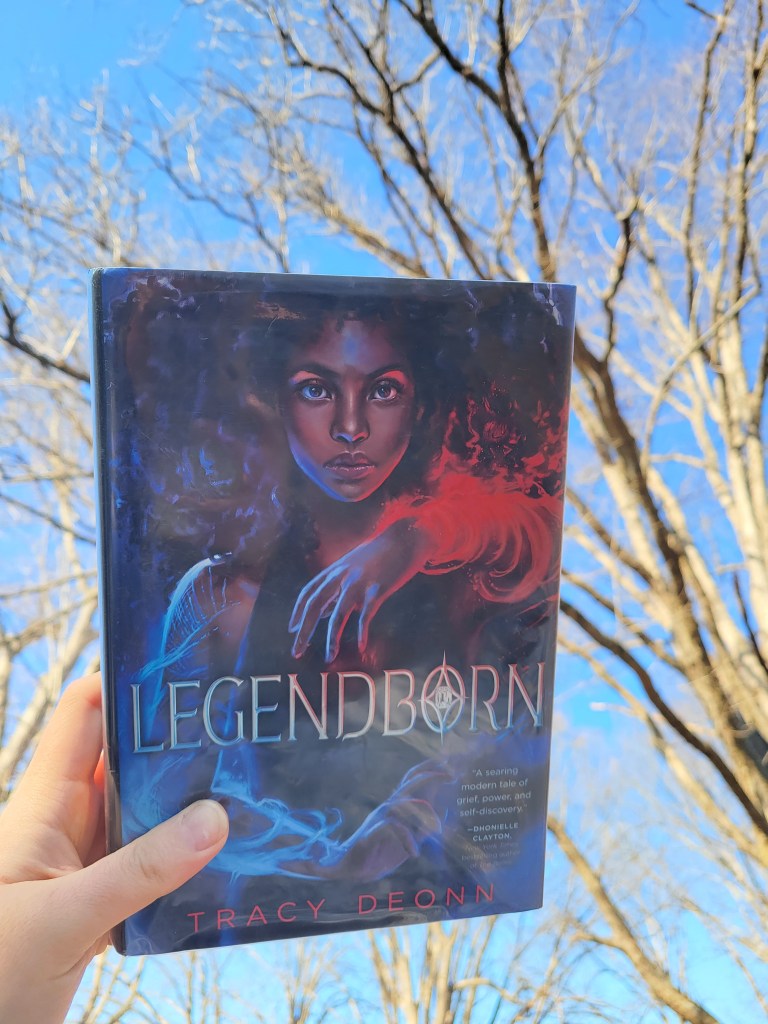
There’s a comforting familiarity to Romina Garber’s Lobizona (Wednesday Books, 2020) – there is an elite school for magical beings and a sporting event, and these magical beings walk the world unbeknownst to but a few humans.  But the world Garber created, the way she blends Argentinian folklore with the realities of the undocumented in the US, breathes a new life and has new layers – it just hits differently.

Manu is an undocumented teen from Argentina.  She’s lived in Miami for most of her life with her mother.  She’s been told that her father’s family are not good people, and they are looking for her.  As she has distinctive eyes, she wears sunglasses any time she exits her home to help make herself invisible from those who would do her harm.  In addition to being on the run from her father’s dangerous family, Manu and her mother are in the United States illegally.  As such, they live in constant fear of ICE and raids.

But Manu isn’t just some undocumented kid from Argentina.  She’s a halfling; half of her being belongs in a world that she’s only dreamed about.  After her mother is picked up by ICE and she’s left to her own devices, she learns that her mom wasn’t hiding her from some Argentinian drug lord – she was hiding her from a world where women are brujas and men are lobizones.  A magical world full of wonder that would want her dead if they knew with certainty of her existence.  The penalty for mating with a human?  Death.  Any child born of such a union also faces the same sentence.  That is why her mother had run.  That is why her father had disappeared.

In a twist, Manu finds herself at the elite school.  She’s undocumented in America and undocumented there, and a plan is hatched to purchase falsified documents to help hide her true identity as half-human.  She makes friends who risk everything for her.  She falls in love.  She joins a sporting team. She’d been denied friends for so long because of a life lived in the shadows that she flourishes among people her own age.  Manu is finally able to embrace the side of her that had been kept dormant with a special drug for so long.

But Manu isn’t a bruja – she’s a Lobizona, making her even more of an oddity in the magical world as women are witches and men are the werewolves. 

Lobizona is the first of the Wolves of No World series, and I’ve already placed a library hold on Cazadora (Wednesday Books, 2021) because I must find out what happens to Manu.

Read this book.

THE SWEETNESS OF WATER – Nathan Harris

Nathan Harris’s debut The Sweetness of Water (Little, Brown and Company 2021) was a highly anticipated novel that was immediately met with applause.  An instant bestseller, it is an Oprah’s Book Club Pick and it made President Obama’s summer reading list.  Additionally, it was longlisted for the Man Booker Prize. 

Everyone loves this book.

Everyone but me.

I have mixed feelings.  Don’t get me wrong – it’s beautifully written, and I am very excited to see what comes next from Nathan Harris.  My issues are due to the hollowness that echoed toward the latter half of the book as related to both Caleb and Prentiss, and the delayed development of Isabelle’s character.  I also would have liked to have seen more of Landry and Prentiss’s relationship, as well as the relationship between Landry and Isabelle that we’re only given snippets of, and much of that through Isabelle’s lens looking backward.

The novel is set just after the Emancipation Proclamation in Georgia.  Prentiss and Landry have left the plantation where they’d been enslaved are heading North when they encounter George Walker.  The older man has found himself lost on his property and seeks their assistance, and the two brothers lead him home.  George offers them both a job with fair wages.  George has never worked a day in his life but has decided he wants to leave a legacy on the land left to him by his father.  As such, he’s determined to build a peanut farm and he enlists Prentiss and Landry to help him.  This does not sit well with the former slave owner or the townsfolks who don’t like that he’s paying them fair wages while their sons are returning from war and need work.  George, a very easy to love character, doesn’t give a shit what they think.

Landry is the heart of the novel – he is the sweetness in the water.  He’d been severely beaten on a regular basis as a child and doesn’t speak.  He can, but he stammers and stutters so much that he prefers not to.  He loves water and that love of water has been his undoing his entire life.

George’s son, Caleb, is in love with his childhood friend, August.  I hated August and I hated the abusive and toxic relationship.  The reader is told early in the novel how August had brutally beaten Caleb when they were children while playing a game called “master and slave.”  When their relationship becomes physical, it is equally as violent and disturbing.

And then there is Isabelle, George’s wife.  She is the silent one, nearly invisible and most certainly not seen.  At least that is how she feels, and it is how she is written for the first part of the novel. Landry sees her, though.  And through him, she finds her voice and purpose.  My issue is how immediate her development is – and perhaps it is intentional; remove the men, and suddenly she can be seen.  However, her character could have been treated a bit better to build to that moment, and this would not have lessened the impact of her relationship with Landry.

In short, The Sweetness of Water is both sweet and bitter.  While there are some flaws, it’s an easy read that is beautifully written.  I would recommend it, but I do think it leaves a hollowness in its wake.

I don’t love it, but I most decidedly do not hate it. 

Read this book.

THE BATHING WOMEN – Tie Ning

Tie Ning’s The Bathing Women (2000, 2012 – English translation by Hongling Zhang and Jason Sommer) was an unexpected read.  The translation received mixed reviews, and I initially found it a bit “off” – but I realized it wasn’t the translation so much as the style of storytelling.  It was a bit frustrating, especially early on, because reading the book was like putting together a puzzle.  When I put together a puzzle, I do edges first and separate the pieces by color to work on sections.  Sometimes you find a piece that clearly goes in another section.  It disrupts the process just a tad, but at the end you have a completed puzzle.  The Bathing Women is a lot like that with random bits showing up in unexpected sections.

I haven’t read many, if any, books by Chinese authors who currently live in China.  That’s largely because the vast majority don’t get translated into English.  For example, Tie Ning was an extremely prominent Chinese author prior to The Bathing Women, yet this was her first novel to be translated into English and that took 12 years. 

Much like the artwork for which it is named, The Bathing Women offers a rare glimpse into the very private and intimate world of Chinese women. 

The novel follows two sisters, Tiao and Fan, and one of Tiao’s friends, Fei.  (Another friend, YouYou, is a prominent character, but she doesn’t have her own sections and she’s not connected to the secret that binds the other three.)  The novel spans from Cultural Revolution of the 1960s, where Tiao and Fan are left to their own devices as their parents have been sent to Reed River Farm for “concentrated labor and thought reform”) to the economic boom of the 1990s, where Tiao and Fan are still struggling with their identities and their past.

After Tiao’s mother feigns an illness to return home from the farm,she finds herself in an adulterous relationship with the doctor who assisted her in the deception.  Tiao hates her mother for this and rebels against her.  When Quan is born, Tiao suspects the doctor is her father.  Tiao and Fan both hate their little sister, and in a moment of gross negligence that will forever haunt the two sisters, Quan dies.

Tiao, forever marked by her mother’s affair and Quan’s death, grows into a woman with romantic ideals but an inability to be truly happy. She goes to college and gets a dream job with a publishing company.  Her life is very fulfilling in many respects, but something is always missing.  A true romantic, she has passionate relationships, but they never fully satisfy her.

Fan, the younger sister, is also haunted by her involvement in Quan’s death.  She masters English because she understands the doors fluency will open and she wants to escape. She ultimately marries an American.  While her pathway to citizenship is a blip in the novel, it should be mentioned that there wasn’t a pathway at all; a US birth certificate was falsified.  American Fan took significant steps to erase her past.

Fei is the adulterous doctor’s niece.   She doesn’t know who her father is, and her mother committed suicide after being exposed as an unwed mother – or a “hooligan.”  A gorgeous girl with limited means and no parents, Fei learns very early how to use her sex to get ahead in life.  She uses sex not only for her own benefit, but also to help her friends. She uses sex to get ingredients for a meal that YouYou wants to make when they’re teens.  She uses sex to get Tiao a foot in the publishing door.  She uses sex to get her ex-husband’s family member into college.  Time and time again, she sells her body, but she never allows anyone to touch her mouth.  This small detail is one of the reasons the beautiful and broken Fei was my favorite of the three.

The Bathing Women is not without its flaws.  The writing is a bit unraveled and clunky in parts, and there are some extremely awkward scenes and phrasings that I attribute to the fact it’s a translation; but Tie Ning is a Chinese woman writing about Chinese women, and I would recommend this novel to anyone who enjoys reading intimate portrayals of women and who like diverse shelves.

THE STATIONERY SHOP – Marjan Kamali

Marjan Kamali’s The Stationery Shop (Gallery Books 2019) is a heartbreaking novel of first love and lost love – a novel of how fate is a fickle mistress.

The novel opens in 2013 in New England.  Roya is an old woman, “nearly American,” who first left Iran over fifty years ago.  Walter, her steadfast and sure husband, is still with her and she is happy.  She’s all but forgotten about Bahman, the young man who stole her heart with his pretty eyes and prettier words, and left her standing in a square, in the midst of a political coup, on the day they were to wed.  But a little nostalgia and a trip to local stationery store bring him and all the memories back.

The novel shifts to 1953 Tehran and Mr. Fakhri’s stationery shop.  Roya is a teenager in love with words, especially words about love.  In his shop, she surrounds herself with poetry.  Her father wants her to be a scientist, but she’s a romantic at heart.  One Tuesday, she meets Bahman in the stationery shop and the world stands still.  He is a political activist, an idealist who believes in the fragile democracy his country is building, and his passion ignites her fire.

Against his mother’s wishes, they become engaged.  The political turmoil in Iran becomes violent as the attempts to overthrow the democratically elected Prime Minister increase.  The country is divided, bleeding around them, when Bahman disappears.  They begin exchanging letters through books that Mr. Fakhri provides.  One letter tells her to meet him at the square, that he wants to marry her immediately and not wait.  There are violent demonstrations all around when she goes to meet her love, but she will walk through gunfire for this man.  Only he doesn’t show.

A letter comes later telling her that he was sorry for leading her on, and that he is going to marry the woman his mother had chosen for him when they were children.  Roya is devastated. Her father, seeing her heartbreak but also seeing what is happening in his country, encourages Roya and her sister to go to America to study.  They go, and both build lives in the States.

Decades later, Bahman is suddenly back in her life, and Roya wants answers.  She wants to know why he didn’t show up that day.  Why he broke her heart.  And to tell him she forgives him   Roya’s mother always told her that fate was written on one’s forehead, and she knew Bahman was her fate.  But fate is fickle, and she didn’t understand that perhaps everything happened according to plan.

I’ve always found stories of someone “finding” their “first” and “true” love again later in life the most heartbreaking because it’s often done in such a way to invalidate the lives the couple lived while apart.  Kamali avoids this by showing how full and complete Roya’s life was, how her biggest heartbreak was not Bahman, and how much she does love Walter and the life they’ve built.

The resolution and the answer as to why Bahman didn’t show up initially seems contrived and dissatisfying, but it is fitting that a letter is how Roya would find out the truth.

This story of a young love during Iran’s coup d’état in 1953 is just as much the story of Bahman’s mother – after all, it started in 1916 with the sweetest of melons and a young man who did unspeakable things. 

Fate… she has a slow burn.

Read this book. 

For the romance.  For the history.  For the culture.  For the food. 

For the fact that we are forever more alike than we are different. Read this book

KLARA AND THE SUN – Kazuo Ishiguro

Kazuo Ishiguro may be the odds-on favorite for the 2021 Booker Prize, and understandably so.   Not only is he a previous winner (Remains of the Day 1989), he is arguably one of the most heralded contemporary English authors.  I don’t think anyone was surprised to see Klara and the Sun (Knopf 2021) make an appearance on the longlist.  I read and loved Remains of the Day decades ago, so I was looking forward to this one.

I don’t know what I was expecting, but it wasn’t Dystopian Science Fiction.  And what a fun surprise that was.  If you want to be surprised, stop reading now.  There will be some spoilers.

Klara is an AF, Artificial Friend, designed to entertain and keep children from becoming lonely.  These robots are made to look like children and come in various models, each fed by the Sun.  The novel opens in the AF store, where the reader is introduced to other AFs and the Manager all through Klara’s observant eyes.  This tunnel vision approach, also used in Remains of the Day, has been criticized by some, but the novel wouldn’t have been nearly as successful without it.

Klara is purchased to be the companion of Josie, a “lifted” but sick girl.  The wealthy have been able to “lift” their children – genetically editing them to make them smarter and more likely to succeed.  It’s a dangerous process not without risks, and the reason for Josie’s illness and the death of Josie’s sister.

  Klara is purchased as a friend and companion.  Josie’s mother has other, ethically questionable, intentions – a plan born of guilt and desperation.  Klara understands her assignment, and she also understands what Josie’s mother wants of her.  But Klara is no normal AF – and she resolves to save her Josie by calling on the Sun to heal her. 

Klara and the world of AFs immediately called to mind the 1980s sitcom Small Wonder and Vicki; however, the sitcom was lighthearted and full of warmth, and the ending of Klara and the Sun was a more realistic twist of the knife in my gut.  The first-person narration and Klara’s unreliable tunnel vision made it all the more impactful.

It’s not my personal favorite of the longlist, but gosh it’s certainly worthy.

Read this book.

THE PROMISE – Damon Galgut

Hailed as “in every way equal to J.M. Coetzee” by Rian Malan, Damon Galgut is an author I was thrilled to see on the Booker longlist.  Shortlisted twice, Galgut’s work is a proven favorite among the Booker judges, and The Promise (Europa Editions 2021) very well could win it for him.  In the spirit of full disclosure, South African literature has always held a special place for me and when the author of My Traitor’s Heart references the author of one of my most favorite books (Disgrace), I’m apt to pay it a bit more attention.

With echoes of my beloved Nadine Gordimer and Coetzee, The Promise quickly went to the head of my Booker list.  The “white voice” in the time of apartheid is always going to recall these two prominent South African authors in my mind.  What I didn’t expect, was the echo of William Faulkner.   There’s a lot of Faulknerian aspects to the novel – the first section in particular murmurs reminders of As I Lay Dying – one scene seems a clear nod to the Southern writer when Anton, much like Vardaman, believes he has killed his mother.  Anton doesn’t believe his mother is a fish, but he does believe she was at the end of the barrel when he pulled the trigger.  She wasn’t – he didn’t kill his mother – but that early introduction to Anton defines the man he becomes in the decades that follow.

The novel is told in four sections: Ma, Pa, Astrid, and Anton.  Amor does not have a section, yet she is the glue that holds the novel together and the lightening that illuminates in the dark.  She’s a young girl when her mother dies, and she begins menstruating at the funeral.  As her mother was dying, she overheard her mother make her father promise something.  That promise carves a wedge between her and her father, and later between her and her siblings.

The novel begins during the mid-1980s, during apartheid.  The second section jumps forward to 1995, after the end of apartheid when the promise could finally have been realized had Amor’s siblings wanted to honor it.  The novel jumps forward again, to Mbeki’s second inauguration in 2004 and Astrid’s second marriage. Again, the promise could have realized.  But it wasn’t.  The novel jumps forward yet again and once more, Amor is set on ensuring the promise is finally kept.  She is firmly middle aged by this point, and her cycles have ceased. The novel comes full circle with a bolt of lightning, a death bed promise, a tortured history of colonization and racism, and the land she called home but couldn’t claim.

Read this book.

LIGHT PERPETUAL – Francis Spufford

Francis Spufford’s Light Perpetual (Scribner 2021) just oozes traditional Booker Prize type, so I’m not surprised it was longlisted.

The novel opens in 1944 at the Woolworths in South London.  The store is packed full of patrons because there are new cookpots available, something that war-torn England hasn’t seen in a long time.   A rocket rips through the store. When the dust settles, 168 are dead.  The rocket decimating this Woolworths and the cookpots the crowd had come to see are firmly rooted in history, but the five young children who are killed in the opening of Spufford’s novel are fictional – as is the rest of the story.

Spufford takes these five young children and reimagines a world where they didn’t die. 

“Come, other future.  Come, mercy not manifest in time; come knowledge not obtainable in time. Come, other chances. Come, unsounded deep.  Come, undivided light.   Come dust.”

The reader gets flashes of their lives, beginning in 1949 and running a lifetime until 2009.  The windows open on their worlds, and flashes of color and the pain of living pour out.  This isn’t a “happily ever after” story; it’s far too real for that.  It bleeds.  It cries.  It cuts.  But it also dreams and laughs.

It lives.

There are the twins, Jo and Val, whose lives take very different directions when they fall for the wrong men.  There’s Vern who just can’t shake the childhood nickname of vermin, and for good reason.  There’s Alec, the steady and reliable husband and father who devotes his life to print journalism and watches its demise.  And there’s Ben, whose demons live inside his head.

Through the years, the reader watches them live. Marriage.  Divorce.  Murder. Drugs. Mental institutes. Jail.  Music. Babies. Memories. Love.  The impact of their lives, snuffed out in 1944 and recast for a lifetime, shines in the mundane. 

Have you ever seen light reflecting off dust? It’s quite lovely.

“Come, dust.”

Read this book.

NO ONE IS TALKING ABOUT THIS – Patricia Lockwood

Can we talk about Patricia Lockwood’s No One is Talking About This (Riverhead Books 2021), because we all need to be. Longlisted for the 2021 Booker Prize, this is Lockwood’s first work of fiction and one of the best books I’ve read this year.

The narrator is a social media influencer who travels the world and constantly posts on the “Portal.”   The first half of the novel rolls along as if you’re scrolling through your Facebook feed or TikTok videos.  Snippets of her life are interwoven with more prominent memes and viral clips that most readers of a certain age would recognize.  (“It me.”)  BLM, white “wokeness,” the Trump presidency (though he is simply referred to as “the dictator”) and oppressive “pro-life” legislation work to date the novel as do the viral images/clips/stories that cycle through the Portal.

The first half is told in the fragmented, selective style of social media postings.  It’s funny. It’s irreverent. And it’s certainly unique.  We all scroll.  We know our memes.  We’ve all looked through photos of Jason Momoa.  We know our viral videos.  We know about the “importance” of “unique impressions.” And we have read countless “top tweets” or Buzzfeed articles about parents who think LOL means “lots of love” and that the eggplant emoji is for when you’re making eggplant for dinner.  We get it.  Lockwood is right there with us, and we’re just scrolling right along with her.  And it’s a hoot.

Then comes the second half of the novel, the half where life catches up with you and you have no choice but to put your phone down.  The narrator’s younger sister is pregnant and there’s something wrong with the baby.  The child is diagnosed in utero as having Proteus Syndrome, and everything slows down.  The Portal and the life curated on it for the world to see doesn’t matter anymore – all that matters is that baby.

“A minute means something to her, more than it means to us. We don’t know how long she has – I can give them to her, I can give her my minutes… What was I doing with them before?”

The second half of the novel is what happens offline.  The tears.  The prayers.  The heartbreak.  The anger.  The grief.  The loving.  And yes, the living.  It is raw and real – Lockwood excelling with her no tricks involved storytelling in such a way that my heart is still sitting in my throat.  When I saw the Acknowledgements at the end and read about Lockwood’s niece, Lena, I understand why her words had such an impact – it’s fiction, but Lockwood exposed her heart, all the broken shards and shattered light of the love she felt for Lena.

And I am thankful she did.

Put your phone down and do some living. 

Then read this book.

SECOND PLACE – Rachel Cusk

In January, I resolved to read the 2021 Booker Prize longlist.  The list was released last week, and I immediately put in my requests at the local library.  (That was another resolution – to use the library more.) Three of the books haven’t been released in the US yet or have limited distribution, which is a bummer, but five are currently in my house.  The shortlist will be announced on 9/14 and the winner will be announced on 11/3, so I have time.  Let’s do this.

I started Rachel Cusk’s Second Place (Farrar, Straus and Giroux 2021) with high hopes, but this 180-page novel is about 160 pages too long.  Had it been any longer, it likely would have been a very rare DNF for me.  The opening where the narrator meets the devil on a train in France and watches as he sexual assaults a child and does nothing set the stage for something that wholly under-delivered, but I’m not surprised it was longlisted as it oozes a certain Booker type – the type where the book clearly thinks too highly of itself.

The novel is narrated by a woman known only as M.  She’s middle-aged, whiny, and insufferable.  She addresses the novel to “Jeffers,” but the reader is never made privy to who Jeffers is.  He undoubtedly represents a very open nod to Mabel Dodge Luhan’s memoir of the time D.H. Lawrence stayed with her for a bit.  M’s second husband, Tony, is also a caricature of Luhan’s Native American husband, Tony.   The reason for a fictional retelling of Luhan’s memoir is a mystery to me, and I do not think it was successful.

The novel focuses on M’s obsession with the eccentric and difficult artist, L, as well as her desire to matter, to be seen.  She’s an author, but little is said of her books.  She’s a mother and a wife, but seemingly not very good at either.  Describing her dark-skinned husband as “more of an ugly than a good-looking man” and having difficulty communicating with him, M is primed for an obsession with an artist that could destroy her marriage.

She invites L to come stay with her and Tony at the “second place,” another home on their property set up for guests.  She thinks it would be good for his artistic creativity, and he eventually agrees.  But the man proves to be far less than the art that spoke so surely to her – he is a horrible, unkind man – and his interactions with M are far from the beautiful, seductive, passionate images M had visualized.

Cusk can clearly write, and there are some quite lovely passages and ideas in the work.  The jealousy directed at M’s daughter over the fear of completely disappearing and being replaced by a younger version of herself is a constant theme, humming as an undercurrent beneath the obsession with L, and represents some of the best writing of the short novel.  But there are far more misses than hits.

This is a hard pass for me and that’s a line I rarely draw.  Next.

THE DIRTY BOOK CLUB – Lisi Harrison

Lisi Harrison’s The Dirty Book Club (Gallery Books, 2017) is what happens when the Sisterhood of the Traveling Pants grows up and pants become erotic novels.  Embracing the bonds between women, The Dirty Book Club begins in 1962 when a group of friends start their own secret club, the aptly named Dirty Book Club.  The DBC is centered around books about sex and the own sex lives of the four original members.  The women seal the pact of secrecy with the smoke of their Lucky Strikes. 

M.J. befriends one of the original DBC members when she moves to California, but the friendship is short-lived as Gloria soon moves to Paris to honor another pact of the original DBC.  The move to Paris marks the time for a new set of members for the DBC.  The founding members pick their replacements, hand them the keys to the club, and a list of rules.  The four chosen women, M.J., Britt, Jules, and Addie, are little more than strangers and would never have organically created that friend group. 

Forced into the relationship by the four women who hand selected them,  the new members are wary of each other and reluctant to read the dirty books and share their deeply guarded secrets.  But the original DBC expected such resistance – each member has drafted a letter to correspond to a reading selection.  These letters, the insight into the women whose friendship has lasted over half of a century,  help form the bonds between M.J., Britt, Jules and Addie – bonds that strengthen over secrets and sex, love and loss, hope and heartbreak.

The erotica, significantly more taboo during the original DBC’s tenure, is the bridge that brings the four young women together, but it is their hearts and the need for female companionship that wraps around them and holds them in the club.

It’s a cute book.  It doesn’t put a lot of flesh on the bones of some pretty serious issues (abuse, alcoholism, depression, adultery, miscarriage), and that seems a bit of miss, but it’s a cute and easy read.