“A page had been turned. It was that quiet and that simple, but Artie – having almost died – no longer wanted to.”
Elizabeth Strout is a talented writer, I’d just previously decided I don’t really like her leading characters. To be fair, I’ve only read Oh William! and I said the following regarding it: The novel is well-written, and Lucy is wonderfully developed and complex as a character, I just didn’t like her. Imagine getting seated next to an older woman, one who is slightly drunk and sad, on a long flight. It’s fun for a bit, but by the time you land you just want to give her your therapist’s number. I’m pretty sure Strout recognized there may be a low threshold for tolerating Lucy – the novel is only 237 pages.
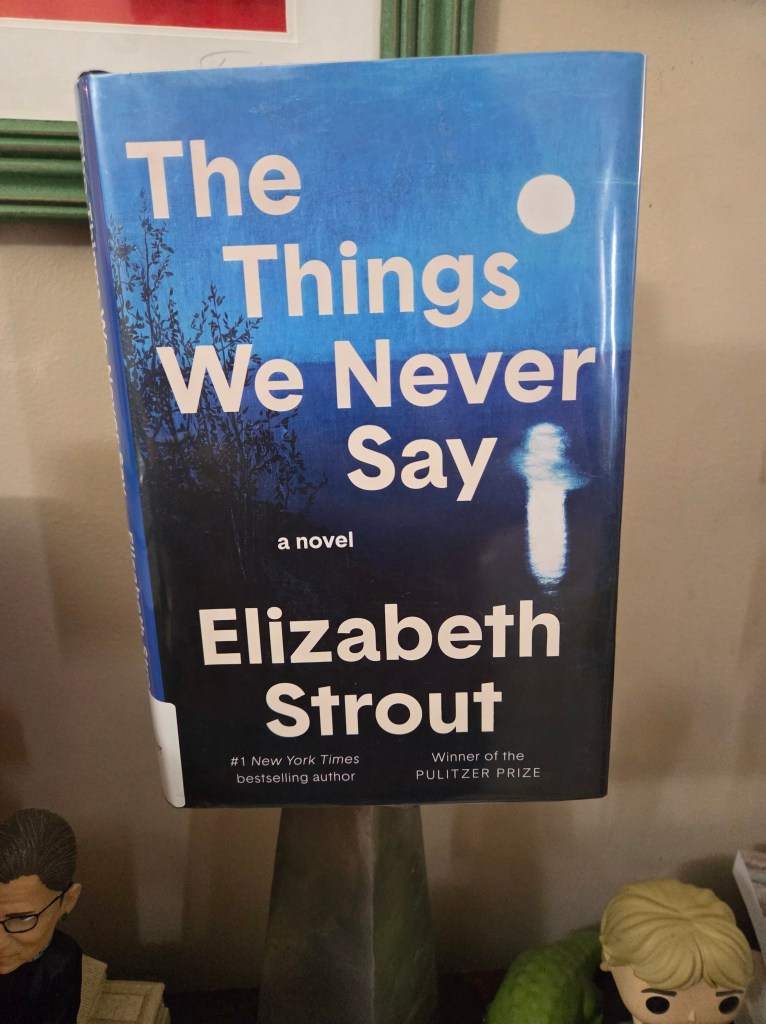
The Things we Never Say (Random House 2026) is getting a lot of buzz, and while I enjoyed Artie significantly more than Lucy, I was grateful the novel barely reached 200 pages. This novel is sad. I mean profoundly sad. Not sad in that attention-grabbing way, but a slow growing, deep-seated sadness that cloaks you by the last page. And it’s sad because you’ll like Artie. (And you’ll hate his wife.)
It’s hard to get away from politics and Covid in American fiction these days, and this novel is no exception. While a significant part of the sadness comes from political turmoil, this isn’t a political novel – it’s a life novel. And that life is sad because of, and this isn’t a spoiler, the things [they] never say.
Strout’s writing is phenomenal, and her sheer talent is why I gave the book 4 stars. It wasn’t the plot or the characters, but how much emotion she rendered in well-developed characters a very short book. This is the case of an excellent novel by a fantastic author that falls short only because of the reader.
*It’s a bit cheeky, but I like that one of Strout’s prior novels shows up in her new novel.

