“Death has been chasing this story for generations, trying to kill it.”
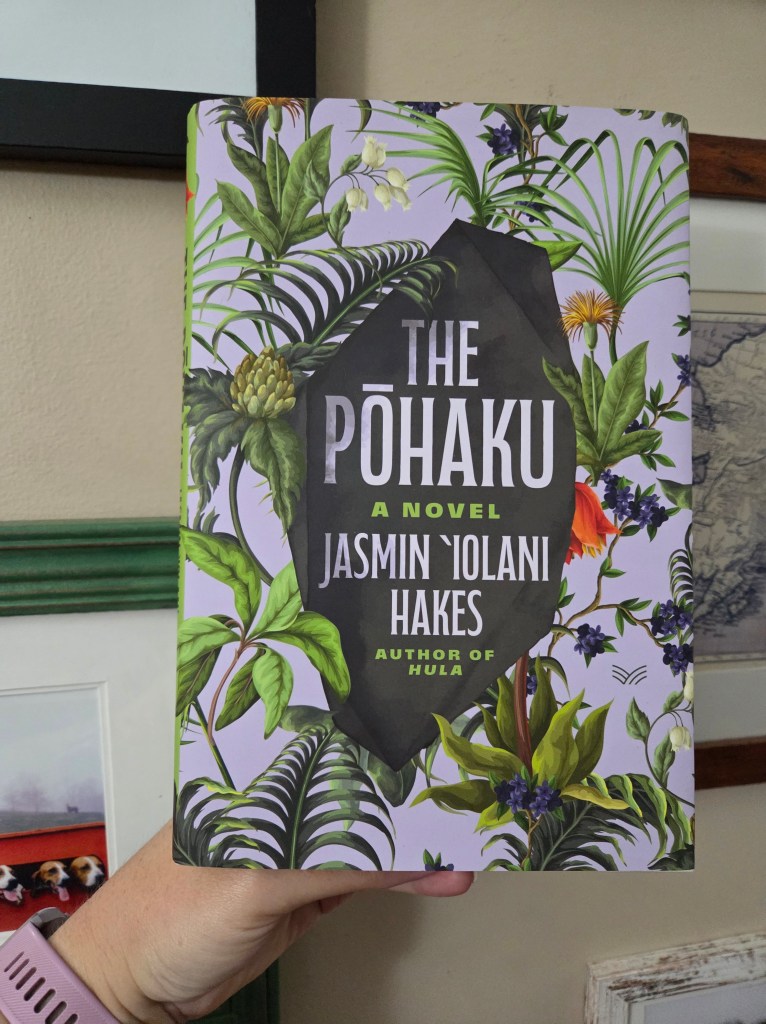
The Pōhaku by Jasmin ‘Iolani Hakes (HarperCollins 2026) has all the elements of the type of story I love: family saga, a storytelling tradition, and a bit of magic realism. Add the fact it is about the Hawaiian people and boasts a stunning cover, and I cannot fathom how it didn’t end up on my radar when it was released earlier this year. But as fate would have it, I went to Fable Books and Café last weekend, and there she was. The woman who rang me up skimmed the flap. “Ohhh, it sounds like Moana for adults!” She wasn’t wrong, but there is no Disney ending here.
The novel is framed by a grandmother frantically telling her granddaughter the story of the women in their family and the pōhaku, the magical stone their family had been tasked with protecting and the stories the stone carried. The granddaughter is on life support following a near drowning, and a hurricane is fast approaching. Time is running out.
The story starts in 1740 with the Earl of Sandwich and his mission to find the Lost Tribes of Israel, thought to be somewhere in Oceania. Bu this is not the story of conquerors; this is the story of women and their connection to the land via the magical stone that was lost somewhere in California in the 1800s. It is both the history of a people and the history of a family.
There is so much to appreciate and enjoy with this novel; however, it did fall short for me. IMHO, I needed more. More flesh to the bones, more heart to the stories. It is so short but covers so much ground, and I was unable to fully connect to our cast of strong, powerful, resilient Hawaiian women.
I liked the framework of the grandmother telling her granddaughter the story, but the storytelling voice wasn’t consistent – it either needed to be all or nothing. Additionally, the ending is not satisfying, but I think it served the story’s purpose well.
In short, there are some things that didn’t work for me in this novel because I wanted more. But that’s the point. History has eroded the stories passed down from generation to generation, and only bits and pieces have survived.
But we still need those stories.
Read this book.

