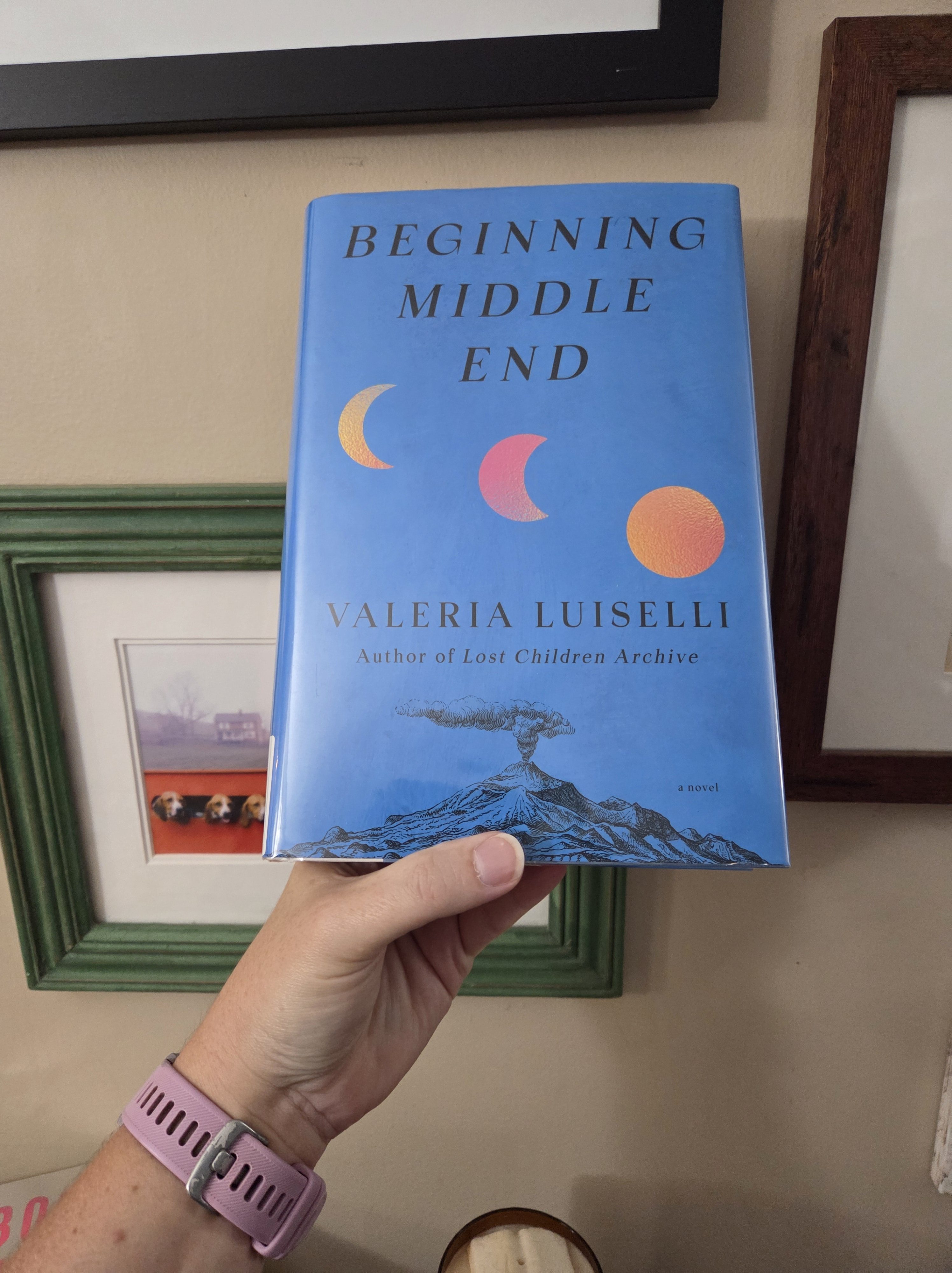
“This was a story with a mother and a daughter and a beginning. And the story, it turned out, was about everything that we reinvented after that.”
This year’s Booker list is extremely male-centric, which infuriates me because it’s not like the pool of eligible candidates was devoid of books that center women. I continue to scratch my head over the failure to include Beginning Middle End. Valeria Luiselli is a former long-listed author and while that does not mean the new work was automatically submitted, I’d have thought her publisher would have included it in their quota. (Especially since it’s beautiful and it fits nicely with the themes of loneliness, storytelling and how we remember.) It has been suggested that maybe Mary Beard took issue with how the Greeks were handled both in this and in Martel’s work, which was 100% submitted as Martel is a former winner. I hate to think the chair has that much veto power, but we don’t really know how it works. Maybe all the judges get an automatic in and an automatic kill, maybe the chair had more, maybe they just didn’t like it– who knows. In my opinion, this list desperately needed a story of mothers and daughters. (And no, The Vivisectors doesn’t count with its matricide and attempted filicide (at least that’s how I read the stairs).)
Beginning Middle End is the story of a mother and daughter on a trip to Sicily. The mother is an author who has just finished her international book tour. She is working on her new book about a woman writing a book and sending passages to her mother to translate because her mother is showing signs of dementia. It’s a book within a book within a book. I usually hate when things get meta, but I enjoyed this immensely.
It’s a novel of women. A young woman who pretends to be a man so she can join an archeological dig in the 1920s. The artifact she steals that is passed down to her daughter, who has passed it to her daughter, who has taken it with her and her daughter on their international travels. The young daughter who fears it is bad luck and wants to return it.
It’s a soft and intimate story of maternal lines, memory, and storytelling. The fragmented approach to blurring fiction with not fiction followed by the child’s letter and her photographs and postcards was an interesting approach. I did, however, enjoy the beginning significantly more.
Read this book.

