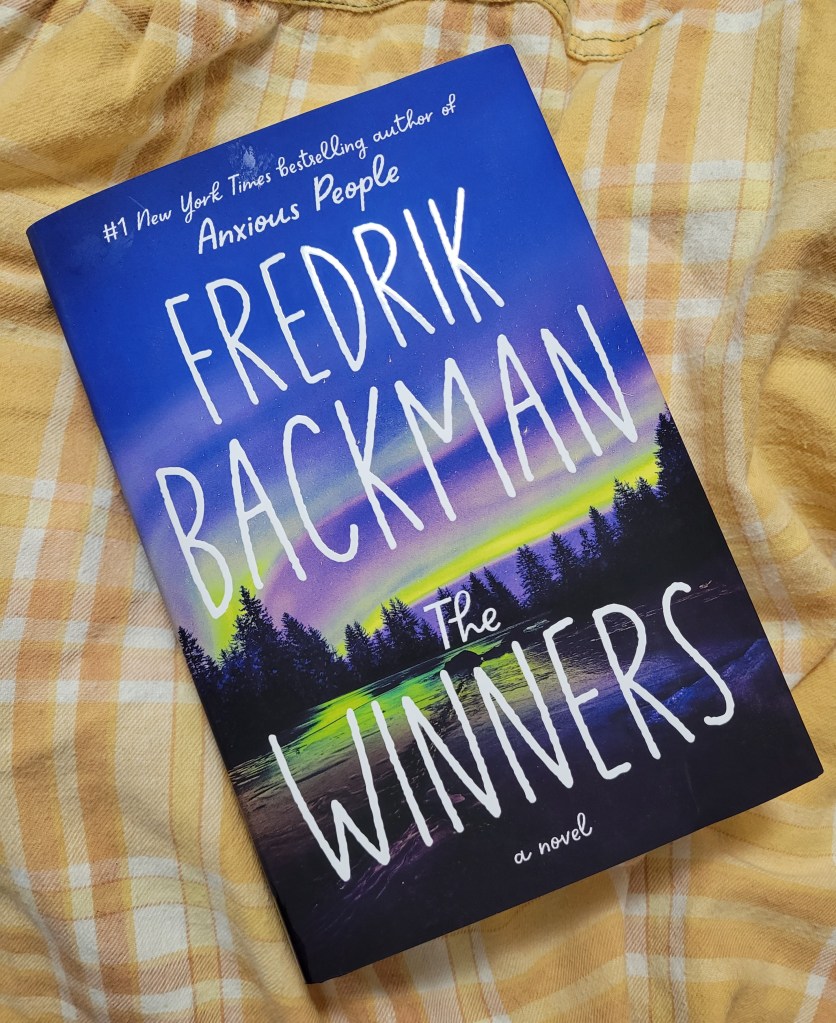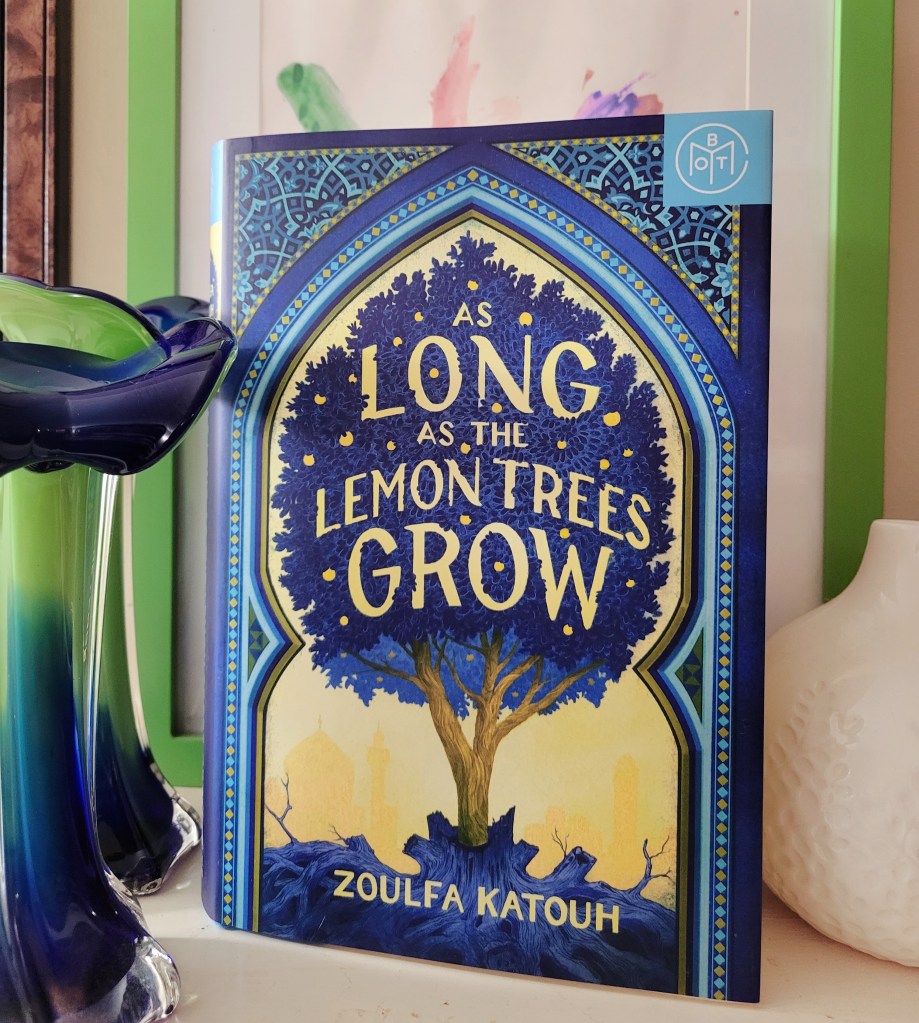
THE FORTUNE MEN – Nadifa Mohamed

Despite my best intentions, reading the Booker longlist during the calendar year just wasn’t realistic due to US release times.  I did, however, finally get my hands on Nadifa Mohamed’s The Fortune Men (Alfred A. Knopf, 2021), which is the last of the shortlist for me.  (There are two longlisted books that are still outstanding.)  Based on a true story, The Fortune Men is a fascinating read about a wrongfully convicted Black man in Wales in the 1950s.  Mohamed’s prose is matter of fact – built on a foundation of truth with sprinklings of humor and love – that focuses on building the character of Mahmood Mattan and not the tragedy that defined his existence.  The point is clear – Mattan was just a man.  He wasn’t a saint, but he wasn’t a murderer either.

In 1952, Violet Volacki, a Jewish shopkeeper, was brutally murdered in her store.  Her sister and niece had seen a dark-skinned man in the doorway just prior to the murder. Despite both saying the man they saw was not Mahmood Mattan, he was arrested and charged.  A trial, both said the man they saw was not in the courtroom.  There was no evidence supporting the charge, yet Mattan was convicted and sentenced to be hung.  His wife fought for decades to exonerate him and finally succeeded in 1998, over 40 years after he was executed. 

Mohamed paints Mattan with a delicate brush, showing the reader all his flaws as well as his richness, his devotion to his children, and the love he had for his wife, a white woman who would cleave to his memory and fight for justice for her husband, their biracial children, and their love – as imperfect as it was.  Mohamed doesn’t focus on the injustice, the intergenerational trauma or Laura’s struggles.  Even the trial is limited in scope in the text.  Instead, Mohamed focuses on developing Tiger Bay and what life looked like for the families, like Mattans and the Volackis, who called it home.  Most importantly, she puts flesh to the bones and breaths life into a ghost.

Read this book.

THE LOVE SONGS OF W.E.B. Du BOIS – Honorée Fanonne Jeffers

Honorée Fanonne Jeffers’s debut novel, The Love Songs of W.E.B. Du Bois (Harper 2021), is a five-star historical saga.  Jeffers’s background in poetry gives this chunky book a cadence and rhythm that carries the voices of the silenced ancestors such they stay with you long after the last page.  The truths and horrors of American history, all the blood and tears and broken bits that have defined this country, are beautifully and painfully found in Ailey’s family tree, but it’s the resilience, love, pride and determination of the females that shows the depths of the roots. 

With a subject matter as heavy as American history, this novel certainly comes with many trigger warnings.  I strongly suggest that sensitive and mood readers check those out before diving in.  There were many sections where I had to walk away from the book.  For me personally, my breaking point is with assault and sexual assault of children and there are many allusions and depictions of such assaults through the nearly 800-page novel.  Many. When Ailey is conducting research into the past, her mentor tells her to shower afterwards and pray.  When she doesn’t, she becomes violently ill.  Her visceral reaction to the horrors contained in the journals is mirrored in the reader – or it should be. 

The generational trauma is carried in the wombs and nestled at the breasts of the many women who came before Ailey, including her sister Lydia.  These women add life to the pages.  I wish Ailey’s other sister, Coco, had been given a bit more of a voice as she appears an afterthought – a shell of a character needed to advance the plot.  But the strength of this novel is in the strength of its women.

These words don’t begin to capture the genius that is The Love Songs of W.E.B. Du Bois.  It’s a sweeping narrative of a love letter to the lost and forgotten voices that made this country.

Read this book.

PLAIN BAD HEROINES – Emily M. Danforth

I don’t DNF (Do/Did Not Finish) books for assorted reasons.  (I can count on one hand the number of books I’ve abandoned after starting, and they still haunt me.)  A few hundred pages into Emily M. Danforth’s Plain Bad Heroines (Harper Collins 2020), I wanted to stop.  I had such high hopes for this sapphic gothic story-within-a -story, and it was quite the letdown, at least initially.  I kept reading hoping it would get better.  And it did, just too many pages into the 617-page novel.

Brookhants – a school for girls run by women.  A scandalous memoir embracing and encouraging young women to explore love and pleasures with other young women.  An obsession.  Or three.  Three ghastly deaths followed by three more.  The school never reopens and it, and the young women who met their demise there, become the ghosts who haunt the grounds in the stories people still tell.

Over a century later, Merritt Emmons, the brilliant and awkward child genius, puts the story to paper.  Centering on the queer history of the cursed school, the debut novel is a success.  Merritt was encouraged by Lainey Brookhants, current owner of the property, to write the story.  Lainey buys the movie rights and a mirror-image story-with-in-a-story develops.  Harper Harper (Nope – not a typo.), the current “it” girl, is cast as the lead.  Audrey, daughter of a washed-up scream queen with a few acting credits of her own is cast, against Merritt’s wishes, as the love interest.  The three young women are forced together prior to filming to forge a bond at the request of the director.  They all have their own secrets and pasts, as well as their own hauntings.  A modern love-story emerges.

The use of wasps both in 1902 and in present-day California shows the continued battle of the LGBTIQA+ community against the so-called WASPS – where the loudest condemnation still comes from – and the devastating and deadly effects this group had and continues to have.  It’s a bit on the nose and heavy-handily used, but it is effective.

With a nod to Jane Eyre (a tie-in that could really use a scholarly paper), the novel is addressed to the “Dear Reader” and told from an omniscient narrator who inserts her opinions, interesting tidbits and historical data through footnotes that are often cheeky little distractions.  I wasn’t a fan of the narrator – the style was fine – I just didn’t care for the voice.

Within the main story lines, there are multiple other stories nested – much like the cursed nesting doll that makes a couple of appearances.  These flash shorts and flashbacks are fantastic, and I wish there had been more of them.  That said, the novel would have been stronger with tighter editing, especially in the first half.  The tightening would have allowed the tongue-in-cheek dark and naughty humor to flank the horror better, and for the little dolls to shine.

It may have been a bit overhyped and not worth all the buzz (see what I did there), but for lovers of gothics and TMZ, this could be your jam.

The HOUSE IN THE CERULEAN SEA – TJ Klune

I finally got around to reading one of the most talked about books of 2020, and before I get into my review of TJ Klune’s The House in the Cerulean Sea (TOR 2020), I want to briefly touch on the problematic aspects of the novel, or as is the case, of the author.

During an interview for the novel, Klune stated that Canada’s residential schools inspired him.  In particular, he was inspired by a cultural genocide called the “Sixties Scoop.”  From the 1960s until the 1980s, Canada sanctioned the theft of indigenous children from their families and placed in them in “orphanages” where they were forced to assimilate, denied their identities, and often adopted out to white families.  These children suffered extreme abuse, and many were murdered and forever lost.  This factual framework in a not-so-distant history served as the inspiration for Klune’s orphanages and the Department in Charge of Magical Youth’s policies.  Fiction frequently pulls from history, and I take no issue with Klune using Canada’s tainted history as inspiration.  Where I take issue is in Klune’s complete and utter failure to acknowledge and give voice to the history in the actual work – the acknowledgements were painfully devoid of any reference to the residential schools or cultural genocide.  He did, however, use it as a marketing tool.  That simply doesn’t sit right with me.

That said, this is one of the most exquisite love stories I’ve ever read.  It’s quirky and quaint, silly and sweet, and extraordinary.  It’s perfectly paced, beautifully crafted, and the characters are absolutely delightful.  All of them.  Even Merle.  It’s a Hallmark movie meets Umbrella Academy of a rainbow love story, and I let every word settle on me like a hug.

Most of y’all know the plot – Linus, a caseworker, is sent to an orphanage to investigate if the home should remain open. It’s a classified assignment because it’s a classified home.  The children (including Lucy, the son of Satan) are the most magical of magical youth, and the master, Arthur, is another enigma.  They slowly break down the rigid walls Linus has built around his heart, leaving him wondering about the life he’s led for the past 17 years and the life he could have.

The novel is about kindness, acceptance, love, hope, and what family means.  And it’s a reminder of the magic that we all have inside of us.  I just hope the world remembers that many of the children who served as inspiration never had a happily after all.

Read this book, love this book, but don’t forget the atrocities that served as its inspiration.

SALT TO THE SEA – Ruta Sepetys

Ruta Sepetys’s Salt to the Sea (Penguin Books 2016) was a bit of a surprise.  It’s been hanging out on my TBR for several years now, but I didn’t much know what to expect when I finally picked it up.  As I’ve never read Sepetys before, I’m not sure if the snapshot-style alternating narration is her typical style, but it was effective in this war novel.

The novel switches easily between four young people from four different countries all caught up in the same war.  Florian is a soldier, traveling under the dead of night, his bag heavy with secrets and the evidence of deceit he is trying to outrun.  As he flees, he stumbles over a Russian soldier attempting to rape Emilia.  He kills the man, and the grateful young Polish girl refuses to leave his side.  He is her “knight” and she doesn’t let him out of her sight despite his best attempts to leave her behind.  The two join a group of refugees where they meet Joana, who is a nurse.

The group, which also includes a very tall woman, a blind woman, a young orphan, and an old shoemaker decide to stay together as they make their way to the sea.  Without discussion, they wrap the young Polish girl into their midst, helping hide her identity and giving her papers belonging to a dead girl.

Most of them reach the sea.  There, they join an ever growing and desperate group seeking passage aboard several ships, including the Wilhelm Gustloff.  Alfred is stationed aboard the ship.  Alfred has delusions of grandeur and a false sense of importance that make him dangerous but also easy to manipulate.  If Florian can fool him, they all might just make it to safety.

But no one knew the Soviet navy waited with torpedoes marked just for them.  What transpired became the deadliest disaster at sea, a disaster history seems to have forgotten.

In Florian, Joana, Emilia, and Alfred, Sepetys gives voice to the thousands of people who were aboard the Wilhelm Gustloff.  It’s a well-done historical novel that doesn’t lose the history in favor of a fictional plot or a half-assed romance.  At its heart, it’s a war novel about the choices we make when our feet are to the fire.

Read this book.

LEGENDBORN – Tracy Deonn

Before I get into my review of Tracy Deonn’s Legendborn (Margaret K. McElderry Books, 2020), I want to recognize that it may be biased and cloaked in an unexpected connection. I was 17 when my father was killed.  My acceptance to UNC arrived just under two months later.  That August, when I moved into my dorm, I was a powder keg of grief, anger and guilt.  But especially anger. There were many days that my walk back to the dorms from class consisted of counting my steps to remind myself just to put one foot in front of the other.  The unexpected loss of a parent on a not-quite-an-adult leaves a mark.  I never expected to see those explosive emotions that defined my years at Carolina on the pages of a fantasy novel set at my beloved Carolina, but here we are and oh how painfully beautiful and accurate Deonn’s depiction is. I often say that books get in my blood, but this one tastes like my tears.

Bree is a 16-year-old black girl from rural NC, and as progressive as UNC is, it’s full of old money, legacy students, and privilege.  With that in mind, the novel sails not only in its depictions of grief but in microaggressions as well.  Deonn does an excellent job of capturing the public ivy’s tainted history and its continued impact.  (Carr and his beatings were real, as is his presence on campus.  Also real was the now-removed Confederate soldier facing North.)

Hippol Castle – I took this picture when I was a student.

Bree breaks the rules and goes to an off-campus party where chaos ensues, and a mage tries to wipe her memory.  But Bree’s a bit different, and her introduction to magic leads her to believe that her mother didn’t just die in a car accident.  Through sheer chance, and a little grit and determination, she pesters her way into the thick of a secret society that operates out of a castle just off campus.  (UNC is home to the Order of Gimghoul, a secret society that operates out of Hippol Castle.) The Order of the Round Table isn’t prepared for someone like Bree, but they may not have a choice.  Bree is determined that they hold the key to the truth about her mother.

Deonn boldly stares down the traditional fantasy canon while giving the reader an Arthurian legend unlike anything Tennyson or Malory could have imagined.  She gives her reader Merlin and the magic expected from the likes of a kingsmage.  But she also gives us rootcraft and generational power.  She gives us Bree.

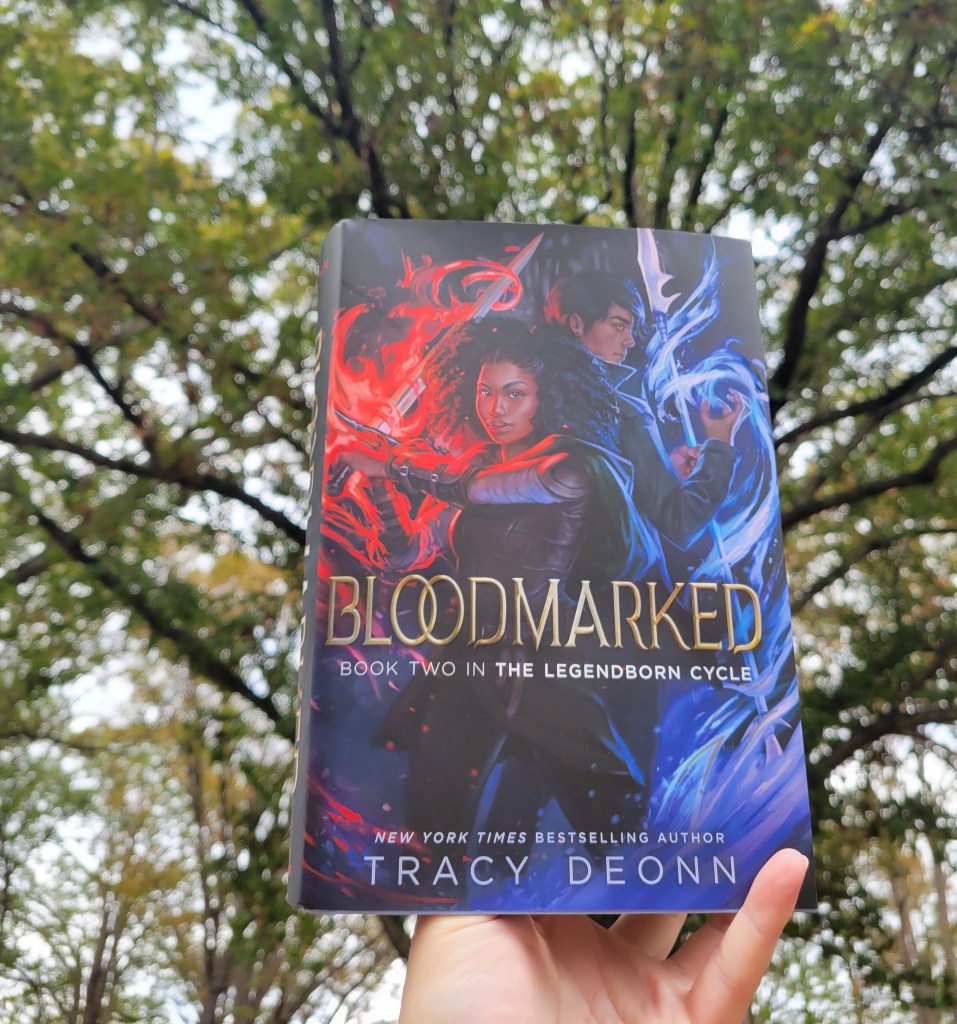
The novel is fantastic.  The premise is great.  It doesn’t fall into some of the traps that other YA fantasy novels tend to get hung up in.  There is a love triangle, but it’s an Arthurian legend – so, there’s going to be a triangle. The second in the series, Bloodmarked comes out at the end of the year. I’m curious to see how it’ll stack up, but I’m very excited for it.

Read this book.

And forever my thanks for this novel, Tracy.

THAT SUMMER – Jennifer Weiner

The title of Jennifer Weiner’s That Summer (Atria Books 2021) immediately brought a smile to my face as I recalled another That Summer.  When the novel started with “She is fifteen years old that summer,” I was reminded even more of Sarah Dessen’s 1996 novel about fifteen-year-old Haven, a novel set at the beach during the summer “when everything changed.” I’d like to think this novel about two summers on the Cape “when everything changed” was an intentional nod to Dessen and her first novel, and it makes my book dragon heart smile.

Also making my heart smile?  The brief mention of the murder of Drue Cavanaugh, the beautiful socialite from Big Summer

That Summer is told primarily from Daisy and Diana’s points of view. The first part of the novel, after an enticing prologue, is primarily focused on Daisy, and it’s a bit of a slog to get through.  As much as I wanted to like Daisy, I couldn’t.  She’s just a puff pastry of a character.  Her daughter, Beatrice, is the more interesting figure in this section of the novel, but her parts are limited and over-shadowed by Daisy. 

When Daisy finally meets Diana, things start to pick up.  When Diana gets her voice, the novel roars.  The Diana sections are strong and powerful, and I could see her so clearly.  While I can appreciate the scene Weiner sets with the first part of the novel, I wish it had been set a bit quicker and that Diana had entered earlier. I also think Beatrice was a missed opportunity.  So much went into developing her character as a unique, confident feminist that I was a bit surprised to see how her relationship with the boy at the new school ended and how all her potential just washed away after the secret was exposed.

Much like Big Summer, That Summer is full of secrets, lies and betrayals, some many decades old.  There is a lot to unpack and a lot of family drama and trauma.  I don’t want to spoil the novel because the unraveling of the lies and secrets is one of its strengths.  But I will say that the ending left me angry and unsatisfied.  It was as if I’d watched someone prepare a delicious meal only to watch them toss it in the trash; Diana deserved better.  So did Danny.

It’s still a captivating read, and once you get past the first part, it sucks you in even if it does leave you angry.

That Summer isn’t as good as Big Summer, but it’s still a solid read.

NO HEAVEN FOR GOOD BOYS – Keisha Bush

Keisha Bush’s No Heaven for Good Boys (Random House 2020) is one of the more delicate and devastating debut novels I’ve read in a long while.  The tragedy of it is exquisitely crafted, clinging to the reader like small, dirty hands begging for money, or a hungry child suckling at his mother’s breast. 

It’s a novel of family, with the power and magic of a mother’s love and grief soaring through every page.  The novel opens with six-year-old Ibrahimah dreaming of his mother.  He’s a Talibé, a student sent to study the Qur’an under the guidance of a teacher, called a marabout. It’s an old tradition, and Ibrahimah is one of many boys under the guidance of Marabout Ahmed; his cousin, Etienne, is also a student and has been for many years.  While rooted in faith, the tradition has become corrupt, resulting in significant atrocities against the children.  (Bush’s firsthand experiences while in Senegal led to her writing this novel.)  Marabout Ahmed is one of the more chilling villains, making Fagin look like a cinnamon roll. On good days, he neglects the children.  On bad days, he beats them.  On the worst of days, he sexually assaults them.

The horrors faced by the young boys are juxtaposed with unexpected kindness and unlikely friendships.  They’re let into the zoo and a soccer game for free. They make friends with a wealthy boy who brings them to his house where they are bathed and fed.  Some of the passersby are especially kind.  And Bush ensures that she includes descriptions of marabouts who are not trafficking and abusing children but are teaching them while keeping them fed and clothed.  Not all Talibé are abused and neglected, and it’s very important that Bush included those details as well.

Ibrahimah’s experiences are broken up by his mother’s.  Maimouna is in mourning when we first meet her; her baby has died, and the grief is eating at her.  In her heartache, she clings to Ibrahimah as he is now the youngest.  Despite being six, she begins to nurse him again – his hungry suckling reminding her of the baby she lost and easing the physical pain in her heavy breasts as well as the pain in her heart.  She fights her husband over sending him to Marabout Ahmed but tradition and pressure from Etienne’s parents mean he goes. 

Maimouna’s journey through her anger and grief is highlighted by a sickness that consumes her.  The magic against her is a dark one, but her family has its own secrets.  Her mother is called, and the magic employed is one that has been passed down by the women – a different tradition.  She will do whatever it takes to ensure Ibrahimah returns, and that love carried on the wings of a red bird is my takeaway from this novel.

This Senegalese Oliver Twist highlights Bush as not only a phenomenal storyteller, but a compassionate and truthful observer.  My beloved Nadine Gordimer once said, “The truth isn’t always beauty, but the hunger for it is.”  This story is beautiful because it is so hungry.

Read this book.

THE GILDED ONES – Namina Forna

The cover of Namina Forna’s The Gilded Ones (Delacorte Press 2020) is a work of art from the way the light hits the warrior’s cheeks, to the details in her hair, to the ombre choice of the backdrop. (Having read the book, I wish her hair had been left naturally in the “soft cloud” around her face, but I think that would have recalled a similar YA fantasy cover.)

Love for the cover aside, this is going to be a painful review.  The potential is there.  With the plot and Forna’s clear talent, this should have been a slam dunk.  So, what happened?  In my opinion, it struggled with its identity, it blurred the line between YA and NA, and it focused on perceived expectations of readers.  (Half-assed romances do not belong.)

The novel opens on the “Ritual of Purity;” the day 16-year-old Deka will find out if she’s pure or not.  All the young women have gathered for the ceremony and are cut.  If their blood is red, they are pure.  If not, they are unnatural and subjected to the Death Mandate.  A horrendous creature spoils the ceremony, and Deka is surprised to see that not only is she not negatively impacted by the scream of the Deathshrieks, but she can command them. Rest assured, her blood is not red; it runs gold.

Deka is subjected to immense torture and is repeatedly bled for the riches of her blood by the elders of her small town.  She dies nine times at their hands before a mysterious woman comes to her with an offer: stay there until they figure out what can kill her or join an elite army of girls like her, fellow Alakis, to fight for the empire.  If she fights, she’s promised her purity will be restored in twenty years. 

As training begins, Deka develops very strong friendships with some of her comrades.  The relationships with Britta, Katya, Belcalis, Adwapa, and Asha are part of the rocky parts of the novel; there was so much room for developing the more tender and fragile connections between these young women deemed unnatural and cast together.  These relationships would have been preferred a thousand times over the rushed and questionable romance with Keita.

Deka is “the chosen one” but she is far too wishy washy to be likable.  I understand she’s 16, and perhaps that flittering and noncommittal experience is because of her age but it makes her extremely untrustworthy.  As a reader, I constantly questioned her motivations and goals because *she* was constantly questioning them.  The indecisiveness could have been effective for the character had it appearing sparingly; however, it didn’t, and the result is that the book has a nervous condition that should have only been attributed to Deka.

All that aside, I’m still giving it 3.75 stars (and rounding up to 4) because it was a fun, quick read with an exceptional premise and the series still has excellent potential.  I’m hoping book two steers away from the romance and focuses on the sisterhood.

Read this book.

THE WISE WOMEN – Gina Sorell

Actress-turned-author Gina Sorell’s second novel, The Wise Women, will be released by Harper on 4/5/2022.  (I rec’d an advanced copy through a Goodreads giveaway. Thank you!)  It’s a hug of an “everything works out in the end” story about mothers, daughters and sisters. There were some missed opportunities in developing the fragile and complex relationships, but it’s a comforting, feel good Hallmark movie of read and where I would have preferred more flesh to the story would have taken it out of that realm.

The “Wise” women are Wendy Wise, former Ask Abby/Miss Manners type columnist, and her two daughters, Barb and Clementine. When the novel opens, the youngest of the two daughters has just learned that her husband had lied to her and instead of purchasing the home she’d given him a down payment for, he’d invested in his own business. Clementine is horrified to learn she’s been renting the home of her dreams for two years and is on the brink of eviction because the rent hasn’t been paid. She’d let her Peter Pan of a selfish man boy husband manage their finances on the advice of Wendy Wise. (Wendy didn’t know she was giving her daughter advice.)

Barb, the older sister who had essentially raised Clementine when their mother was trying to build up her brand, has her own issues. She’d loaned her sister money for the house, she’s over-extended her finances, she’s questioning her role as a real estate developer as she watches her work destroy the individuality and uniqueness of neighborhoods in favor of cold high rises, and she’s concerned her girlfriend is cheating on her – again.

Wendy has been “let go” by the magazine in favor of younger voices, and she’s married husband number three and moved to Florida.  Her children have no idea.

It’s a novel of secrets and misunderstandings.  There’s a particular memory that lingers in Barb’s brain of being left home with a sick Clementine while their mother went out.  Barb had to call 911 and the police were almost dispatched.  Wendy also remembers that night.  She remembers the work party and the promotion and all the battles she had to fight to be successful enough to stand on her own and care for her children.  Much of the presentation of Wendy is a caricature, but the moments that scratch beneath the surface to show her fears and sacrifices are tenderly wrought.

The characters of Dominic, Jill, and Samantha could have been better utilized.  The Sunny and Todd drama was unnecessary and distracting.  And Seth was far too cliched.  I wish we could get away from the idea that when a woman’s marriage is over, she has to immediately get into another relationship.  I thought the novel was going to hold fast to Clementine becoming independent and unafraid (especially after the focus on her mother’s second and third marriages) and it comes close, but then there’s Seth.  Perfectly harmless and safe, but unnecessary; she could have had her happy ever after without the promise of him.

The cover is stunning with its design and colors, but it’s a complete misrepresentation of the novel.  I think a cutesy illustrative cover like The Kiss Quotient with the three women (and a treehouse, lip balm, the Wise books, etc.) would have been more fitting.

In short, it’s a quick, feel-good read.