CONJURE WOMEN – Afia Atakora

One of my more recent goals has been to read more “new” releases, particularly from debut authors and authors of color.  I ordered Conjure Women because it ticked off several of my boxes.  It is a debut novel by an author of color, but more importantly, it’s the type of book my shelves crave: magical realism, historical fiction, strong female leads, stunning cover.
                Afia Atakora’s mesmerizing debut novel, published in April of 2020, has been brushed with magic but the magic rests just on the fringe of the story.  Personally, I would have liked to have seen more of it, but that storyline was May Belle’s, the magic was May Belle’s, never Rue’s.

                “Miss May Belle had used to turn coin on hoodooing.  As a slave woman she’d made her name and her money by crafting curses.  More profit to be made in curses than in her work mixing healing tinctures.  More praise to be found in revenge than in birthing babies.”
                Rue believed in the magic; her mother just never taught her.  As such the magic rides the edges of the story, like the runaway slave Miss May Belle turned into a bird so she could escape North or Rue’s daddy, turned into a tree when he was hanged for the false words of a white woman, or the joinder through a topsy turvy doll, crafted lovingly by Miss May Belle, of Rue and the Master’s daughter, Varina.  It kisses the pages, just enough to remind you it sits, just under the surface of everything, like secrets tossed in the water.
                Therein lies Rue’s power; she’s the keeper of secrets and stories.  As a child, her mother had used her to glean information from throughout the plantation.  This information was used in both the “hoodoo-ing” and the healing.  While her mama didn’t teach how to conjure, her mother did teach her healing.  After the war, with a red-headed secret held fast in the church, Rue took care of her people.  She birthed the babies and cared for the sick.  Forever tied to Varina due to the conjure, she could not leave.
                When she births a mysterious child, buried with a caul, with strange eyes, she knows one of her secrets has floated to the top of that river where she had buried him – a different type of magic emerges.  Superstition has long addressed the caul in childbirth, and Rue quickly tells Sarah it means the child will have the gift of second sight.  Of interesting note, seamen believe it will protect one against drowning as long as it is kept.  This very British superstition grabs hold of this very African superstition and the two link – much like the bloodlines that created the baby in question, a baby Rue names Bean because of his little black eyes.  The caul is burned and Bean is terrified of water.  (There is so much that can be said about Bean, the caul, and the water.)
                Midwifery, conjuring, and healing are oft thought to be “women’s work” and the novel gets its heart from Rue, May Belle, Ma Doe, and Varina.  But a smooth-talking preacher man, light enough he could pass as white if he so wanted, threatens to unravel the fabric of their lives.
                Bruh Abel comes to town every year on his way down south.  He thumps his Bible, winks at the women, and baptizes as many as he can – with his hands finding themselves in questionable places.   But it’s different this time.

“She’d known him for what he was then.  His was a clear-water cure sweetened with nothing more than clever words, a con man’s type of conjure.”
Rue is forced to fight for herself, to hold fast to her mother’s healing and her mother’s words, as Bruh Abel encourages her people to toss aside the past and find their faith in religion while he collects their coins. Suddenly an outcast and deemed a witch, Rue does what she has to protect herself, her secrets, her people, and Bean – just as she’s done her whole life.  

Despite many differences, Conjure Women called to mind Sarah Gertrude Millin’s God’s Stepchildren, which was published in 1924.  They are very different novels that were published in very different times and set in very different locations, but the interracial aspects (one through slavery and one through “faith”) the treatment of color, and the use of God had the two swirling in my mind and had me wishing I still did things like present papers.  I haven’t thought of Millin’s novel in a long time – I may need to reread it.
As far as Afia Atakora’s debut goes, Conjure Women is a roaring success.  It is beautifully written, cleverly told, magical, and heartbreaking in its reality.  There are some hiccups, particularly as we reach the close where the story could have been a bit tighter as the conjure came undone, but I strongly recommend it.  It’s an excellent example of magical realism removed from Latin America, and that’s an important aspect in understanding the fluidity of the genre. Conjure Women is a brilliant novel to break down and look at the tools the author is using to create something quite literary. I know many of you don’t care so much about the building blocks and dissection of a work – you are just looking for a good read – and Conjure Women would also fit that need.

ALL THE LITTLE LIARS – Charlaine Harris

It’s been a hot minute since I’ve read anything by Charlaine Harris, but she is candy for this book-dragon heart and just like a Bit-O-Honey, I still enjoy her characters.  Admittedly, I’ve only read the Sookie Stackhouse books, and not even all of those.  (I loved the books so much more than the TV show.)  I have been introduced to Manfred and all those “not so normal” folks seeking refuge in Midnight through the Midnight, Texas TV series, which I did enjoy, and that trilogy is on my “one day” list even though not yet in the TBR pile.  And thanks to the Hallmark Channel, I know who Aurora Teagarden is.  Harris is incredibly talented in the worlds she creates.  She’s not going to win any awards for “literary fiction” but the woman can spin a tale that will hold your attention until it reaches its usually satisfying close.  CANDY.
(Also, she’s a very nice woman who actually responded and responded promptly to a message I’d sent several years ago.)
When I saw an Aurora Teagarden mystery at the huge library sale in my county last year, I added it to my box.  (I am really missing that sale this year.  $5 a box.  Any sized box.)  And I have no regrets.  It’s a quick and delightful little mystery.
Published in 2016, over a decade after Poppy Done to Death, All the Little Liars marked the return of the beloved mystery-solving librarian.  Interest in the series undoubtedly increased after Hallmark and Candace Cameron Bure started making the Aurora movies, and Harris has published another one since All the Little Liars.

All the Little Liars revolves around Roe’s missing half-brother, who had moved in with her and Robin after walking in on his dad cheating on his mon.  Phillip has adjusted well and seems to be a typical teenage kid.  Better still, he’s made friends with twins Josh and Joss.  He seems happy, or as happy as a kid with such dysfunctional parents can be. 

Then he turns up missing.  Along with Josh and Joss.  And Liza, the 11-year-old daughter of the preacher.  And the notorious town bad boy, Clayton.  Rumors began to circulate, and Roe is hellbent to get to the bottom of it and find her brother.
A body is found, and Roe is called out to ensure it’s not Phillip.  The fact Roe is called to the scene, before the body is even flipped over, is not realistic.  Nor is it realistic to think they’d call her to see if the body was her brother when the body is clearly female.  But the scene is important and considering the POV of the story, Roe had to be there for us to be there. 

The body belongs to another teen, Tammy.  Why her disappearance hadn’t been acknowledged, I don’t know, but she’s found in an alleyway, having been struck by a car.  Turns out, she is Joss’s girlfriend.  Or was.  There is a very brief but touching moment where Joss’s mother learns she’s a lesbian and Tammy was her girlfriend.  Joss is still missing, and her mother goes to Tammy’s funeral in her place. 

Clayton’s parents have claimed he has been kidnapped and they’ve received ransom information.  They beg Roe not to tell the police or the kidnappers will hurt their son. Roe and Robin conduct a little stakeout to find the drop-off.  There’s certainly something rotten here – none of the other parents have received any contact from the kidnappers.
Josh’s car is found.  There is blood inside.  It belongs to Joss.  A bloody shirt is found further out.  The shirt and the blood are Josh’s.  Roe gets a call from an unknown caller.  It’s Phillip and he says someone has a gun on her and that Josh is hurt.  Is the “Liza” or “Joss”?  Who has the gun?  Where are they?
Roe learns that Liza had been bullied, severely bullied, by three girls at school.  One of the girls is Clayton’s sister.  “Little bitches” they’re called by everyone.  Even Roe – and she is not one prone to potty mouth.  Clayton’s sister threatens to tell everyone that Phillip was having sex with Liza – a blatant lie, but she is a vicious child.  Much like her brother.
Roe learns that Clayton’s girlfriend, Connie, is never far from his side.  She’s surprised that Connie isn’t missing as all witness accounts place her with Clayton the day of the kidnapping.  She tries to speak with Connie, but Connie’s mother won’t let her.  She encourages law enforcement to question the teenage girl further.  Connie ultimately commits suicide.
As per the formula, Roe is able to put the pieces together faster than local police and the FBI.  And, as also per the formula, she takes some risks and makes some enemies along the way.
I’m not going to spoil the fun by giving away the ending, but if you want a quick, little mystery – you can’t go wrong with Aurora Teagarden.

OUTLANDER – Diana Gabaldon

Unpopular opinion – I’ve tried watching Outlander since Netflix picked it up, but it just doesn’t hold my attention.  Maybe I’ll try again.  I don’t know.
But my attempts to watch it did result in me snagging a used copy of Outlander, the first in the series, during the times I could venture into a used bookstore worry free.  It jumped to the head of my TBR pile because its bright blue cover grabbed my attention when I was looking for my next selection.  I’ve never read anything by Diana Gabaldon.  Truth be told, I was too young for this book when it was published in 1991.  While I do think it is something my grandmother would have enjoyed and she is who often slipped me books that were perhaps a little too sexy for my age (Flowers in the Attic ring any bells?!?), I was wholly unaware of this series until Starz picked it up in 2014.  Even then, it wasn’t something that grabbed ahold of me.  Probably because I didn’t (and still don’t) get those fancy cable channels.  Flash forward a few years to when Netflix starts streaming the first few seasons and the unpopular opinion I opened this post with – I’m not that keen on the TV series.

My thoughts on the book are likely also going to fall along unpopular lines. 

  • I do not like Claire.  In particular, I do not like how Claire treats Frank at the beginning of the book – before Jamie even enters the scene.
  • I adored Frank.
  •  I understand that Claire loving sex is a big part of who Claire is – that was spelled out quite clearly in Mrs. Graham’s kitchen on page 23 – but the absolute worst parts of this novel are whenever Jamie and Claire are clawing at each other in the throes of passion.  There are many missed opportunities in their developing relationship, in their connection to each other, that were cheated by being cut short only to have the pages filled with sex.   It was a pity that sex became such a crutch as this is a pretty solid plot.  (Don’t get me wrong – I love Claire’s sexual awareness.)
  • Half-way through the novel, I decided I wouldn’t continue reading the rest of the series.  I wasn’t invested.
  •  Geillis Duncan, the “witch” from 1968, deserved more pages.  It’s my understanding she eventually gets them – just not in the first book.
  • Jamie’s continued and repeated abuse at the hands of the man that looks like Frank and is of Frank’s blood seemed more devastating to me, the reader, than to Claire.  We get a line here or there about seeing Frank’s smile on Randall’s face and how she almost willingly opened herself up to him when he was attempting to rape her, but these are flashes of the trauma she must have been going through.  Quite a missed opportunity for a well-developed internal struggle.  Pity.
  • Her “struggle” about returning to Frank was never a struggle and it annoyed me.  She never *really* wanted to go back.  And her half-assed attempted was really just a plot device to get her back to Randall to be rescued by Jamie so they could have hot sex.  Again.
  • My favorite parts of the novel are when Claire and Jamie visit Jenny and Ian, when Jamie is imprisoned and Claire is seeking to rescue him, and at the monastery.   (The wolf scene is what made me like her a little.)  The best writing shows up in those sections and it was only because of them that I decided I might need to read Dragonfly in Amber.
  • For someone who repeatedly said she was super disinterested in whatever her husband had to say and his passions, Claire sure enough remembered enough of what Frank told her to benefit herself in the world she found herself in.
  •  The descriptions of the Jamie’s rape are horrific.  What Claire does to him to “break him” out of death spiral is even more difficult to read.
  
I      In short, I never would have been allowed to read this in 1991.  In 2020, I find myself more interested in the meat of the matter, not the meat of the character; I may have waited too late in life to fully enjoy this historical romance with a splash of sci-fi.

UNDER THE RAINBOW – Celia Laskey

In 1915, Edgar Lee Masters published Spoon River Anthology, a collection of short free verse poems that served as epitaphs for the residents of the fictional Spoon River. Masters gave a voice to the dead – and splayed the ghosts in their closets, their shattered dreams, their angry fists, their vices and virtues, their hopes and dreams, their innocence wide open for the world to peer upon and judge. The book was banned in his hometown where people realized the fictional inhabitants weren’t that far removed from the real inhabitants, but the rest of the country loved it.

I read it in the late 90s and absolutely adored it. The town of Spoon River remains a main character I cannot forget, and snippets of small town America will often call it to mind. As such, it’s not surprising that the town of Big Burr from Celia Laskey’s Under the Rainbow (2020) had me thinking of Spoon River.

Laskey’s collection is one of short stories, not epitaphs. While her characters get the chance at redemption and forgiveness and love, the stories still pack a punch as they reveal a human condition very reminiscent of Masters’s work.

 The premises of the collection is that Acceptance Across America (AAA), an LGBTQ nonprofit, has sent a task force to the most homophobic town in America, Big Burr, Kansas. (Big Burr is fictional, but it really could be any small town.) The task force intends to live in this town of hate for two years as part of an experiment to see if they can change the hearts and minds of the residents. The stories are told from members of the task force as well as the townsfolks, and Laskey comes out swinging.

The first story is “Avery” – the very straight daughter of the very gay face of AAA. She doesn’t want to be in Big Burr, and she certainly doesn’t want anyone at school to know who her mom is. She goes to a party and watches one of her classmates pretend her mother, as appearing on the TV screen, is giving him a blow job. She makes some decisions that quickly show this experiment isn’t going to be all rainbows and unicorns.

Avery’s story stings, but not nearly as much as Zach’s – a classmate who becomes her friend and who is very much in the closet. (Big Burr didn’t become the most homophobic town in America for nothing.) He is abused in every sense of the word by his classmates and teachers – his pain and the darkness that he feels depicted in such a matter of fact and hopeless way that I had to take a pause after finishing it. There are so many current accounts that mirror his. Far too many.

The two stories that spoke the strongest to me, however, were Linda’s story and Elsie’s story. Linda’s son dies just as AAA descends upon the town, so she’s had her mind on things other than the “lesbian billboard” that has her neighbor all fired up. She is mourning – her grief leaking from the pages – and she’s so tired of the sympathetic sighs of her neighbors. Without realizing it, she becomes an ally. The task force embraces her, just letting her be her. They respect her grief, and she finds belonging and meaning with these strangers who become friends. Her chapter is beautifully crafted.

Elsie is also a resident of Big Burr. She’s stuck in a nursing home. Her children don’t come see her and only call her as a chore, but Harley comes like clockwork. Harley (they/them) is part of the task force and non-binary. Harley becomes more family than her own children, and Elsie loves them perhaps even more because their relationship isn’t about obligation.

After two years, the task force leaves. Laskey doesn’t leave us empty-handed though. She flashes forward ten years to take us to the wedding of one of Big Burr’s recently divorced, recently out of the closet, hunters.

So was the experiment a success? There was a lot of hurt and hate and darkness, but there was also hope and light and forgiveness. And in the end, love wins. For me, that’s a success.

Read it. Just read it.

REMEMBRANCE – Rita Woods

“I will not always be here like this for you and your sister. But when the world is black, when you think you are alone, the spirits, my spirit, will be with you, living in your heart. When you don’t know the answers, just listen. Quiet. And the answers will pour into your soul…They might not be the answers you want, but the spirits always answer.” – Remembrance, Rita Woods

The are some books that just stick with you, tight to your bones, like they’ve always been a part of you.  For me, those books tend to have a hint of magical realism and typically, but not always, a post-colonial framework. Two such books, Christina Garcia’s Dreaming in Cuban and Jean Rhys’s Wide Sargasso Sea, flitted about my heart while I read Dr. Rita Woods’s stunning debut, Remembrance.
Remembrance is the story of four powerful and resilient women, all touched by the spirits, who always keep putting one foot in the other.
Gaelle, a refugee from Haiti, fled to our country after an earthquake ripped her’s apart.  She works at Stillwater, a nursing home in Cleveland. There is an old woman in Stillwater.  No one knows her age or her name.  Gaelle is inexplicably drawn to her.  The novel starts and ends with Gaelle.  She is our present.
Margot is a young slave in Louisiana at Far Water in the years leading up to the Civil War.  Her grandmother, Grandmere, talks to the spirits.  She can see the things to come.  (Like the Yellow Fever.) Her gift is why Master Hannigan has agreed to give Margot and her sister their freedom when they turn 18 – to show their appreciation to (and fear of) Grandmere.  They don’t know that Margot also has a gift.  But a death and bad debts result in her and her beloved sister being sold, being ripped from Grandmere, and sent to Kentucky where Margot soon begins her journey to freedom, to Remembrance.
“Master Hannigan is spit in the ocean, Margot,” said Grandmere finally. “In fifty years, a hundred, who will know his name?  But the ancient ones, they will still rule the ways of the world.”

Abigail began as a slave in Haiti at the original Far Water.  That’s not true.  Abigail began as Kianga, but she was stolen from the lands that knew her by that name and taken to Haiti.  She was in Haiti in 1791, at the start of the Revolution.   She belonged to the grandmother of the woman who claimed Margot. Her husband had joined the maroons and had been captured by his master.  She watched them burn him for his crimes.  Her master then sent her to Louisiana with the mistress and young child, forcing her to leave her two boys behind and promising her he would keep them safe.   She is a slave and has no choice, no say.  She never sees her boys again.  In a moment of despair, on the verge of giving up, Abigail becomes Yon Nwa, a much-feared voodoo priestess.  She is Babalawa.  And she is Mother Abigail to those who find Remembrance.
Winter is the child of a runaway slave, found protected by the body of her dead mother just outside the edge of Remembrance.  She has also been touched by the spirits, but she doesn’t know how to control the power.  Mother Abigail has taken her under her wing.  She is the future of Remembrance.
Remembrance is just as much a character as these four women.  She is a town along the Underground Railroad, created in the folds of the earth, that no man can enter unless Mother Abigail brings down the edge and lets them in.  No white man is allowed.  But Mother Abigail is growing old and the Edge is growing weak with her.  Her spell is faltering.
And then there’s Josiah.  A man I believe to be Papa Legba.  One can’t have the spirit world without him.
The novel is beautiful.  It’s weighty and magnificent.  The dialogue gave me remnants of Christophine, and I could hear the voices, the French and the Creole, the musicality and beauty of the speech in my head.  Being able to hear Gaelle, Margot, and Abigail so distinctly, the sparks of that language carrying through in text, is not an easy feat. 
The way the novel glides in a non-linear fashion, moving effortlessly between characters, places, and times, triggered thoughts of Garcia’s novel.  Dreaming in Cuban is one of my most favorite novels and not a comparison I make lightly – many authors are not able to successfully traverse their story in such non-linear methods – not like Garcia.  And not like Dr. Rita Woods.

This has joined the list of books that stick close to my bones.  Read it.  Read it now.


CHILDREN OF VIRTUE AND VENGEANCE – Tomi Adeyemi

In 2018, debut author Tomi Adeyemi spun onto the literary scene with her magi and brilliant sparks of magic. The book deal was phenomenal.  Movie rights have been acquired.  Disney is at the helm.  It’s a big flipping deal.

I  devoured Children of Blood and Bone and encouraged my readers to join in the “magi uprising.”  I did, however, find flaw with the love story, and my April 1, 2018 review reads as follows:

The love story, half-assed and out of place, was an insult. This was not, nor should it have been, a struggle of the heart. This novel would have been stronger without that pesky Romeo & Juliet story line. Trust me. Inan’s conflict should never have been with Zelie. It was always with himself, sweet Amari, and his father. Always. That story is written on their skin, in their blood.

Flash forward to 2019.  The second book of the trilogy was pushed out twice, I believe, before finally hitting the shelves in December.  Having now read Children of Virtue and Vengeance, I have some opinions as to why it was delayed.

In book deals, where there are deadlines, many authors falter.  Tomi Adeyemi likely spent YEARS building what became Children of Blood and Bone.  And then she sold it as part of book deal, which means she had to deliver book two on their schedule.  I think that may be why it is rushed, jarring, incomplete; the magic is simply gone as the half-assed “love” story eats at the plot.

When I posted that Inan’s conflict was with his family, I didn’t realize how accurate a statement that was.  And that conflict had the potential to be absolutely brilliant in this novel.  But it wasn’t realized.  It wasn’t developed.  Instead, hollow characters made hollow decisions with cheap literary tricks revolving around emotions like love, lust, and anger.

All the beautiful world building was lost.  The momentum behind the magi uprising fell flat.  Forced words.  Forced plots.  Empty characters.  And it hurts me to say that, because I loved this world so much.  I’m hoping this book was just a rocky path to get us to book three, which will light up with that magic again.

Despite my less than glowing comments, the novel isn’t all bad – the last quarter of the book gives me glimpses of what I loved so much in Children of Blood and Bone and the ending has me excited for what can be done in book three.  I just wish there had been better character development and building in this one – the characters deserved it.  I will still read the conclusion, currently slated to be published next year, and I hope they get the flesh on their bones I was seeking in this book.

I’ll end this with Mama Agba’s words: “You are the children of the gods. You shall never be alone.”

BIG SUMMER – Jennifer Weiner

Jennifer Weiner released her latest novel, BIG SUMMER, early – just in time for my birthday.  I don’t typically pre-order books and I’ve promised my TBR pile that I would lay off adding to it until I’d whittled it down a bit more, but I couldn’t resist.  Weiner is a captivating personality, and listening to her talk about this book and seeing its beautiful summery covers had me apologizing to my stack and ordering it.  No regrets.  Jennifer Weiner is brilliant.  As someone who has struggled her entire life with her image and weight, I’ve never felt such a connection to a character as I do to the women she writes.  The older I get, the more I regret not doing things because I didn’t think I was pretty enough, skinny enough, good enough.  Weiner captures those fears that were so controlling when I was younger as well as the steps I’m continuing to take toward just being happy in my skin.  And the best part is the book isn’t about “body positivity” or “fat shaming” – it just happens to have an overweight protagonist who in her day to day life, deals with her own monsters – both real and imagined.
Daphne Berg is a plus-sized social media influencer.  She’s fought her demons regarding her weight since her grandmother watched her one summer and left scars that never go away.  Later, her “best friend” – the beautiful, rich, and perfect Drue Cavanaugh humiliates her over her size.  That is a turning point for Daphne, and she drops Drue and becomes #bodypositivity.  She babysits to supplement the influencer gig (both she and her dog are influencers and money is coming in just not enough), but she’s just scored a contract with a designer who wants everyone, regardless of size, to have cute clothing options.
Drue pops back up in her life and despite Daphne’s best efforts, she finds herself under the beautiful woman’s intoxicating spell yet again.  Her friend and roommate, Darshi, another of Drue’s many “victims,” cautions her but Daphne allows herself to believe Drue has changed.  She agrees to be maid of honor in Drue’s wedding at the Cape, where no expense has been spared.
The first part develops Daphne, our narrator, and those she surrounds herself with.  We see her fears, we feel them.  The reader forms such a connection that unlike Darshi, we understand Drue’s pull because we’ve either been Drue or Daphne – the moth or the flame – at some point in our lives.  Which makes the second part of the novel, the unexpected dead body and whodunnit, all the more powerful.
As this novel was just published, I’m going to avoid spoilers.  I will, however, highly recommend you pick it up.  The writing is smart, the steamy parts are perfectly steamy, and the mystery is well-done with a twist I didn’t see coming.  BIG SUMMER is the perfect summer read that you won’t want to put down until you reach the last page.

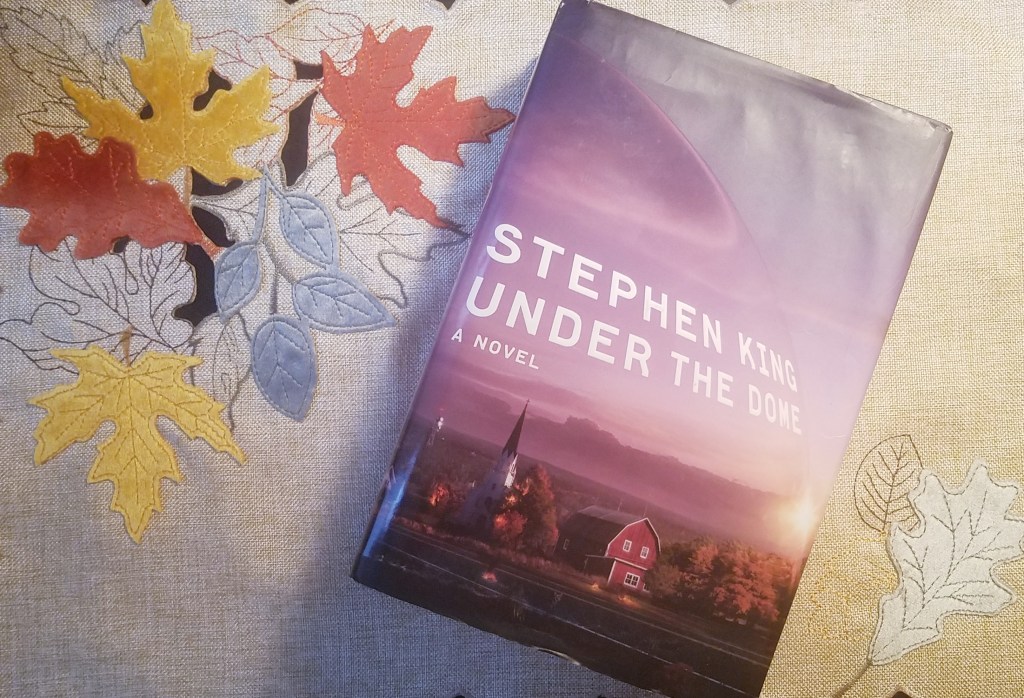
HORSE HEAVEN – Jane Smiley

There are some books that leave a lovely ache.  Some books that reach into your bones and squeeze until you say “NO MORE” but you keep reading anyway.  For me, Jane Smiley’s HORSE HEAVEN is one of those books.  Smiley is a talented author who can write with that perfect level of fervent passion that is often either too much or not enough.  Her level is the Goldilocks level – just right oh so matter of fact.  She won the Pulitzer Prize for Fiction in 1992 for A THOUSAND ACRES, a book I read ages ago after the movie came out. 

HORSE HEAVEN was published in 2000, but it just found its way to the top of my TBR pile.  Spanning two years and following all sorts of folks and horses in its 561 pages, this novel is a bit of a mouthful but at no point does it feel as if its spiraling or rambling.  Each word is placed with careful precision.  It makes for a beautiful world of beautiful creatures, but we all know horse racing isn’t beautiful.
The grit of this novel, the treatment of the horses, caused some expected unease.  For many in the sport, it isn’t about the individual horse – it’s about the sport, the race, the glamour, the victory, the roses.  And in the high stakes world of ponies, people will do just about anything to win.  And while the main four horses may have ultimately received the best happily ever after possible for them, their journeys to that point were not always pleasant.
Early in the novel, one of our main characters, Joy Gorham, mare manager at Tompkins ranch, opened a letter from an 11-year-old girl, Audrey Schmidt.  The young girl was, as many young girls are, bitten by the horse bug.  There was a horse near her school that she took a fancy to and began to care for.  The horse was mistreated and half-starved.  She contacted the Thoroughbred Protective Association and provided the information from the tattoo on the horse’s lip and learned that he was *Terza Rime, a stakes winner who won seven races out of 52 starts, who had been sold by Tompkins ranch.  The girl is leaving the area and is concerned about the horse she calls Toto, so she writes to Mr. Tompkins, the former owner.  She concludes her letter as follows:
I think that since *Terza Rima won $300,000 dollars for you, you should take him to your farm and keep him there.  My Dad says that that is what a decent person would do, but he doesn’t think very many horse people are decent.  You are in California.  We are in Texas.  That isn’t very far.
The reader quickly learns that this remarkable horse had been sold by Tompkins for $7,000 after serving his purpose as a racer.  Since he was a gelding, he was of no further benefit to the farm.  (Don’t fret – Joy gets the horse, and Audrey ends up getting her own pony after a series of unfortunate events for both her and the horse that ultimately ends up under her care.)
The sentiment that Audrey’s father had expressed rings true throughout the novel – many of the characters are not decent.  Horses are drugged, abused, raced with known injuries, and sold to slaughter.  They are often easily discarded without a second thought.  Don’t get me wrong – there are many people who love the horses, but those are seldom the people in positions of power.  Exercise riders.  Grooms.  Some trainers. 

Early in the novel, the wife of one of the owners finds herself in an affair with her trainer.  (No surprise there.) I liked this trainer.  I loved the leadup to the affair and the writing about and of the affair. I liked Rosalind with him. But the affair, like most, simply cannot continue.  This is a high stakes world.  And when it ends, Smiley wants to ensure her reader is finished with the trainer just as much as a Rosalind is; he hits her dog.  Eileen, a feisty Jack Russell (and one of my favorite characters in the whole novel), was doing terrier business and barking, and he hit her.  A vet was called and assumed she’d been kicked by a horse.  She’s fine, but the impact of that scene on Rosalind is felt by the reader long after Eileen has forgotten about – there was no turning back after that.  Not long after, Rosalind finds a new trainer – one who believes in her horse, hasn’t seen her naked, and doesn’t hit her dog.
HORSE HEAVEN is a novel of the human condition.  Our hopes and fears.  Our dreams and failures.  Our regrets.  It’s not pretty, but neither is life.
The heart of this novel beats fast, like hooves around a racetrack.  It’s gritty, messy, and uncomfortable at times – but gosh how she breathes.

BEST IN SHOW – Laurien Berenson

While everything is on lockdown due to COVID-19, I am still very much working and my amount of “reading time” has seemingly dwindled, so I’m a bit behind my 2020 goals. I’m hoping to pick it back up and better manage my reading and writing time. That said, Laurien Berenson’s BEST IN SHOW was a fun and quick cozy mystery for anyone who loves the sport of purebred dogs, cozy mysteries, or dogs in general.

I’d honestly forgotten about the hot pink hardback that I’d picked up from the used bookstore. I was working on one of my works in progress, which was a murder mystery at a dog show, and I wanted to see how Berenson handled explaining aspects of the dog show without interfering with the flow of the plot. (My WIP is dark, gritty and about as far from a cozy as you can get. I set it aside for Merchants Town and haven’t found the time to return to it.) In the spirit of “research,” I bought this one and another one, and then I promptly forgot about them. But when I looked at the TBR pile, that hot pink spine called for attention.

BEST IN SHOW is a Melanie Travis Mystery, and I may have been a wee bit disadvantaged to have entered into Melanie’s world so late in the game (this is book ten in a series that she is still actively writing), but it certainly can survive as a standalone. Set at the Poodle Club of America National Specialty Dog Show, the novel is full of poodle-love. (Berenson is most decidingly a poodle person.)

 Being part of what I call the “fringe” fancy (one foot in, one foot out), I am quite familiar with national specialties, and I know that PCA is the best of the best. My personal and professional experiences had me read this with a different lens, and at times I found some of her explanations obnoxious and unrealistic. (Example – I don’t much think she’d need to explain how PCA worked or how the handlers must pick up the poo at the hotel to a professional handler who has been in the sport for years.) I also questioned the trustworthiness of the narrator. At times, she seemed still the novice to the dog world, but her beloved Aunt Peg has been a top breeder of poodles for decades. Her brother is married to a professional handler. Her lover is a handler. She herself has bred a litter of poodles. This isn’t her first rodeo at PCA – though it is her first time showing; however, at times she acts like she’s never been before and doesn’t know who the Sisters, who have been running that raffle for years, are. She talks about how small the dog show world is and how the poodle world is even smaller, but she is puzzled by some of the professional handlers and doesn’t know the contenders.

 I imagine I wouldn’t feel this way if I’d started at the beginning of the series, so this likely isn’t a fair criticism. I also get that much of what she does is a writing choice that affords Berenson the opportunity to explain certain things and allows her to create an air of mystery around certain folks that is necessary in a whodunit.

That said, it’s a fun little mystery. There is a murder. There is an affair between a rich client’s wife and their hot handler. There is a “fix” in the winners ring. There is a pet psychic. There is a neatly tied up resolution with an unexpected twist solved by, of course, Melanie. And then there are the poodles. Berenson does a fantastic job of capturing and appreciating the electrifying energy of a poodle, both in and out of the ring. She equally does an excellent job of capturing the thrill of even just being pulled for the long list at such a prestigious show.

As a final note, this was published by Kensington Publishing Corp. and I imagine there were multiple folks who had their hands on this manuscript before it went to print. Yet this was printed: “The problem – as every dog show exbitor knew full was – was that bredding dogs wasn’t a money-making venture.” … … … (Yes, I know there are mistakes in my works, but I also didn’t have a publishing company behind me and I did run it through spellcheck once or twice…)

As a final note that is unrelated to the book, this year’s PCA was canceled due to COVID-19. I know this was a heartbreaking decision for many, and I wish the club, exhibitors, breeders, owners, spectators and remarkable poodles the best of the best come 2021’s show.

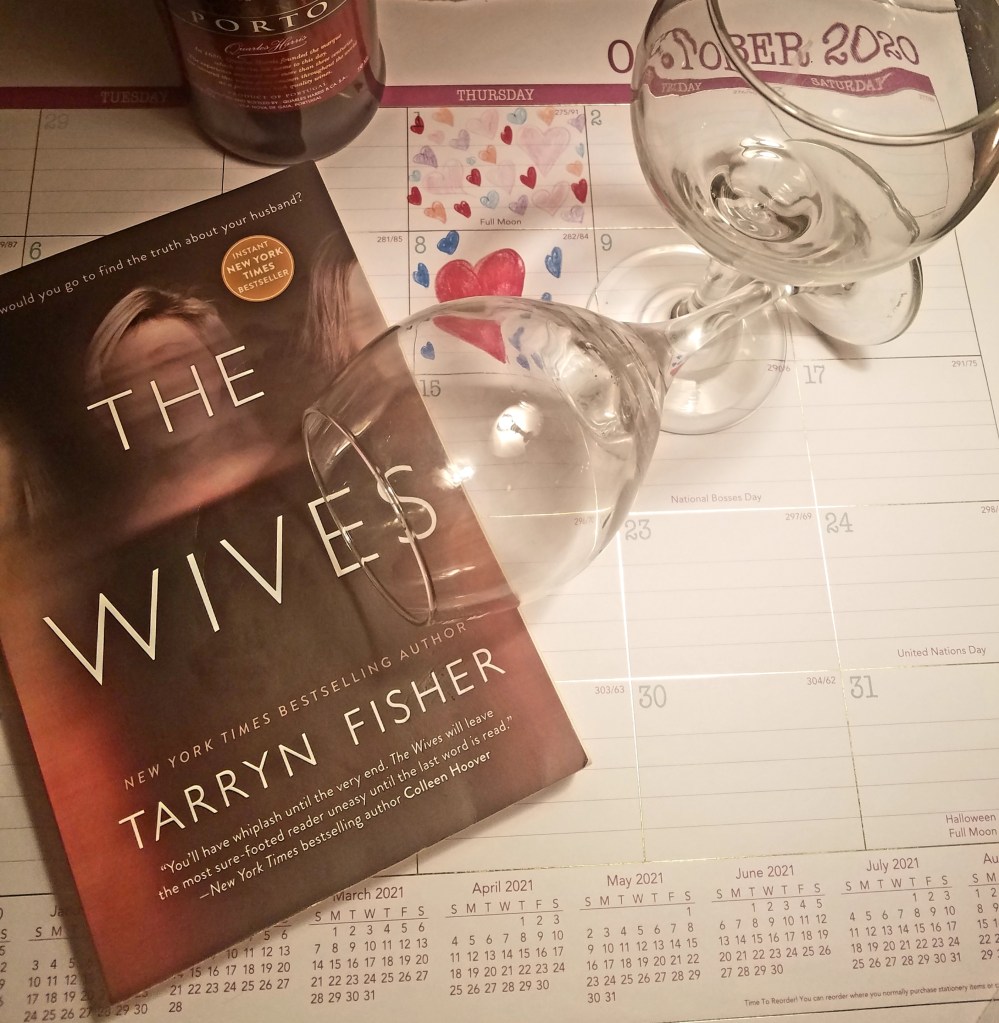
WEDDING BELLES – Haywood Smith

Let me start by saying that I love Southern fiction.  There are charming books set in the South, with charming women you want to go have brunch with.  WEDDING BELLES by Haywood Smith (2008) is not that book.  Georgia, Linda, Diane, Teeny, and Pru are notthose women. 

To be fair, I’ve never read anything by Ms. Smith, and this is the third book in the Red Hat Club series.  I picked it up at a little free library because the cover looked like something cute and sweet – a candy of a book.  Plot-wise, it had the potential to be an absolute romp and sometimes I want something sweet, like icing on a cake.  This is the first book in a very long time that I nearly refused to finish.
Let’s start with our narrator, Georgia Baker.  Bless her heart, but she is the absolute worst.  She is not a good friend.  She is not a good wife.  And she is not a good mother.  But she will proclaim that she is all three all the day long, and especially from the church pew come Sunday morning.
Exhibit A: She claims that she has been Wade’s close friend for 30 years.  Bullshit.  She’s hated that man since he sexually assaulted her friend Linda.  (And I won’t even touch on that little scene.)
Exhibit B: She wants the world to think she’s a good wife.  She repeatedly lets the reader know she purposefully married a man she didn’t love so she wouldn’t get hurt.  (They’ve been married for 30 years at this point.)
Exhibit C: She wants the world to think she’s a good mother.  She nearly causes her daughter to go into a panic attack over sex with a man she loves before marriage.  She lets someone else pay a lot of money to have the man her daughter intends to marry “checked out” by professional investigators.  The man who is also her close & personal friend. 

Again.  She is awful.
Her daughter, Callie, is marrying a man 30 years older than her.  But, as our Karen of a narrator makes quite clear, it’s not as bad as if Callie were marrying a woman.  And it’s certainly not as bad as Linda’s daughter and that “Osama-damned-son-in-law.”  (Those early sections made me not want to finish the book.)
Now let’s talk about the book itself, shall we?  There were certain things in the actual writing that annoyed me. 

1)      She repeats herself.  Over and over again.  I don’t need to be told five hundred thousand times that MYOB is Mind Your Own Business or that it’s Sacred Tradition of Friendship #5 – I get it.
2)      Rachel.  Why is she even in this novel if not a vessel to give one of the other women a slice of drama and to showcase again what filthy rich can do?  She flits into the novel like hell on wheels, drives the plot for a bit, and then gets married off to a rich widow.  Maybe they just needed a nasty northerner to remind Georgia that “family is family.”  She was intentionally underdeveloped, flashy as the moment required, and quickly discarded.
3)      Elena.  The best person in the novel is never actually seen.  But she birthed Peach and that little girl made the novel worth slugging through.  (I actually enjoyed Pru’s storyline.)
4)      She can’t remember Wade’s children’s names.  At first, his son is Scott and most certainly not named for Wade.  Then, through the detective’s report, we learn he has three children: Wade Robert, Brandon James, and Laura Elizabeth.  Suddenly at the wedding, his eldest son’s name is Tom.  Ummm…
I could go on, but I won’t.  I was not the audience for this book, and I don’t know that I have ever said that.  Additionally, there were some issues that I think an editor with St. Martin’s Griffin, an imprint of MacMillan, should have gleaned on to and “helped.”
A lot of people ADORE this series and these women; I am not one.