OUR EVENINGS – Alan Hollinghurst

“I lay there for agonized hours as the miracle of being in bed at him was nibbled away by the heat and the hangover and the longing.”

This year, I decided to get “a jump” on potential Booker books, and Alan Hollinghurst’s (a previous Booker winner) new novel, Our Evenings (Random House 2024) was a no brainer prediction for me. Even if not listed, I’d recommend it; Hollinghurst’s writing is simply beautiful. While reading, I likened the novel to a candy bar with a bit of everything – chocolate, nougat, caramel, nuts, Krispies… Every page was a delightful surprise.

Beginning when he turns 13, the novel spans the life of David Win, the son of a Burmese man he’s never met and knows next to nothing of and a British dressmaker. David has been awarded a scholarship to a prominent boarding school. There, he struggles with racism, classism, intellectualism, jealousy, and his own sexuality.  Also there, he finds his voice, a passion for acting, and a fragile relationship with the wealthy white parents of a classmate who sponsored the scholarship he’d won and serve as his patrons for years to come. What follows is a lifetime of loving, living, and learning – all the while Giles Hadlow and his parents remain in the periphery of his life.

Based on the opening to the novel, I wrongly assumed the book would focus on his relationship with Giles, a bullying teen and David’s first “relationship” who grew up to become the Brexit Minister with some questionable politics.  I was pleasantly surprised to learn Giles and the Hadlows, while ever present and playing prominent roles at varying times in his life, don’t define the story of David Win.

I don’t typically like books within books, particularly when you learn the book being written by the main character carries the same name as the book you are reading – so that aspect of the plot did annoy me.  Our Evenings, the book within the book, is the story of the men who spent their evenings with David – the first time the title appears is when he’s listening to music with a teacher – but the novel, while encompassing that, also focuses on David’s mother and her partner, his unknown father, and his relationship with himself as a brown gay man.

Hollinghurst’s storytelling is complex and delicious.

Read this book.

*Tune in at the end of the month to see if the novel is longlisted for the 2025 Booker!
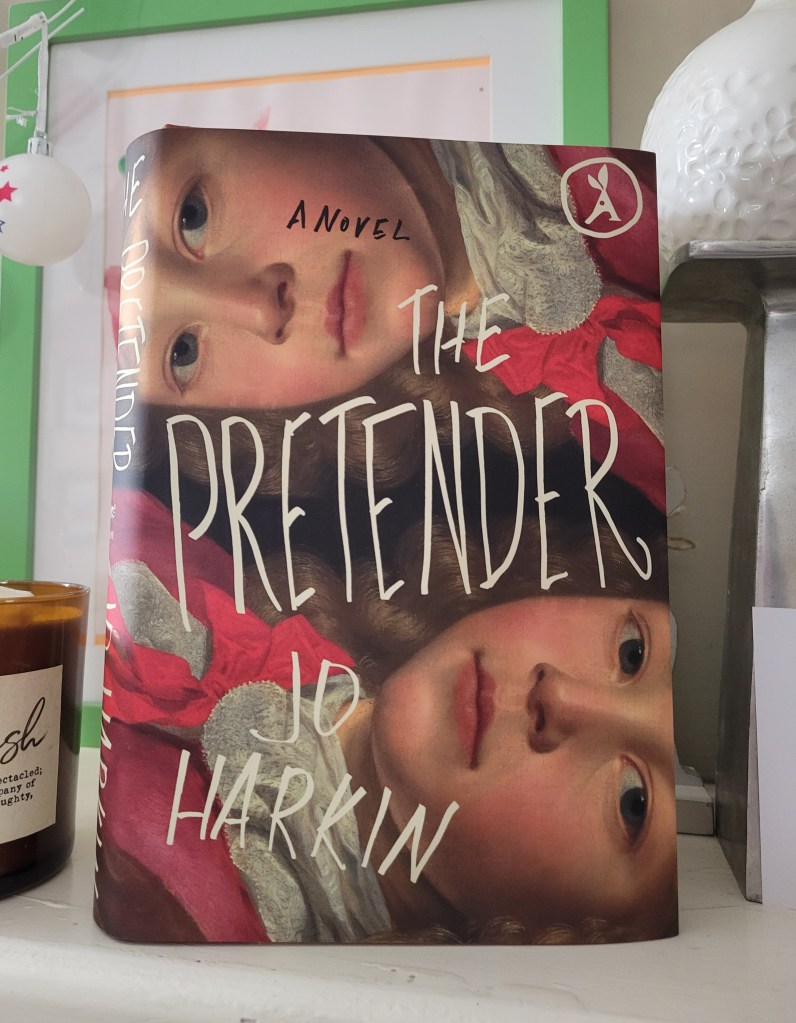
THE PRETENDER – Jo Harkin

“Lambert isn’t sure if he’d remember to answer to the name Lambert, but he does, every time. What kind of soul does he have, that can tip itself out of a John Collan cup into a Lambert Simons cup, without spilling a drop.”

In 1487, Lambert Simnel, a boy raised in obscurity and believed to be the true heir to the throne, was crowned as King Edward VI, last of the Plantagenet kings. He became the leader of the York rebellion. The rebellion failed, but King Henry VII took pity on the young boy – instead of putting him to death like many of the rebellion leaders, he put him to work as a spit turner.  Known as a “pretender” to the throne, Jo Harkin’s The Pretender (Knopf 2025) is based on his true story.  She breathed life into a footnote in history and created a 476-page novel full of history, wit, and heartbreak.

When the novel opens, John is a ten-year-old boy growing up on a dairy farm. He misses his older brothers who have gone to school, and he is being bullied by a goat. No one is more surprised than him when he learns that he is not his father’s son, he’s not John at all. He’d been put with the family for sake-keeping and is heir to the throne. His once-father had been paid. He is taken away from everything he ever knew – including his very name.

John, Lambert, Edward… he wears all the faces as he becomes the figurehead in the York rebellion – a young boy struggling with identity, belonging, and knowledge that he has zero desire to be king; he’d rather read books and tell fart jokes.

Lambert’s voice is well established and well crafted through the chunky novel, and while I think the novel may suffer from being too full of puffery in some spots, I do think it’s an overwhelming success and a fun read, albeit at times  difficult due to the authenticity of language.  (And who doesn’t love Joan?!?  Why couldn’t there have been more Joan!?!?)

Read this book.

TOLD BY STARLIGHT IN CHAD – Joseph Brahim Seid

Current installment of Tommi Reads the World – we are now in the C’s!!!

Country: Chad
Title: Told by Starlight in Chad
Author: Joseph Brahim Seid
Language: French
Translator: Karen Haire Hoenig
Publisher: Africa World Press 2007 (originally published in 1962)

The options for English translations of works from certain countries are extremely limited, and I had very options for a few upcoming countries.  Chad is one of them.  Told by Starlight in Chad was the ONLY work I could find translated in English. Luckily, Thriftbooks had a used copy available for purchase because the library has been a deadend for a lot of these selections.

Told by Starlight in Chad is a very slim volume of folktales/fairytales for the region. The oral tradition of storytelling and the importance of the land, faith, and their animals is prominent (as is the case in most folktales).  My favorite is “Bidi-Camoun, Tchouroma’s Horse” – a lovely little tale about a prince with a talking horse. (Bidi-Camoun is said to be the ancestor of the country’s “sturdy, swift steeds.”) “The Lion’s Justice” reminded me of another folktale I’ve read, I just can’t place it or the country. It makes sense – I’ve said before we are far more alike than we are different, and folktales the world over show that.

I am so glad I set off on this journey around the world.

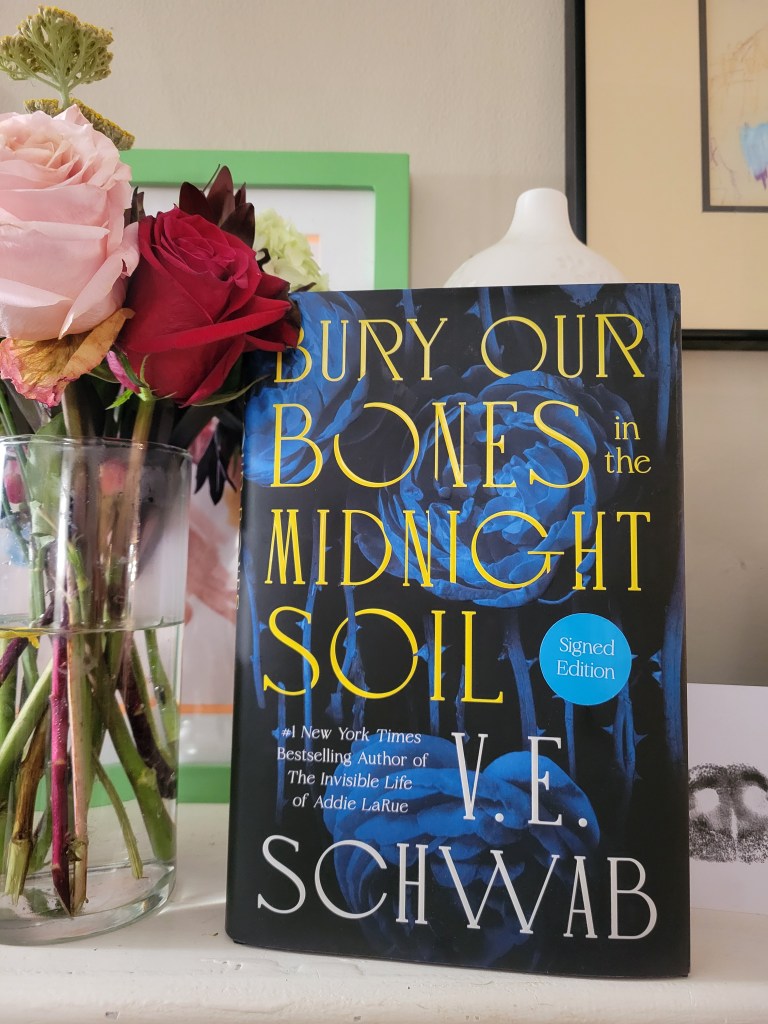
BURY OUR BONES IN THE MIDNIGHT SOIL – V.E. Schwab

“It is easy, isn’t it, in retrospect? To spot the cracks. To see them spread. But in the moment, there is only the urge to mend each one. To smooth the lines. And keep the surface whole.”

Toxic lesbian vampires. That’s how V.E. Schwab’s Bury Our Bones in the Midnight Soil (2025 Tor) was marketed. And it’s not wrong. But it’s also woefully inadequate. As someone who spent many a night in the 90s reading Anne Rice’s The Vampire Chronicles, this novel gave me something I haven’t had in ages. Twilight it is not – and that’s a good thing. With the slow burn pacing of The Invisible Life of Addie LaRue, Bury Our Bones in the Midnight Soil is bloody and wicked, morally grey characters wink and nudge and bite and tug at you.  Sabine, Lottie, and Alice are perfectly imperfect feral roses, in various stages of rot, and I loved the way this novel made me feel – tickling the recollections from my youth with also the whispers of Addie. Schwab can weave a wicked tale – and that slow burn pacing can still leave one breathless with a  quickening pulse.

The novel, which jumps in time and space, follows Sabine (turned in 1532), Lottie (turned in 1827), and Alice (turned in 2019) from Spain to Italy to England to the United States, with centuries of blood and bodies and brokenness in their wake.  They all have a hunger that cannot be satiated; and it’s just as much a bloodthirst as a longing for love that gnaws at them.  Alice, newly turned, is a bit of a pawn in a game of cat and mouse between Lottie and Sabine that has been going on in earnest since 1943.  Theirs is indeed one of toxicity.

I hated Sabine, but I loved her before she turned. I wanted more Lottie – more of the obsession and not the chase. (Lottie is unreliable. She gets her thrills too, don’t let her convince you she doesn’t.) And Alice – the girl who tastes like grief before she’s turned and winter once she blooms – her character hiccups along initially and I found some actions a bit out of character, but by the end, she is indeed born of both Sabine and Lottie.  (And I’m still not sure how I feel about that.)

In short, it’s a quick read with an intoxicatingly savoring pace. Anne Rice would have loved this book.

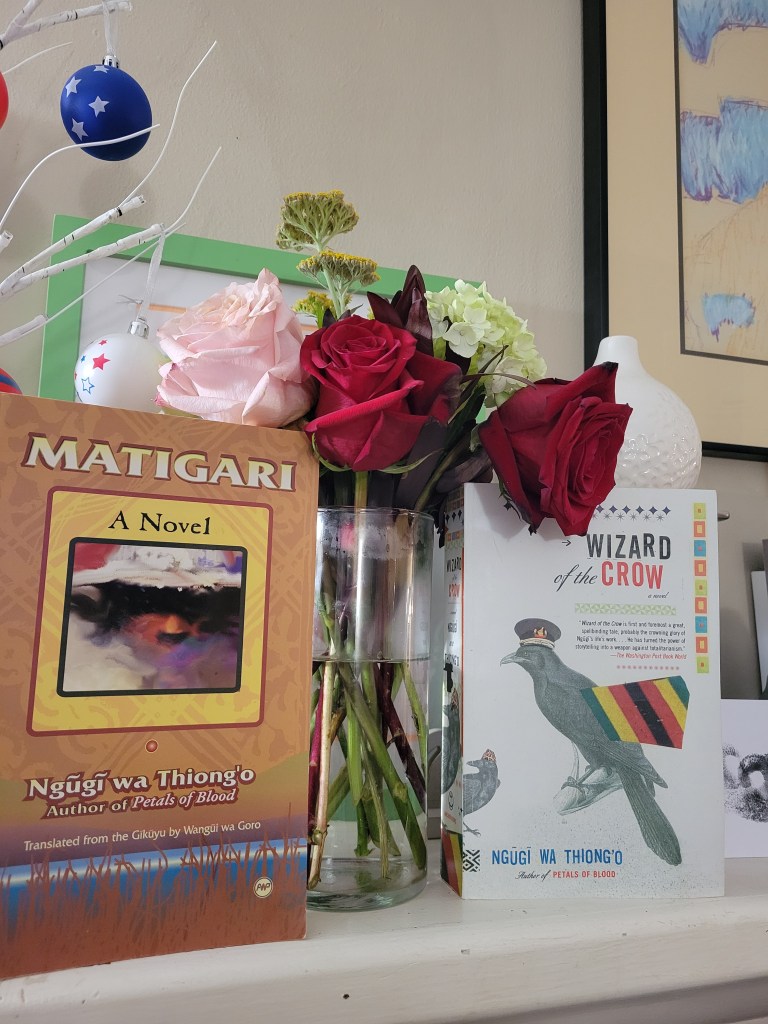
WIZARD OF THE CROW – Ngũgĩ wa Thiong’o

“Nyawĩra and Kamĩtĩ drifted from group to group till they came to a crowd around a storyteller with a single-stringed violin.”

Ngũgĩ wa Thiong’o passed away on May 28, 2025. I didn’t know until recently, but perhaps that’s why Wizard of the Crow ( 2006 Random House) called out from my shelves of the unread. I knew of Thiong’o – I studied him and Matigari (1998 African World Press) back in 2003. He was a champion for African literature, particularly from his native Kenya. Perhaps more importantly, he was a champion of native African languages; his novels were written first in Gikũyũ before being translated by the author into English.

While significantly longer than Matigari, Wizard of the Crow has similar themes of postcolonialism, political corruptness, and a people finding their voice – there’s magical realism, biting commentary, and a dry humor to the writing that will have you chuckling.  It’s difficult, complex, and really flippin’ funny.

Set in the fictional “Free Republic of Aburĩria,” the novel follows Kamĩtĩ, a beggar with seer capabilities, and Nyawĩra, a young woman who has been kicked out by her wealthy father and is now part of a rebellious group set to take down the Ruler and his corrupt administration. A twist of fate brings them together not once, but twice, and to avoid being arrested, Kamĩtĩ quickly takes on a persona of a sorcerer – the Wizard of the Crow.  What started as a lie to avoid arrest and exposure snowballs as both Nyawĩra and Kamĩtĩ get pulled into the Ruler’s web. (The Ruler has announced his  “Marching to Heaven” campaign and efforts are underway to get funding from Global Bank.)

The whole ruling party is corrupt and there’s infighting and distrust between everyone with even a hint of power – they will kill each other to be the Ruler’s right-hand man. One minister enlarges his ears to better be the Ruler’s ears. One has his eyes enlarged. Another his mouth (that one comically fails).  One has an arm and leg turned white before the clinic closes for fraud.  Meanwhile, the Ruler is suffering from his own comical ailment.

It’s biting and funny, and if you’ve never read Thiong’o, now is the perfect time.  Like a lot of African literature, there’s an air of storytelling that just pulls you in – an oral tradition finding its way to the page.

TWIST – Colum McCann

“We are all shards in the smash-up.”

“Everything gets fixed, and we all stay broken.”

As y’all know, I read the Booker longlist every year. Sometimes, I try to get a jump on things by reading eligible books that smell Bookery.  (If you follow the Booker Prize, you’ll know what that means.) The buzz around Colum McCann’s Twist (Random House 2025) and its summary let me know the slim novel has that Booker scent. After reading it, I can’t imagine it not being listed provided it was submitted for consideration. (I suppose we’ll find out together on 7/29!)

The novel follows Anthony Fennell, an Irish journalist and playwright who is a bit fond of the bottle, after he gets assigned to a story about the underwater cables that transmit our telecommunications around the world. In particular, he’s tapped to do a story on a cable repair. He flies to South Africa where he joins the crew of the Georges Lecointe, the repairs under the direction and leadership of another Irishman with a fondness for a drink, John Conway.  Prior to leaving Cape Town, he meets John Conway’s domestic partner and children. Zanele is a stunning South African, and Anthony is captivated by her almost instantly.  This captivation dances around obsession while Anthony is out at sea.

There’s a watery Great Gatsby feel to the novel that emerges from the waves with a glaring intensity in the second half. The repair is over. The article has been written. Anthony is back on land. John, however, is missing; he’d vanished from the boat off the coast of Ghana.

In this man vs. technology and man vs. man mashup, McCann has mastered a writing that oozes uneasiness, leaving the reader just as unsettled as Anthony. When you turn that final page, you’re going to want to hide your devices, touch grass, and maybe even talk to a stranger on the street.

Read this book.

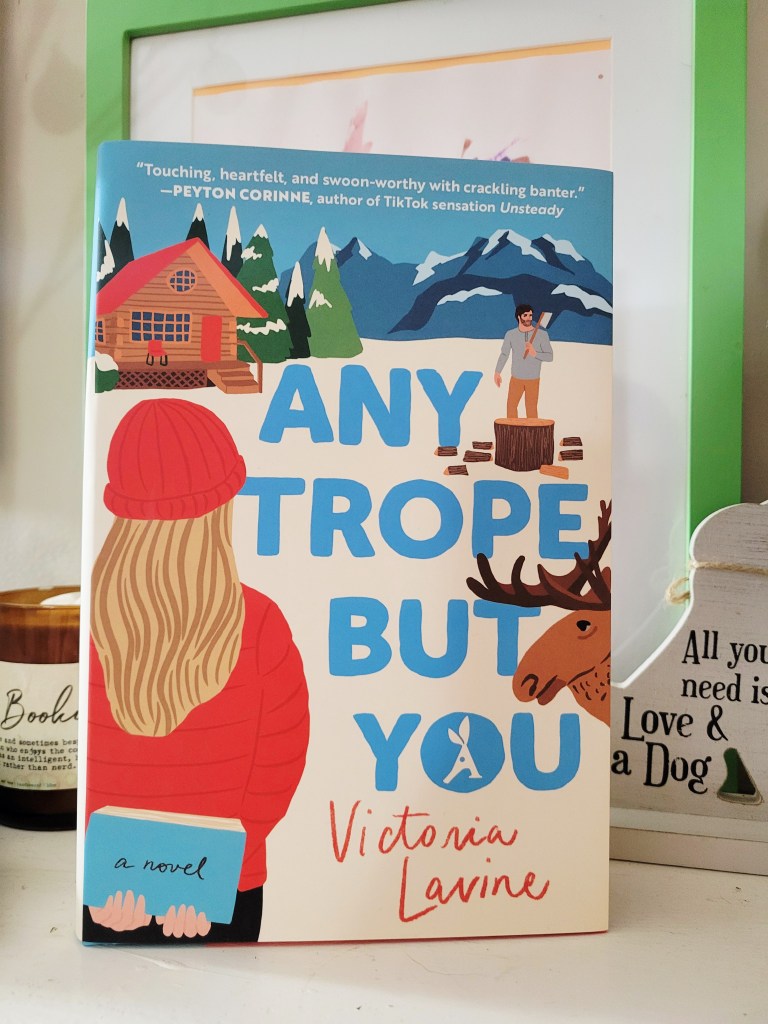
ANY TROPE BUT YOU – Victoria Lavine

I wanted a cute, candy read.  A Hallmark movie in book form.  Set in the remote wilderness of Alaska with a romance author from California and the hunky lumberjack son of the proprietor of the resort she’s staying at? That sounds like a delicious candy book.

And Victoria Lavine’s Any Trope But You (Atria 2025) IS cute, don’t get me wrong, but parts of it just hurt my teeth.

Margot is a very famous romance author who had a bit of fall from grace when her secret files of alternate endings become public. Since the world now knows she doesn’t believe in HEA, maybe it’s time for a murder mystery. She is tiny and gorgeous, a biting ray of sunshine and very much a fish out of water in Alaska .

Forrest is the compilation of every leading male in all her novels. He works at the Alaskan resort, a towering lumber jack of a man, who just so happens to be a doctor studying breast cancer. He is wicked intelligent – a true Doogie Howser with a heart of gold. He’d left a prominent position in California to return to Alaska after his father became injured.

It’s insta-lust when Margot launches herself into his arms after being scared by a half-tamed moose she thought was a bear.  (Let’s be real – there should have been more Bullwinkle.) The tropes stack up, as expected, and her cheeky reaction to the tropes as they unfold in her actual life are pretty fun, but that loses steam by the midway mark.

They become unreasonably head-over-heels in love with each other, without even knowing much of anything about each other. (Hate it.) The focus on the “he’s so big” element also grew tiresome; if I had to read one more time about how tiny she was and how massive he was, I would have vomited. (The business end of a ball bat, eh?)  Both of them need hardcore therapy, and this relationship is a bandaid over their broken bits.  (Fix yourself, people. Just because he fills your holes, doesn’t mean he heals your soul.)

That brings me to the spice.  Margot jokes that her and Forrest’s love story is Hallmark meets Pornhub – and that kind of nails the novel as well. (Pun intended.) I’m sorry – it was just as cringe as the spice scenes Margot and her sister mock early on in the novel.  Not all of them – but a lot of them.  (I loved the tent scene – but I enjoy one bed tropes.)

In conclusion, it’s cute. It’s a quick read. You know there will be a HEA (but let’s be real, one of Margot’s alternate endings is more likely with two people so in need of selfwork) and there is some heat.

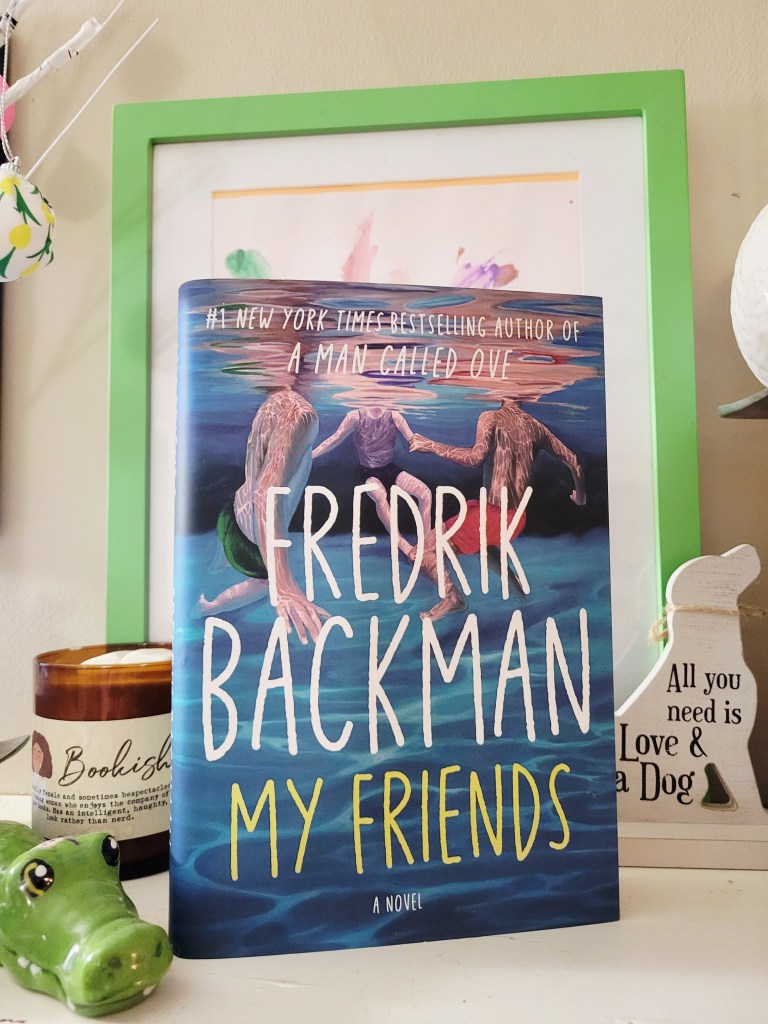
MY FRIENDS – FREDRIK BACKMAN

“Twenty-five years later he still wishes for the same thing, that he was fourteen years old and that the world was full of broken clocks.

“As seventeen-year-olds they would sleep next to each other almost every night in the foster home, with ice cream stains on their clothes and each other’s laughter in their lungs, a chest of drawers against the door, each clutching a screwdriver  in case anyone tried to get in.”

It shouldn’t come as a surprise that Fredrik Backman is my favorite hearthug & heartbreak author – no one else can shred my heart into a million pieces in the span of five words before following it up with a fart joke that has me chuckling through burning eyes, lump still in throat.  He writes humans and life better than anyone. Life is gritty and bloody, and trust is to be guarded. But we laugh.  We laugh through bruises and broken bones, through dark days and stolen innocence.  And there is nothing more beautiful than when you find one of yours and there’s more laughter than before, and My Friends (Atria 2025), a novel about four fourteen-year-olds and the events that unfolded that last summer before they turned fifteen, is beautiful.  You’ll cry. But you’ll laugh.  Hard.

I don’t want to spoil this novel, so I’m not going to talk about the actual plot.  I will say that even with the Donna Tartt reference, My Friends is likely going to be in my top five at the end of year. (I don’t like the literary brat pack. We’ve discussed this before.) This novel was reminiscent of Beartown and My Grandmother Asked Me to Tell you She’s Sorry – pulling at some of the very things that made me fall in love with Backman’s writing to begin with. Unsurprisingly, it gave me echoes of Stephen King and, surprisingly, Fried Green Tomatoes.

If you haven’t read Backman, I’d recommend starting with My Friends or Beartown or My Grandmother Asked me to Tell You she’s Sorry – or, what remains likely my favorite, A Man Called Ove.

Read this book.  And remember, life will break your heart, but if it didn’t, you wouldn’t be living.

“I love you and I believe in you.”

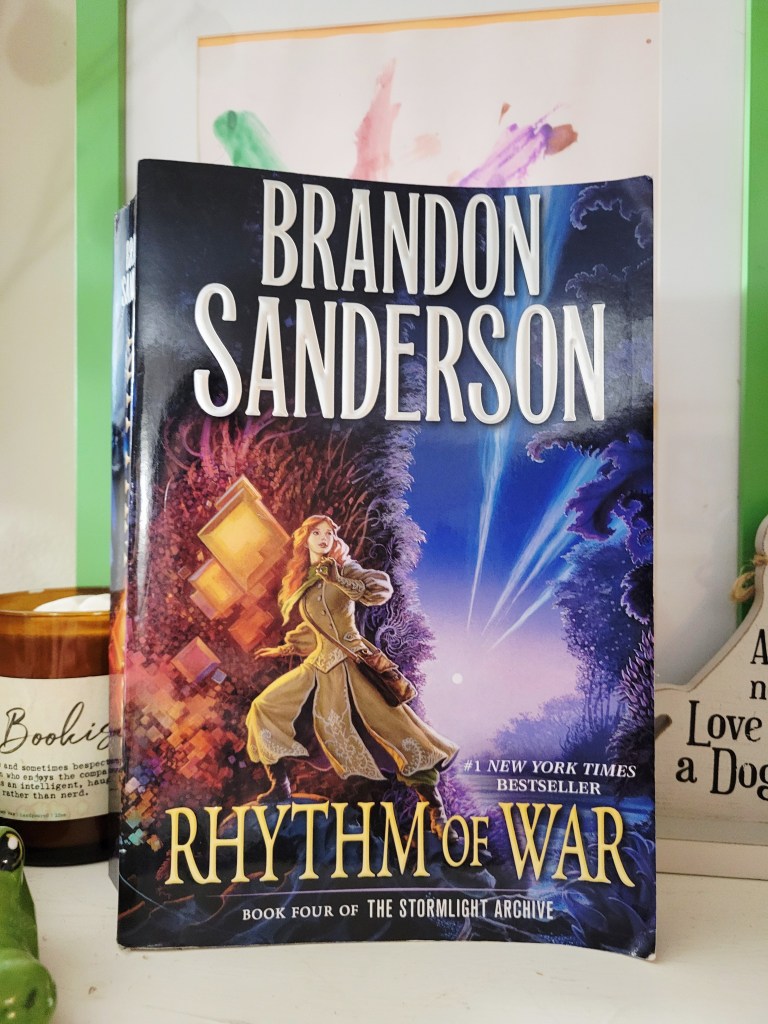
RHYTHM OF WAR – Brandon Sanderson

“If we slow down,” Jasnah said, “the past catches up to us. History is like that, always gobbling up the present.”

The year of Sanderson continues and while I may have had a rather slow month of reading in May, I did finish Rhythm of War (Tor 2020).  Book four of The Stormlight Archivemay very well be my favorite.  I’m still Bridge Four forever, but Adolin…  somehow the non-Radiant became my heart.

We get more of Venli and Eshonai, as well as seeing the rebellion brewing amongst the Fused, but this novel seemed too much like two novels for me.  I wish the occupation of the Tower, the Rhythm of War tone and the discoveries of Navani, while captive, and Raboniel were the dedicated focus. That would also include Venli and Eshonai and the flashbacks there, which I appreciated but wanted more flesh because I couldn’t reconcile what I was being presented with Eshonai’s viewpoint in earlier works.

The storyline with Adolin and Shallan on a mission to Shadesmar to convince the honorspren to bond with humans again, particularly the role of the Dead Eyes, is such great storytelling.  While I understand why these storylines happening at the same time were important for the evolution of the story and how the two plots work together,  both are such great storylines that interrupting one to give a taste of the other annoyed me every single time.

The portrayal of mental health, most noticeably with Kaladin and Shallan, is respectfully and talentedly done.  Suicidal ideation is prominent throughout the series, beginning with book one.  In Rhythm of War, they name it and claim – and a healing starts while the world continues to burn down around them.

I love these characters, and I do not regret starting my Sanderson journey with Stormlight.

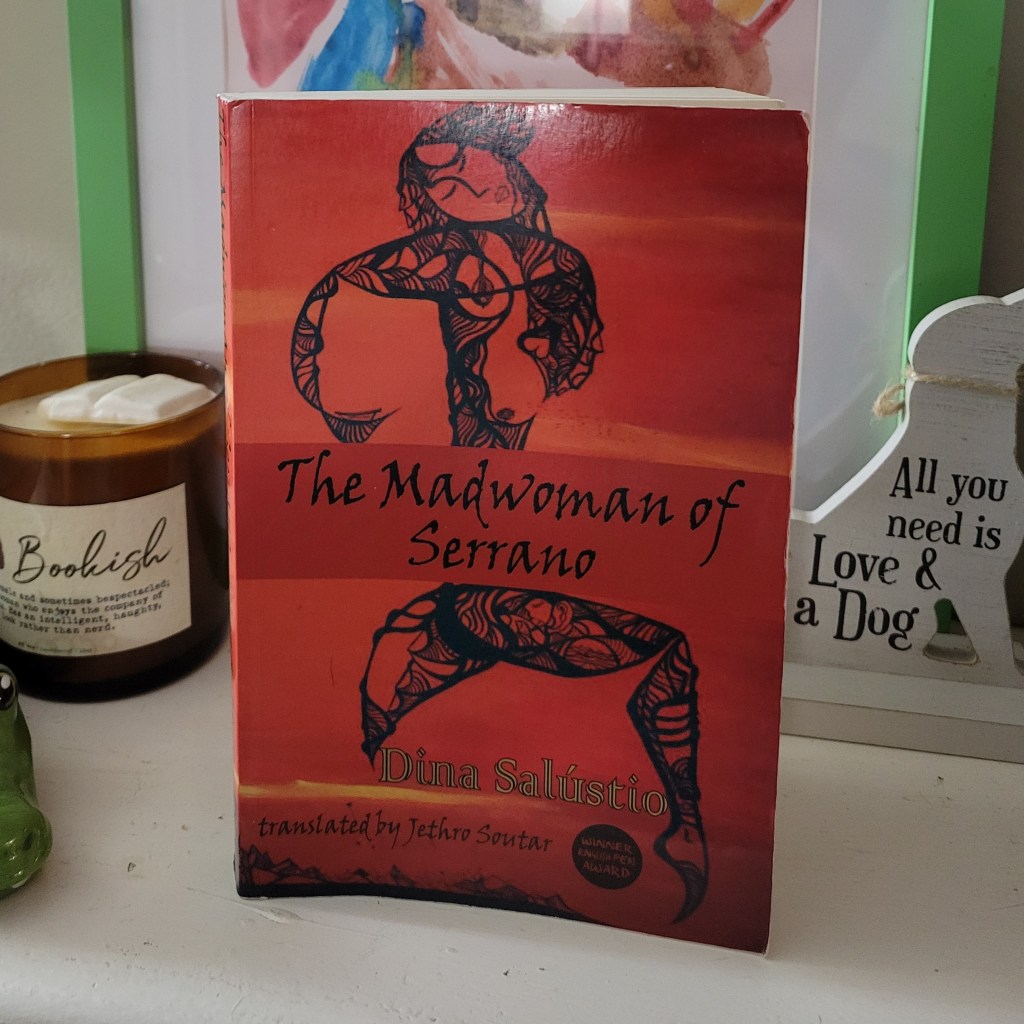
THE MADWOMAN OF SERRANO – Dina Salústio

Current installment of Tommi Reads the World – we are now in the C’s!!!

Country: Cape Verde
Title: The Mad Woman of Serrano
Author: t
Language: Portuguese
Translator: Jethro Soutar
Publisher: Spleen Ediçũes (1998), English translation Dedalus (2019)

The Mad Woman of Serrano was the first novel by a female author to be published in Cape Verde, and the first to be translated into English. It’s a magical realism novel about Serrano, a rural village set apart from the city, and what happens when the village is thrust into the world. When the village is “discovered” and the men forced to join the military as required by all citizens, their way of life changes because their dreams change.  Perhaps the biggest change comes from a plane crash with a sole survivor who winds up in the village, pregnant and confused.  The novel primarily follows her daughter, Filipa, who is raised in Serrano, but eventually taken from her home. In the city, she attempts to come to terms with her identity and decisions made by her mother’s prominent family, while struggling with the  memories of her childhood, her adopted father, and her only friend – the village’s madwoman. 

The history of Serrano and the stories about the folks who called it home are my favorite.  The lore of the midwives, the women who birth every child of the village (except for Filipa, which is part of the problem) and who take the virginity of every boy years later, is a well developed thread. It can get a little  confusing, likely due to the translation and the magical realism aspects, but it’s well worth the journey.