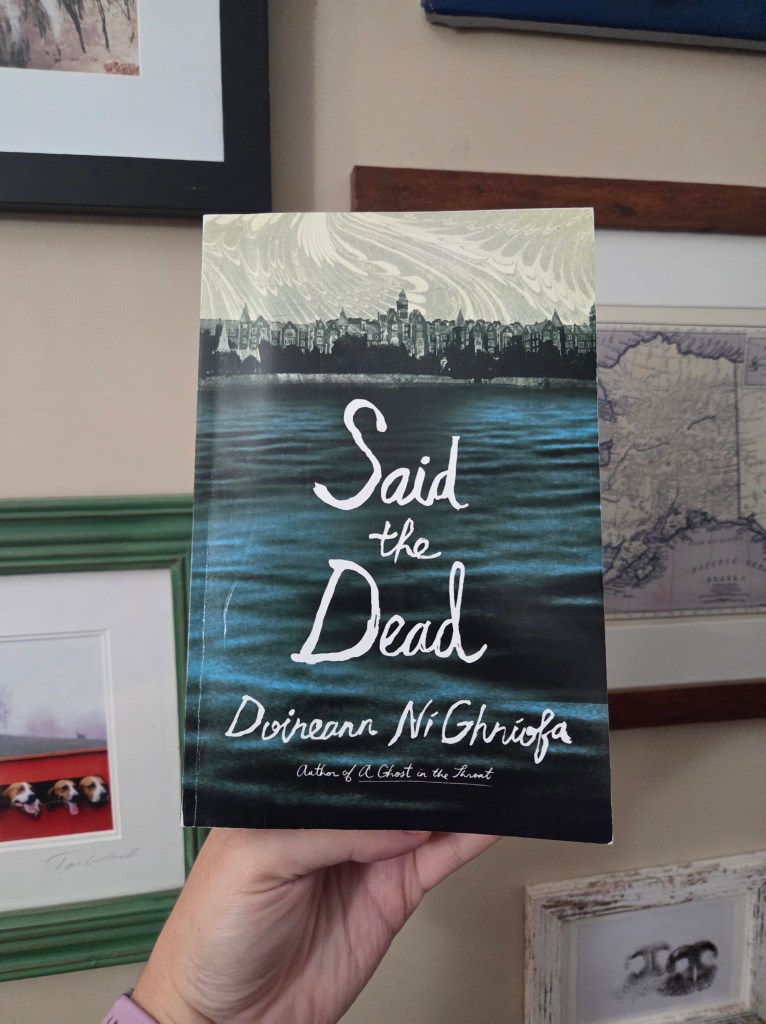
Doireann Ní Ghríofa’s Said the Dead (Farrar, Straus and Giroux 9/22/026 – a huge thanks to the publisher for the galley copy) is one of my top reads of the year. I have to assume it wasn’t submitted for Booker consideration, likely due to the genre-blurring elements that lean heavily into nonfiction, because I can’t imagine a panel that would intentionally pass on this novel. I personally think Said the Dead, Son of Nobody, Transcription, and May We Feed the King should all be studied together (and I really would have appreciated them all on the longlist, but we only got one).
Said the Dead is genre-defying, but it is very heavy on the nonfiction. The novel follows someone called the “Reader” who is finally named at the end of the book at Doireann as she dives into the archives of a derelict Victorian mental hospital in Cork, Ireland. She spends years pouring over the casebooks, following mostly the notes and life of Dr. Lucia Strangman. Breathing life into the patients, the Reader takes us, the second reader, along on a ghost story, with the women in the asylum and their stories taking center stage. They will not be forgotten. The Reader, obsessed with the asylum, Lucia, and the women, teeters on madness herself.
As the Reader recreates the past, she slips into it. Her trespass into the past is often noticed by the patients and on occasion, a doctor. She once exposed the hiding place of a thief. (How this works in the text is a bit like how Perry does it in May We Feed the King.)
I gravitated to the women who had babies in the asylum or who were admitted not long after birth. This is likely due to the current interest in postpartum psychosis in the States as the jury continues to deliberate in the Clancy trial. But all the bits are marvelous. From Ernest’s injury and a fleeting fear that history will repeat itself in another hunting accident to memories of grandchildren of a woman they loved – it’s a remarkable novel.
Read this book.

