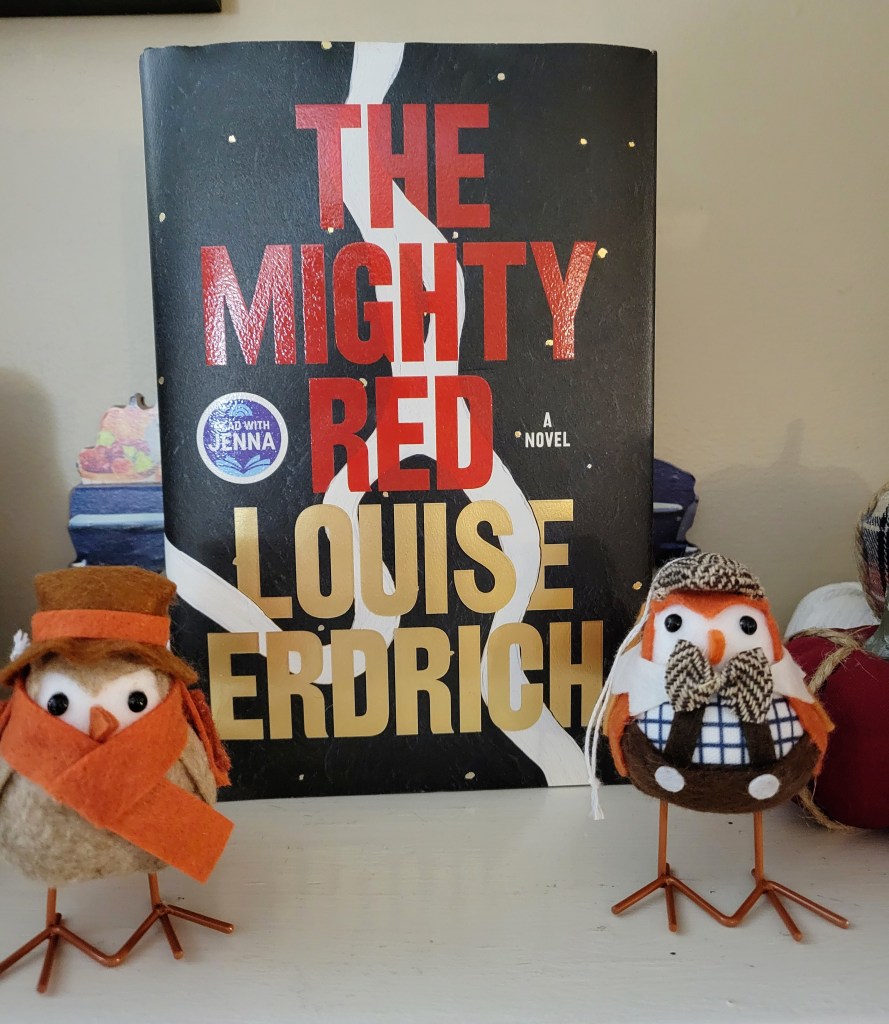
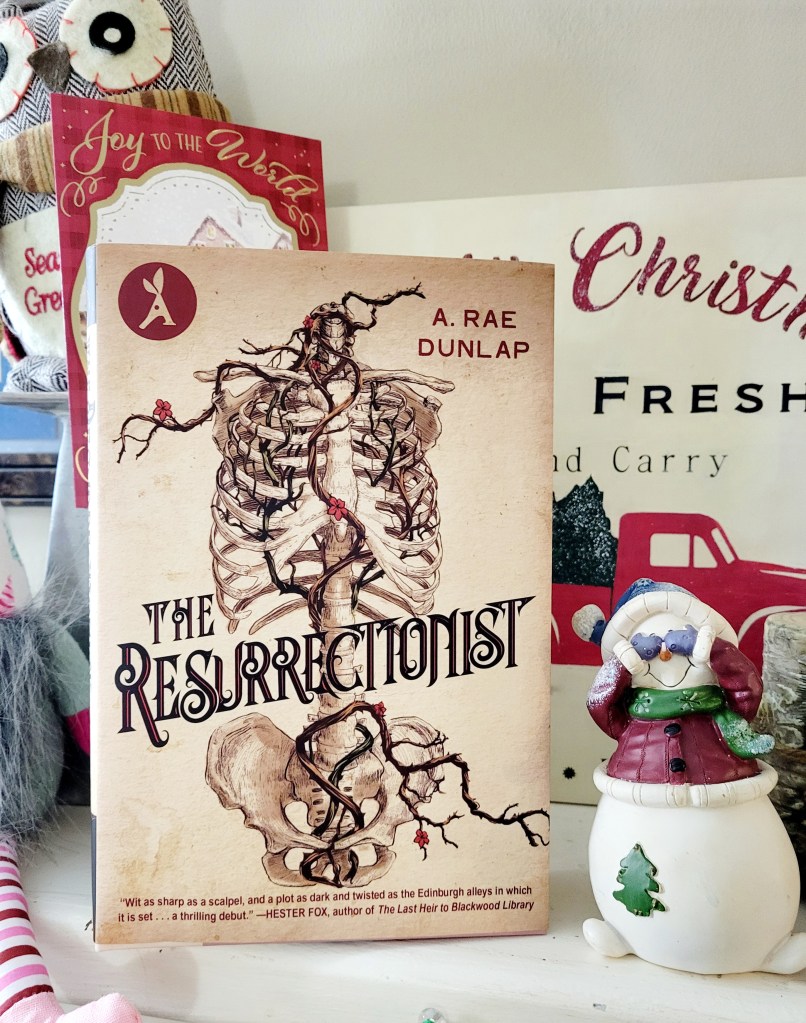
THE MIGHTY RED – Louise Erdrich

“Like the mighty red, history was a flood.”

“So it was, every teaspoon of sugar that was stirred into a cup or baked into a pudding was haunted by the slave trade and the slaughter of buffalo.  Just as now, into every teaspoon, is mixed the pragmatic nihilism of industrial sugar farming and the death of our place on earth. This is the sweetness that pricks people’s senses and sparkles in a birthday cake and glitters on the tongue. Price guaranteed, delicious, a craving as strong as love.”

For me, Louise Erdrich never fails. I’ve said before and I’ll say again, reading her work is like meeting up with an old friend and marveling at how they’ve changed and at all the ways they’ve stayed the same.  The Mighty Red (Harper 2024) is no exception. Dedicated to “those who love birds and defend their place on earth,” this novel comes out swinging with characters you won’t soon forget.

From the dying earth to the bleached bones of the forgotten ancestors to the chemicals and vanishing birds, this is an econovel that takes a stark look at human accountability or lack of accountability for what we’ve done in the name of profits, in this case the main focus is chemicals used in sugar beet farming that destroy everything but the sugar beets.  (The historical segway into how buffalo bones were used to refine sugar in the 19th century is something I won’t soon forget.)

Set in the Red River Valley of North Dakota, the novel follows Crystal, a hardworking woman who hauls sugar beets; Crystal’s husband (despite never marrying), Martin, a down on his luck actor who is really bad at finances but somehow was put in charge of managing the church’s renovation fund; Crystal’s daughter, Kismet, a really smart Goth high schooler; Hugo, the homeschooled son of the bookstore owner who is madly in love with her; Gary, the star football player and son of a beet farmer who is believed to have a guardian angel and is convinced he has to have Kismet to keep his ghost at bay; and Winnie, Gary’s mother, who is teetering on insanity, living on her parents farmland that they’d lost to the man who later became her father-in-law – a man who’d razed her family home and destroyed the soil for profit.

The quick and dirty – the church renovation fund is at zero, Martin has disappeared, a mortgage has been placed on Crystal’s house without her knowledge, Kismet marries Gary, despite still being involved with Hugo, Hugo heads west to make money in the oil fields so he can steal her away, there’s been a string of bank robberies, and the truth about what really happened in the accident that took the lives of two football players emerges.  All the while, some farmers are trying to breathe new life into the dead soil and bring the birds back.

We need this novel.  More than ever.  Remember, there is no planet B, and that books and reading are both political.

Read this book.

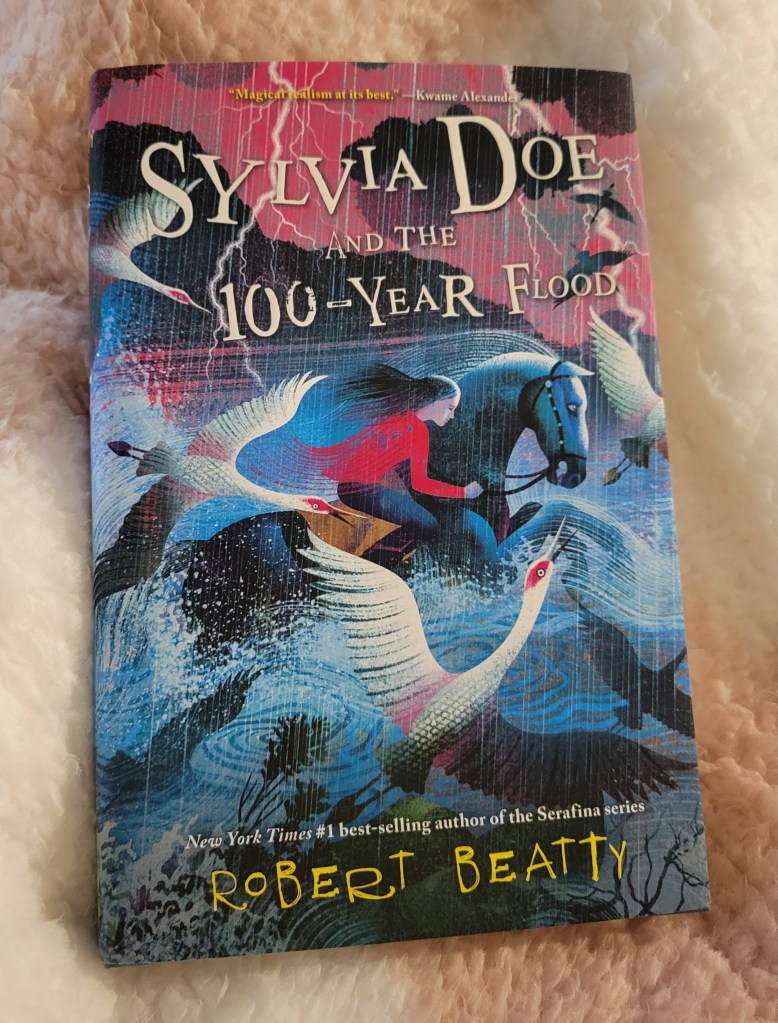
SYLVIA DOE AND THE 100-YEAR FLOOD – Robert Beatty

“She was thirteen now, and the one thing she knew how to do was run away.”

I met Robert Beatty several years ago just after the release of Serafina and the Seven Stars. My oldest niece loved the Serafina books, and I wanted to surprise her with a personalized autographed copy of the newest release.  Pretty much the entire second floor of the two-story B&N was standing room only.  (Since I could see over the heads of most in attendance, it didn’t both me.) Special drinks in tiny Starbucks cups were distributed for the occasion.   Children, both boys and girls, vibrated with excitement and energy.  It was like being inside of a beehive, the place was alive.  And it was alive with children whose joy at meeting the man who gave them Serafina could not be contained.  It was contagious. Watching children reading and excited about books and authors, and asking engaging, thoughtful questions, still gives me hope.  Let them read.  And let them be bold.

You guys know I support NC authors, and Asheville is Beatty’s home and muse. You guys also know that western NC, including Asheville, was battered, bruised, and broken by the floods caused by Hurricane Helene.  Beatty’s newest book, with a new heroine, was released just after the flooding. In an unfortunate twist of fate, his new release is about a great flood in western NC, spawned by Hurricane Jessamine.  Beatty is donating 100% of earned royalties from Syvia Doe and the 100-Year Flood (Disney Hyperion 2024) to families impacted by the flooding.

Now on to the book.

Sylvia Doe is an orphan, and when the novel opens, she is running away from her latest foster home.  She’s running to Highground Home for Children, which is the closet thing to a home and a family she has. Hurricane Jessamine has battered the coast and it’s flooding in the mountains.  Sylvia is worried about the horses at Highground, particularly her horse, Kitty Hawk.

What follows is an action-packed adventure of magical realism, bravery, and found families.  Sylvia is very smart, and she carries field guides with her. The novel is interspersed with her scientific discoveries, including her drawings. These entries are likely my favorite parts of the novel.  I also enjoyed her relationship with Mason, though the novel dances around issues with race without really connecting to the beat.

I’m not sure if this is a planned series, but it should be. There is too much material with Highground and the Chutes for it not to be. If it’s not a series, the ending is a bit messy and untidy.

The novel hiccups, but I think it will hit soundly with its intended audience.

Consider this the first of my “Middle Grade Mondays” – and read this book.

My 2024 Booker Prize Longlist Rankings

The 2024 Booker Prize winner will be announced Tuesday, and this is the first year I have read the entire longlist prior to the announcement. (I will not meet my Goodreads goal, so this is my reading accomplishment of the year!)

If you’ve followed me, you know I had some predictions prior to the announcement as well as some predictions regarding the shortlist (I nailed four of six!).  You would also know that I think two books were shortchanged on that shortlist.  (Justice for My Friends and Headshot!)

My winner is Charlotte Wood’s Stone Yard Devotional with Yael van der Wouden’s The Safekeep close on its heels.  But how would I rank all 13? Depending on the day you ask, my rankings might shift, but there are some books consistently in my top and some consistently in the bottom.  I picked my shortlist selections due to what I preferred and also what I thought would be chosen, so there are some that I predicted that don’t appear in my personal top six.  (Perhaps an unpopular opinion, but I wouldn’t have shortlisted James – The Trees, absolutely, but not James.)

Without further ado, here’s my ranking of the 2024 Booker Prize longlist.

  1. Stone Yard Devotional (Shortlisted)
  2. Headshot
  3. Enlightenment
  4. My Friends
  5. The Safekeep (Shortlisted)
  6. Playground
  7. Creation Lake (Shortlisted)
  8. James (Shortlisted)
  9. Wandering Stars
  10. Orbital (Shortlisted)
  11. Wild Houses
  12. Held (Shortlisted)
  13. This Strange Eventful History

All reviews are posted on my website.  What do you think?  Any surprises?

Should my goal be the entire longlist before the shortlist announcement next year? As for now, I’ll resume chipping away at “Tommi Reads the World” (eventually) and getting as close to my 90 book goal as I can.  I’m currently loving The Mighty Red, but I’m not surprised – reading an Erdrich novel is like lunch with an old friend.

May the remainder of 2024 be full of excellent reads.  And remember, books and reading are political.

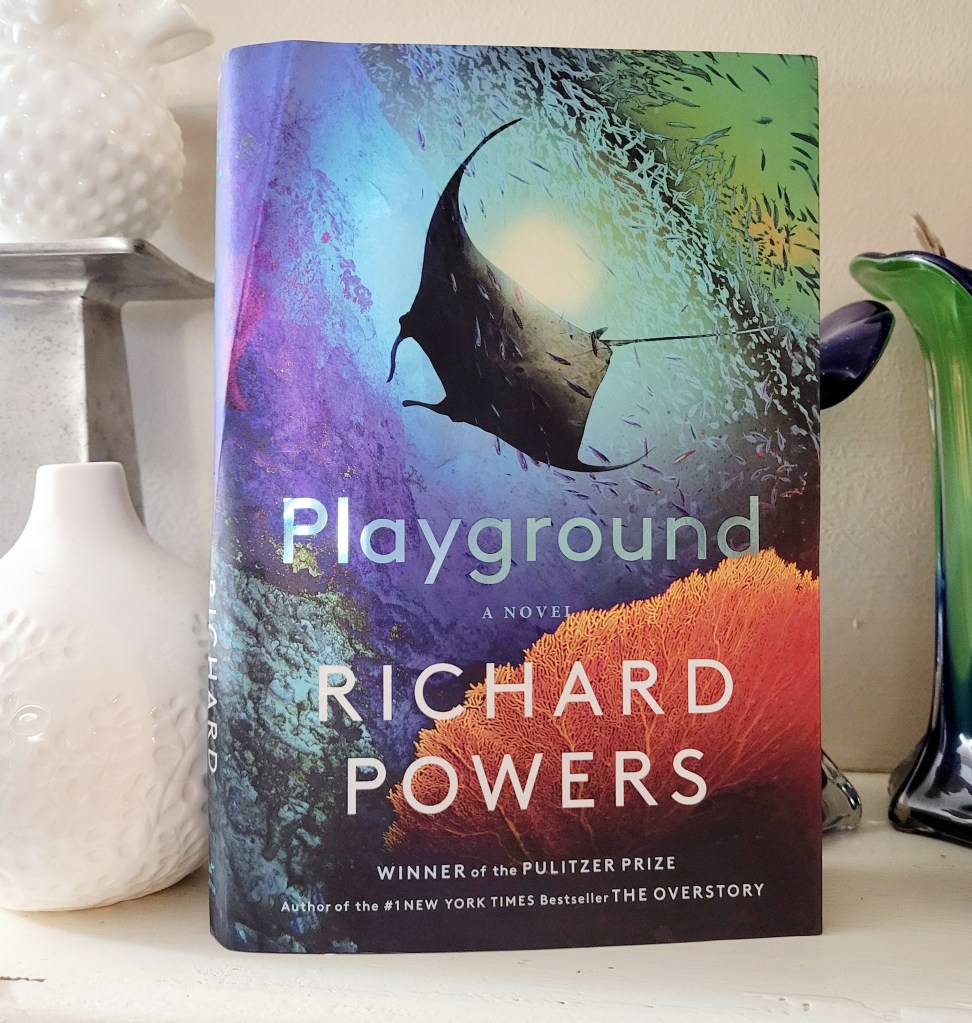
PLAYGROUND – Richard Powers

“You know me now. You know him as well as I did. Maybe better. You have raised the dead and given us one more turn. Now tell me how this long match ought to end.”

“Our first god mad the world from eggshells and tears and bone. Then our artists made the other gods out of shells and coral and sand and the fiber from palm fronds. All those gods are dead now, now. What am I supposed to do? What am I supposed to make?”

“For centuries, the island has always hung flowers around the necks of its destroyers.”

“It a thing still garbage once life starts using it?”

The last of the 2024 Booker Prize Longlist needs to be on syllabi regarding the art of storytelling; it’s certainly a book that begs to be studied for craft purposes. But I’m not surprised – it’s Richard Powers, after all.  Playground (W.W. Norton & Company 2024) is an expansive, fragmented man vs. man, man vs. nature, and man vs. machine with an ending that seems both a cheap trick and the only possibly and brilliant conclusion.

The novel ripples, like a tidal pool of life, focusing on Evie Beaulieu, a female diver, Ina Aroita, a Pacific Islander who grew on bases across the Pacific with no true home, Rafi Young, a black man from Chicago with the weight of the world, his race, and his family on his shoulders who gets lost in literature, and Todd Keane, a once rich white kid who loses himself to the technology that will change the world.  Long story short? As a child, Todd read Evie’s book and fell in love with her and the ocean.  That love was replaced with one for Rafi and board games. When the friends went to college, they roomed together, their lives so intertwined. Enter Ina.  A girl they both loved.  Choices were made and children grew up.

Stop reading now if you don’t want this novel spoiled.

When the novel opens, Todd, age 57, has recently been diagnosed with Dementia with Lewy bodies. Extremely successful and extremely rich, he finds himself getting his affairs in order, parsing out hallucinations from reality, and getting lost in memories (and in the grocery store).  Meanwhile, on the island of  Makatea, Rafi and Ina and the two children they’ve adopted, are preparing for their island to be sold to the highest bidder. A California corporation wants to use the island as a base for seastanding, a series of floating cities that move and interlock much like the pieces on a gameboard. Building it will destroy so much of the life on and around the island.  But it will also provide funds that will greatly improve the lives of the inhabitants of the island, which include Rafi, Ina, and Evie, now in her 90s. It’s not a surprise that Todd is behind the corporation spearheading seastanding; the reader can gather that pretty much immediately.  The surprise comes later.

Stop reading.  Seriously.

Playground is the story of a man who has built a machine that allows him to resurrect the dead, a path Rafi had set him on back in high school, and that machine is feeding him stories of how he wants life to shake out, how the game should end. Rafi and Ina were never married, they never adopted children, or had an island life together. Rafi never really found peace. He died surrounded by his books and frenzied writings and his desire for perfection. Todd and Rafi never reconciled. Evie, the great female diver and Todd’s first love, is also dead.  Ina is living on an island with adopted children, and that truth forms a foundation for the stories Todd’s great creation spits out.  And that’s the surprise – the computer has cobbled the story from Todd’s memories, Rafi’s writings, Evie’s book.  And that is why Rafi, Ina, and Evie all shimmer, a little glitch here and there that one could argue is lack of character development (like Evie’s announcement she likes women that never goes anywhere), but it’s because the computer is regurgitating what Todd has feed it in palatable way to please Todd – they’re not real.

The question we’re left with is which story is better – the truth or the world that was created? This question is one that isn’t uncommon in works of fiction – as mentioned previously, the reveal seems a bit of a trick. A very popular example that asks on the page which story is better is Life of Pi. In Life of Pi the driving force behind the story with the animals in one of literal survival.  In Playground, the driving force behind this beautiful island world is fear and love and the desire to win.  I don’t think there is any other way the story could have ended.

While not my favorite selection from the longlist, I’d argue it belongs on the shortlist. Hopefully, I’ll get a complete Booker wrap up soon that will detail my rankings. I am very excited to have finished the entire longlist before the winner is announced next week.

Playground is a spotlight on how technology, AI and social media are eroding human interactions and nature while also breathing new life into the dead, lost, and forgotten.  Go read this book.  Then maybe play a board game with a friend on some grass.

Booker Count: 13 of 13
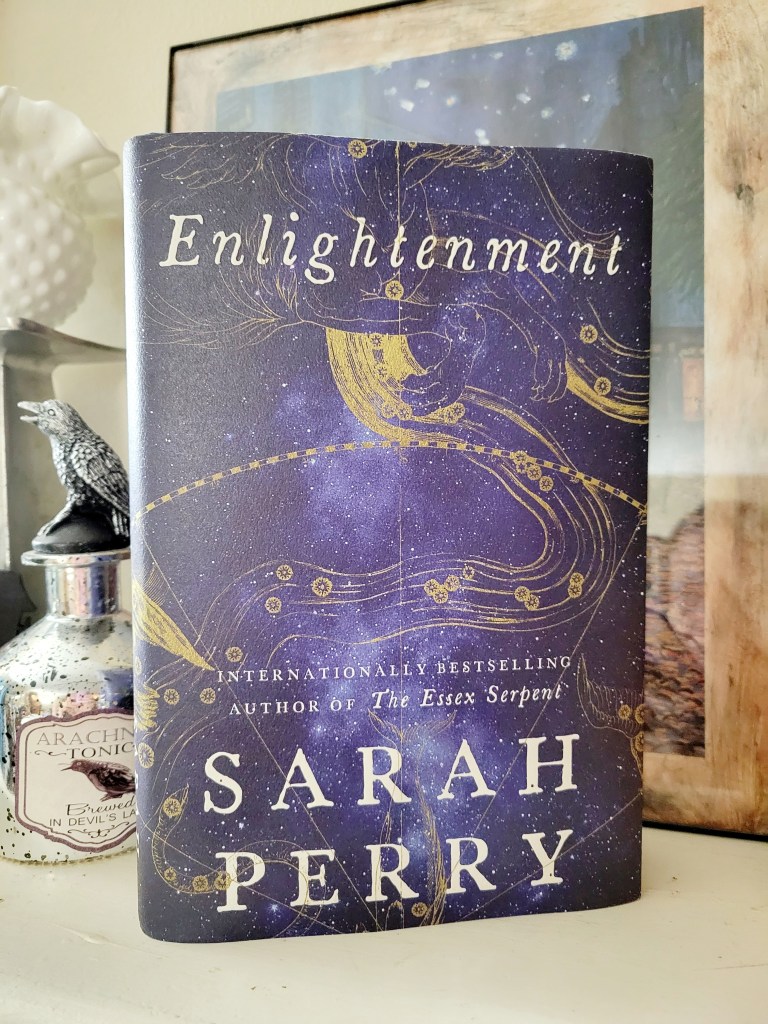
ENLIGHTENMENT – Sarah Perry

“She was the most alive person he’d ever met.”

“Her mouth was blotted red, as if she’d painted her lips, regretted her sin, and rubbed her shame on the back of her hand.”

“Grace Macaulay – in whose veins ran Essex rivers and Bible ink…”

“For God’s sake, Thomas Hart, for God’s sake: isn’t it all a question of orbits? Things go, things come. Something’s bound to happen soon.”

“though your sins be scarlet, they shall be white as snow.”

I’m not going to lie; I thought Sarah Perry’s Enlightenment (Mariner Books 2024) was going to be my Booker dud. I struggled to get into this novel – reading and rereading the first 15 pages and avoiding reading all together. Then something clicked, and it ended up being one of my favorites from the longlist. The writing gets in its own way sometimes as it attempts a Victorian feel. Sometimes it hits the mark and flows beautifully and antiquated and gorgeous. Sometimes it doesn’t, and it muddies things and appears to try too hard. But by the last page, I was invested. They wanted heart?  This novel has it in spades, you might just need a telescope to see it.

The novel starts in 1997 with Thomas Hart writing his column about Hale-Bopp, a comet, and receiving a letter from James Bower about the Lowlands ghost and how he may have found her. It’s also when Nathan breaks the window of Bethesda and the glass cuts 17-year-old Grace’s neck. Those two moments are the start of everything that will define Thomas and Grace for the next twenty years.

Thomas is an author and scholar who grew up in Bethesda, a small Baptist church that clings to the past. Women cover their heads. No jeans. No current music, tv, movies, etc.  The church and the community are very much a part of him even though he has had a crisis of faith. Thomas is gay, and he lives two lives.  One in London where he loves men, and one in Aldleigh where he attends Bethesda on Sundays. Grace is the reason he still attends church.  When he was about to turn his back on the church forever, her father brought baby Grace to the service.  Her mother had died during childbirth and her father was bewildered. Thomas decided to stay with one foot in Bethesda to ensure that Grace had some taste of the outside as she grew up.

Thomas, alongside James Bower, begins to chase Maria Vaduva, the Romanian woman they believe to be the Lowlands ghost. Through her uncovered diaries and writings, they reveal more of this phenomenal astronomer who was heartbroken with an unrequited love.  As Thomas chases Maria, his love story with James mirrors her’s, as does Grace and Nathan’s. And when all seems lost and her writings and home destroyed, Maria always finds a way to come back, and it is Maria who will reunite Thomas and Grace after they horrifically hurt each other.

There is so much in this novel that begs a second read. One of the things that stood out to me is the repeated use of “red” and “scarlet,” the stain of sin, in particular with Dimi and Nathan.

It’s a novel of faith and stargazing, of finding ones way, of things in orbit that will always come back like a comet or a love or a memory or a ghost.

Read this book.

Booker Count: 12 of 13

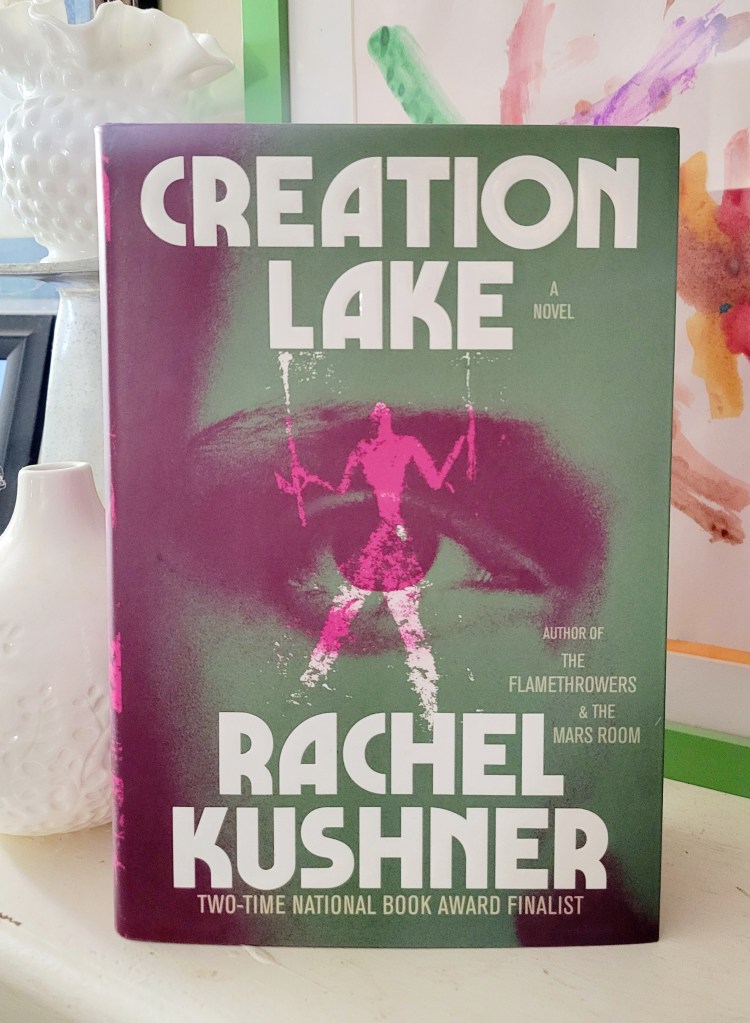
CREATION LAKE – Rachel Kushner

“The French might have better novels (Balzac, Zola, and Flaubert) and they have better cheese (Comte, Roquefort, Cabecou). But in the grand scheme that’s basically nothing.”

“Bad people are honored, and good ones are punished. The reverse is also true. Good people are honored, and bad people are punished, and some will call this grace, or the hand of God, instead of luck. But deep down, even if they lack the courage to admit it, inside each person, they know that the world is lawless and chaotic and random.”

The Booker train continues.  The shortlist was announced this week, and I was pleasantly surprised that four of the six are actually on my personal shortlist. (Pats self on back.) I was not surprised that Rachel Kushner’s Creation Lake (Scribner 2024) made the cut.  It also made the National Book Award longlist.   (So did James and My Friends (the fact My Friends  didn’t make the Booker shortlist still leaves me gob smacked.) I admit to being a bit surprised that both Creation Lake and The Safekeep made the short because they are both “thriller” novels of obsession and unreliable narrators, but I also selected both so I can’t be too surprised.

It took me a minute to get into Creation Lake because I think the blurb does it a huge disservice; if you’re looking for a spy novel, this isn’t it. Half the novel (not all in one chunk but spread out) is philosophical musings and anthropological studies about Neanderthals and the evolution of man as emailed by a reclusive to his commune of followers.  The recluse, Bruno, is our narrator’s “target” and she has hacked his emails.

Sadie Smith, as she’s given as has her name for this job in rural France, is an unreliable and untrustworthy narrator. She’s lost grasp on reality and her own identity, and her obsession with Bruno and her desire to be rooted becomes more pronounced as the novel progresses. She is indeed a spy, formally with the US government but now in the private sector after some questionable tactics resulted in a successful entrapment defense from one of her “jobs,” but she’s not as sharp and skilled as she thinks she is.  Her “job” in rural, concerns the Prime Minister and infiltrating an eco-terrorist group, allegedly led by Bruno. Sadie becomes very attached to Bruno, and she is cognizant that she treats this mythical figure with more familiarity than those who actually know him.

The use of sex in novel is expected considering the focus on creation and evolution, but I didn’t expect the repeated imagery of children engaged in sexual activity. There is the song, which I did google to find out it is indeed real and was popular in the 80s, “Lemon Incest,” which is performed by a father and his then twelve-year-old daughter with lyrics that hint at both pedophilia and incest. There is the 13-year-old boy who’d been kicked out of the commune after impregnating his teacher at age 11.  And there’s a documentary about a very young boy’s very active sex life that Sadie references frequently.

As an aside, there’s an undercurrent of regret concerning missed motherhood, and the reoccurring imagery of Sadie finding a crying baby in a dumpster is reminiscent of Pearl, from last year’s longlist.

In a longlist of rather short novels, Creation Lake might be the longest. It’s not my favorite, but there’s a reason I predicted it to fall on the shortlist.

Read this book.

Booker count: 11 of 13

STONE YARD DEVOTIONAL – Charlotte Wood

“A feeling that something is coming, waiting to be born, out of this time. Almost physical, like before a period, or pregnancy, or vomiting. Something is getting ready to resolve itself.”

The Booker journey continues with Charlotte Wood’s Stone Yard Devotional (Allen & Unwin 2023), yet another thin volumed character reflection, heavy on the introspective and light on the plot.  (Page count is just under 300, but font and spacing come into play with that.)  Surprisingly, this one edged out a few of the other selections that I’ve just lumped together.  Wood is the first Australian to be longlisted since Coetzee in 2016.  (Born in South Africa, Coetzee moved to Australia in 2002 and became an Australian citizen in 2006.)

The plot of the novel is that a woman abandons her city life, job, and husband and joins a secluded religious community on the outskirts of the town she grew up in.  She initially went just on a retreat there for the solitude, but she eventually joins the community.  She doesn’t believe in God, and she isn’t really a nun, but she lives that life with the sisters. (And keeps her thoughts on God and heaven to herself.) It’s the peace and solitude that brings her comfort, a peace and solitude that almost makes her a believer.

The novel is set during Covid, but the pandemic isn’t what disrupts the quiet community and forces the narrator to look more inward – a mouse plague (the parts about the mice are truly horrific – just wheelbarrows full of dead mice, mice eating each other, mice eating faces off of doves, etc.), the bones of a murdered Sister who had left the community to serve in Thailand and has been returned to be buried there, and a famous activist nun from the narrator’s childhood who accompanies the bones are what disrupts the status quo and makes a novel of reflection turn even more inward.

I do take issue with the title.  While catchy, the stone yard paddock is only mentioned three times (I think) and it’s not the paddock our narrator has her moments in. It is, however, where the bones of the murdered nun are buried.  But I wish it had also been where our narrator had her quiet reflective moments under the night sky.

It’s a novel of faith and forgiveness, childhood, and how the choices we make determine our selves.

Booker Count: 10 of 13

WILD HOUSES – Colin Barrett

We’re a week out from the shortlist announcement, and I just finished my ninth from the Booker Dozen.  In following this year’s theme of thin volumes and character studies, Wild Houses by Colin Barrett (Grove Press 2024) is a gritty look at small town Irish life – heavy on drugs, violence, and hopes to escape – that takes place over a weekend. I wanted to like it more than I did, but I don’t think I was in the correct mindset to fully appreciate and love this group of misfits.

The novel opens with Dev Hendrick, an early twenties high school drop out who lives alone (after his mother died) out in the countryside with his mother’s dog. He’s Steinbech’s Lennie. After Dev’s mom died, some local drug runners (and distant relatives) realized his house was perfect to hold drugs because of how remote it is.  Masquerading as a twisted friendship and familial relationship, the men treat his house as their own.  And poor Dev is torn between wanting to just be left alone and wanting friends. But this Friday night, they showed up with a kid – Doll English – that they will tie up in Dev’s basement until Doll’s brother, Cillian, pays his debts.

Doll is kidnapped Friday night while leaving a party at one of the “wild houses.”  He’d gotten in a fight with his older girlfriend, Nicky, and he’s alone when he’s taken. Seventeen-year-old Nicky drunkenly stumbled to Doll’s house in hopes of finding him there.  When she woke up and found he’d never returned to his bed, she decided he must have stayed with his brother and continued her day.  Nicky is probably my favorite character of the bunch – orphaned and having tended bar since she was 14, she’s finally on the cusp of getting out.  University and the city are on the horizon for her, but right now she’s dating the younger brother of a drug runner who owes a lot of money after losing a lot of coke.  And she’s elbows deep in a plot to get him back.

Wild Houses is somewhat surprising and somewhat not surprising a selection.  Barrett’s talent in shorter form is certainly apparent, but Wild Houses just missed the mark for me – I couldn’t find the novel’s heart the way I wanted.

Should you read it?  Sure. My problem with this longlist is that they are all pretty much falling into the “perfectly fine” category and there have only been a handful of standouts for me. On the flip of that, there haven’t really been any complete and utter duds.

Booker 9 of 13.

WANDERING STARS – Tommy Orange

“I wasn’t trying to be funny. I could have done it if you hadn’t come. We’ve just been the feather. We used to be the whole bird. We used to believe and we were the whole bird.”

Next up on my Booker journey is Tommy Orange’s Wandering Stars (Knopf 2024). Wandering Stars is a bookend to Orange’s 2018 There There, serving as both prequel and sequel. It’s not something you have to read prior to reading Wandering Stars, but I would recommend it. Having just read Orange’s debut this year, it was still pretty fresh for me – and that could have contributed to my disappointment with Wandering Stars.

I wrote the following about There There: Soaked and blood, tears, and alcohol, it drips with generational trauma, past and present assaults.  It echoes with the screams of the dead, dying and lost.  It gets under your skin, in your ear – the thrum of a drum in your heart as the sound of gunshots leaves your head ringing.  You feel this novel.  You taste this novel.  You breathe this novel.

And while Wandering Stars reads as a continuation of There There, it doesn’t have the same sense of urgency, or the feeling of the drum beat leading into the shooting that There There had.  Because of that, the second half, which brings us back to some of the characters involved in the shooting at the pow wow, kind of fizzles out.  The generational “prequel” portion certainly captivated my interest as it gave voice to those that came before, and it covers a lot of history and trauma.  Some of the things I love most about the novel are the little things – like the title itself, the imagery with the bear without a shoe (which recalled my favorite parts of There There )( the use of Opal as a name that was passed down and for the necklace Bird Woman wore, and the stories that came from it.  The use of dogs throughout the novel, from the Cheyenne legend to the dog they give Lony, is so quietly and cleverly done.  These little bits are sparks of brilliance.

There’s a lot of talent in this novel and a lot of heart, but it’s a novel of two parts and one part is decidedly better than the other. It’s a good novel, but it’s not as powerful as There There.

Booker 8 of 13.

THE SAFEKEEP – Yael van der Wouden

“Little baby Jesus everywhere. They have no problem letting Jews into their homes as long as they’re carved from wood, do they”

“What did people who spoke of joy know of what it meant, to sleep and dream only of the whistle of planes and knocks at the door and on windows and to wake with a hand at one’s throat – one’s own hand, at one’s own throat. What did they know of not speaking for days, of not having known the touch of another, never having known, of want and of not having felt the press of skin to one’s own, and what did they know of a house that only ever emptied out. Of animals dying and fathers dying and mothers dying and finding bullet holes in the barks of trees right below hearts carved around names of people who weren’t there and the bloody lip of a sibling and what did – what did she know of – what could she possibly know of what it –“

Yael van der Wouden’s debut, The Safekeep (Avid Reader Press 2024), another slim novel from the Booker longlist, is a wet and sticky atmospheric historical fiction that finds two girls from the war reconciling their pasts as adults in a house that defined them both, a house that is just as much a character in the novel as they are.   And however improbable, it’s a love story.

Set in a rural Dutch village in 1961, the novel centers on Isabella.  She lives in their home, alone now after their mother died, caring for the things their mother had loved and knowing the house has been promised to her brother when he decides to settle down.  Enter Eva. Another possible ‘wife’ candidate and someone Isabel hates from the moment she meets.

Isabella is unyielding and rigid, particular and set in her ways. Her brothers have accepted her peculiarity. When her brother insists his new girl, Eva, stay in the house with her while he’s away, she refuses. But she can’t refuse him – it’s not her house. That bitterness makes her dislike Eva even more. Isabella like things just so, and she’s convinced the maids are stealing. When Eva comes to stay for a few weeks, she becomes even more paranoid – counting silverware and keeping an inventory.  Her paranoia and distrust help build an atmosphere that eventually spills over into sexual frustration and near obsession.

But the best parts of this novel are the unpeeling of Eva’s history, of seeing how two young girls crossed paths and lives during the war. I wish there had been more of Eva’s diary entries, but instead we get more of Isabella trying to reconcile a truth that she’d been blind to while also struggling to accept her own sexuality.

Much like the rest of the longlist, there is little action but a bit of heart.  It is sticky on your skin, like the juice of a pear running down your chin and mingling with the sweat of someone you want.

Read this book.

Booker count: 7 of 13