THE PRIORY OF THE ORANGE TREE – Samantha Shannon

In 2012, I read a news story about a twenty-year-old student at University who was signed by Bloomsbury Publishing in a six-figure book deal.  I was intrigued (and jealous).  The deal was for three books in a seven books series.  The first of which, THE BONE SEASON, was published in 2013.  I’ve had what I call a “literary crush” on Samantha Shannon since; she is one of few authors on my automatically pre-order list.
When she announced that she was taking a little break from the Pale Dreamer to pursue a bit of a passion project, I was again intrigued but a bit wary.  High fantasy is not something I frequently read, despite loving mages and dragons.  Perhaps it is because the stories of men with swords slaying beasts and winning the hearts of the fragile maidens bore me.  But I knew from the first three books of THE BONE SEASON series that Samantha Shannon’s females are far from fragile and rarely need rescuing.  I hit “pre-order” and waited for what seemed like ages for it to be released in 2019.  When it came, I was afraid of not liking it and sat it on a shelf.  But it’s the year of the book dragon and every book dragon needs a book about dragons.
Dubbed a “epic feminist fantasy,” THE PRIORY OF THE ORANGE TREE is nearly as massive in size as it is in heart.  (At just over 800 pages in hardback, it’s one of the biggest books I’ve read in a long while.  Its sheer size makes it a bit cumbersome of a read – certainly not bubble bath material – but this standalone epic will have you craving more pages after the last sentence – “But not today.”)  What is most striking is how expertly the story is woven and how powerful yet realistically flawed the women are.  It is most fitting that I finished this novel on International Women’s Day.
At its heart, this is the story of dualities.  East and West.  Fire and water.  Dragon rider and dragon slayer – Tane and Ead. 

Tane is of the East, and she opens the novel. She has spent her entire life preparing to be a rider and on the eve of Choosing Day, where her destiny would finally be realized, a stranger from the West washes up on her shore and threatens everything she has worked so hard for.  She makes a choice that night that will change the course of destiny – a choice that will destroy what she loves, turn her into a ghost, and breathe new life and purpose into her battered bones.  A choice that just maybe saves the world.
Ead Duryan is a lie.  Eadaz du Zala uq-Nara is the truth.  An initiate of the Priory of the Orange Tree, she poses as a chamberer in the Upper Household of Queen Sabran Berethnet.  She is a mage, her magic coming from the sweet fruit of the Orange Tree.  The Priory is a group of women, led by a Prioress, who slay dragons or “wyrms” and protect the rest of the world with few others knowing of their existence.  Ead is a skilled assassin, trained since birth, who has been sent to protect the western queen at all costs. Legend claims the Nameless One, a fire-breathing dragon hellbent on death and destruction, will awaken and destroy the world if the House of Berethnet does not deliver a female heir.  The Priory, even while questioning the legend, cannot risk it.
Over time and space, the reality of this duality emerges.  The stars align.  The scholars finally understand the ancient riddles involving a hawthorne tree, a mulberry tree, and an orange tree.  But is it too late?  Can the rider of dragons, powered by water and stars, and the slayer of dragons, powered by the fire of an ancient tree, join forces as their ancestors did 1,000 years before?
There is love.  There is betrayal.  There is murder.  There is the Flesh King.  There are animals that help and animals that hinder.  There is a shape-shifting witch.  There are poison darts and pearls sewn into skin.  There are lies and truths.  There is darkness.  There is light.  There is a rose in winter.  And through it all are some of the most remarkable characters you will meet – the idealistic Truyde utt Zeedur, the soul-less Golden Empress,  the haunted Donmata Marosa, the devoted Margaret Beck, the tortured Sabran – these women are fully developed, perfectly imperfect and beautifully portrayed.  And they are strong even at times they appear the weakest.
 “And yet I am reminded – as I so often am – that you never needed my protection.  You are your own shield.” – Chassar to Ead (He raised her after her mother was murdered.)

I will always love THE BONE SEASON, but if this is what Shannon can do with high fantasy – please give me more. 

CROOKED LETTER, CROOKED LETTER – Tom Franklin

It’s been a bit since I’ve read a thriller, but Tom Franklin’s CROOKED LETTER, CROOKED LETTER reminded me how much I love a good literary thriller.  Published in 2010, CROOKED LETTER, CROOKED LETTER is haunting and heartbreaking in its cutting realities and unapologetic portrayal of racism and classism in the rural South. 

If the title didn’t give it away, the novel is set in Mississippi.  (M, I, crooked letter, crooked letter, I, crooked letter, crooked letter, I, humpback, humpback, I)  The novel travels across decades effortlessly, the lives of Silas and Larry weaving in and out and oft

running parallel.

Silas “32” Jones was born to a single mother.  He’d grown up in Chicago, but an incident with one of his mama’s boyfriends has them running back to Mississippi, where she said she knew people.  Silas would eventually learn the “people” she knew was the white Ott family.
Larry Ott was born to a doting mother and a father who drank too much and wished his son liked sports more than the books he toted around.
The boys first meet when Larry’s father stops to pick up Silas and his mother.  It’s cold, and they ride with them into town.  Every morning.  Every morning until Larry mentions it to his mother.  The next day, his mother takes him to school.  Silas and his mother were waiting as usual, his mother handed them used jackets and angrily addressed Silas’s mother.  The pair never rode with his father again.  And his father never forgave him for telling his mother.
The unlikely pair begin a secret friendship.  It was the ‘70s in southern Mississippi, so it had to be secret.  They didn’t hang out at school.  They didn’t bring each other into their respective homes unless no one else was home.  Society simply wouldn’t approve, but the boys were friends – each learning from the other.
As teenagers, their relationship is destroyed by Larry’s father.  Silas had stood up to a friend of Larry’s dad who was sexually assaulting his stepdaughter, much to Mr. Ott’s drunken delight.  Larry had hidden, but his father had seen him.  He followed his son when he went to see Silas and forced the two boys to fight.  Larry was torn between the only friend he’d ever had and the father he wanted so desperately to please.  Fisticuffs ensuedwithout much heart, until Larry uttered the slur that would sever the friendship.  There are some words you can’t walk back from.
Sometime not long after, Larry takes the girl Silas had been protecting on a date to a drive-in and she’s never seen again.  There’s no evidence, no charge, no conviction.  But the town judges him all the same.  Larry Ott’s life is destroyed, and Silas Jones doesn’t look back.
Now it’s decades later.  Silas is back in town as the constable, and another girl is missing.  Larry is the prime suspect.
“The only ghosts here knew the secrets already.”
And the secrets are as crooked as the letter.

The Last Kind Words Saloon – Larry McMurtry

“We don’t rent pigs.”
Larry McMurtry is the man who, without knowing who I am, gave me one of the sweetest gifts when he wrote LONESOME DOVE.  Published when I was toddler, the book was turned into a TV mini-series in 1989.  My father recorded it, and those old VHS tapes were likely the most watched movie in our house.  I remember sick days home from school with my father cleaning his Civil War era gun while we watched.  Snow days where we watched.  Lazy Saturdays when the fish weren’t biting when we watched.  I remember being sent to my room or having him fast forward when they crossed the river and disturbed the bed of snakes.  I remember him assuring me that Blue Duck wasn’t real. I remember the way his eyes turned liquid every time Deets died, and how he’d change the subject when I wanted to know what a “poke” was.  I couldn’t wait until I was old enough to go to Montana.  I remember the way he looked when they hung Jake Spoon, and how he told me that some lines can never be crossed.  I have a worn paperback on my shelf at home, and a signed first audition is one thing I’m always looking for. 

McMurtry’s beautifully drawn characters – especially Gus and Captain Call – remain some of most my loved fictional creations.
THE LAST KIND WORDS SALOON, published in 2014, immediately brought the Pulitzer-winning novel to mind.  But where LONESOME DOVE was a meal I could eat every day for the rest of my life, THE LAST KIND WORDS SALOON seems a hastily thrown together one sheet meal that relies on some of the same ingredients of the meal I love but doesn’t come close to being satisfying.  The novel is considerably shorter than LONESOME DOVE, but there are some aspects that seem pulled directly from the 1980s work.
The steers in the lightening storm.  The sign that Wyatt totes around.  The reporter.  There are a lot of similarities between Jessie and Gus’s Lorie-darlin’.  The cattle drive to Montana.  The relationship between Doc and Wyatt is very much the same foil as Gus and Call.  Teddy Blue has a lot of Dish in him.  (And it’s been a long time since I’ve read LONESOME DOVE.)
McMurtry takes some liberties in this story of the Earps and Doc Holliday, and some of them just don’t work.  Wyatt’s wife was Josephine, not Jessie, and the timeline of their relationship is horribly wrong in this novel.  This bothers me greatly. 

He opens the novel by telling the read “THE LAST KIND WORDS SALOON is a ballad in prose whose characters are afloat in time; their legends and their lives in history rarely match.  I had the great director John Ford in mind when I wrote this book; he famously said that when you had to choose between history and legend, print the legend.  And so I’ve done.”

The fact he plays with the stories and legends surrounding these larger than life figures of the West in the Earps and Wild Bill and Doc doesn’t bother me.  But changing the name of the prominent woman who factored into the life and the legend does.
Additionally, there is also a minor misprint where “Jessie” is printed as “Jesse.”  Much like her name is missing its “I,” this book is missing its heart.
It made me miss the genius that was LONESOME DOVE. 

THE LUST LIZARD OF MELANCHOLY COVE – Christopher Moore

I’m no stranger to Christopher Moore and his ridiculously outrageous tall tales – he is one of a handful of authors who can make me donkey laugh out loud while reading, even in public.  Shoot, just his titles give me a chuckle.  (Island of the Sequined Love Nun, Lamb: The Gospel According to Biff, Christ’s Childhood Pal, The Stupidest Angel, You Suck: A Love Story, Fluke, or, I Know Why the Winged Whale Sings are just some examples.) He writes “comic fantasy” and his stories are absolutely absurd, so if that doesn’t float your boat I wouldn’t suggest you pick him up.  Sometimes the absurdity, for me, gets very close to and at times crosses the line of “too much,” but he can usually rein it in so as not lose me as a reader.  (I’ve read a couple of things prior and I do have several in my TBR pile, but you have to be in certain mood for a Moore novel.)
Published in 1999, THE LUST LIZARD OF MELANCHOLY COVE is a WTF kind of read.  The absurd and the fantastical weave seamlessly out of the mundane and ordinary in this small town of Pine Cove.   The “Lust Lizard” is the Sea Beast fondly called Steve by Molly, the “crazy slut” down in the trailer park who used to be a B actress in Sci Fi films.  Molly took care of Steve after had attempted to mate a gas truck and it exploded, injuring him.  Molly and Steve have a bizarre relationship that takes a weird sexual turn where a weed eater is involved.  And that’s not even the most WTFDIJR (What the fuck did I just read) moment of the novel.
Our hero, if we’re going to have one, is Theo – the pot-smoking (and growing) town “constable” who keeps the wayward folks of Pine Cove out of the sheriff’s hair and off the sheriff’s ranch (which just so happens to a pretty big meth operation for the cartel.)  Everything is going just fine until the blues singer Catfish shows up, Bess Leander kills herself, and there’s a wee bit of a leak at the nuclear power plant.
The leak rouses Steve and brings him (and his lustful longings) to Pine Cove.  The “suicide” has the town psychiatrist thinking that maybe she should be listening to her clients and not just giving them pills.  In cahoots with the pharmacist (who has the most disturbing of fetishes), she switches all their meds to sugar pills.  The lowered serotonin levels are perfect for Steve’s predatory mechanism that makes everyone horny and therefore vulnerable to being prey.  (Food or sex drives everyone, right?)  Catfish has prior knowledge of the beast as he’d killed the offspring of the beast when Steve was a girl.  (I didn’t say it wasn’t weird.)  Steve hates Catfish and wants to avenge his/her child and the sound of the guitar will send him spiraling into a flashy rage.
Things only get worse when Theo stops smoking pot and starts acting like a detective.  Maybe Bess Leander didn’t kill herself.  Maybe the tracks he saw just past the trailer park weren’t a figment of his pot-soaked imagination.  I won’t tell you how it all plays out, but let’s just say again that this is a WTF kind of read.

The phone behind the bar rang and Mavis yanked it out of its cradle.  “Mount Olympus, Goddess of Sex speaking,” she said, and there was a mechanical ratcheting noise as she cocked a hip while she listened.  “No, I haven’t seen him – like I would even tell you if he was here.  Hell, woman, I have a sacred trust here – I can’t rat out every husband who comes in for a snort after work.  How would I know.  Honey, you want to keep this kind of thing from happening?  Two words: long, nasty blowjobs.  Yeah, well, if you were doing them instead of counting words, then maybe you wouldn’t lose your husband.”

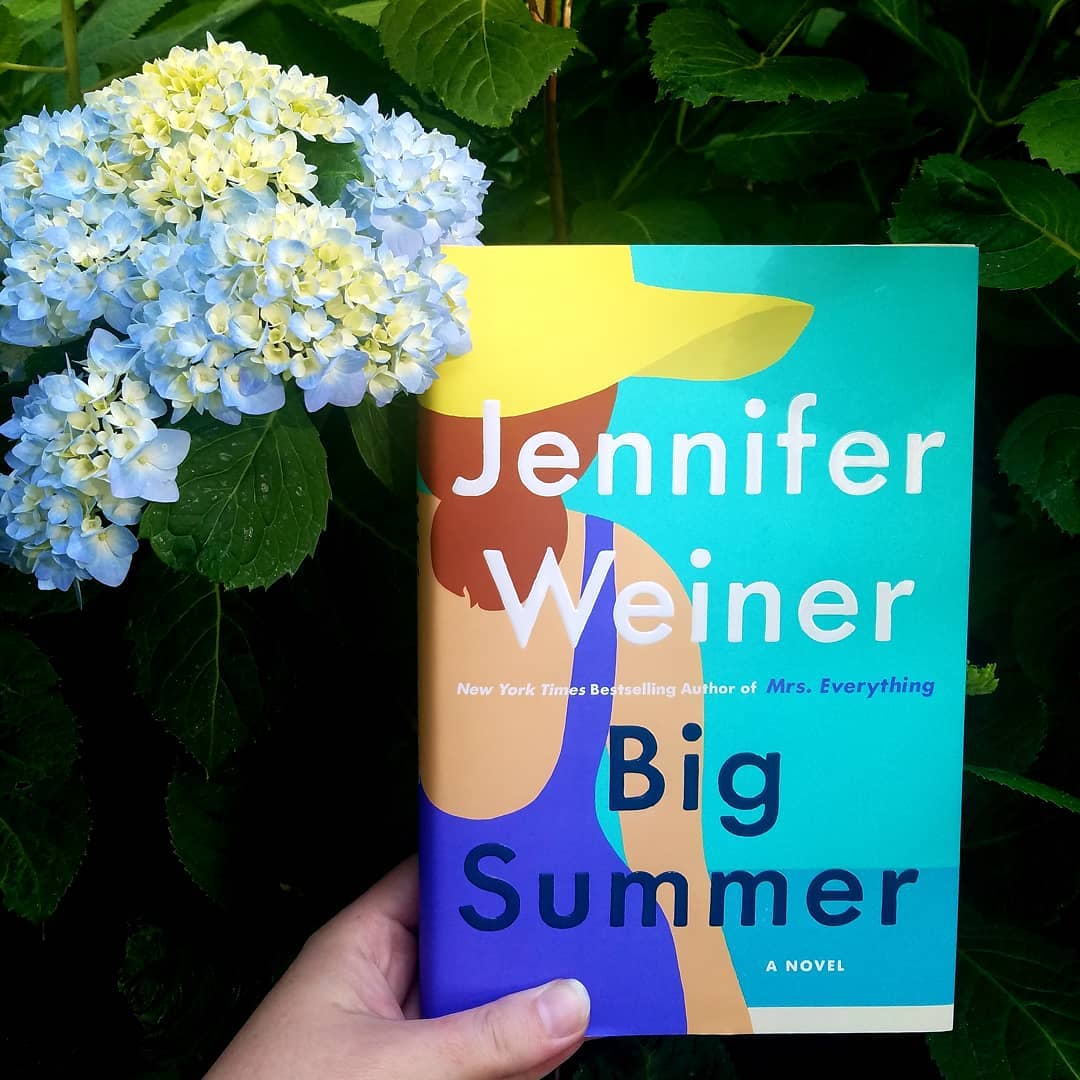
LITTLE EARTHQUAKES – Jennifer Weiner

“Little earthquake… They happen all the time.  I hardly feel them anymore.”

“I could have told him that nothing was safe and that no matter how careful you were and how hard you tried, there were still accidents, hidden traps, and snares.  You could get killed on an airplane or crossing the street.  Your marriage could fall apart when you weren’t looking; your husband could lose his job; your baby could get sick or die.  I could have said that nothing is safe, that the surface of the world is pretty and sane, but underneath it’s all fault lines and earthquakes waiting to happen.”
Published in 2004, Jennifer Weiner’s LITTLE EARTHQUAKES was an unexpected delight.  I’m a bit ashamed that I have never read Weiner before, and I know it’s because I tended to avoid the “chick lit” and so-called genre fiction categories.  I was a bit arrogant with my reading and my shelves back then; that was my mistake, and one I’ve learned from. 

LITTLE EARTHQUAKES may be considered “chick lit” but such a label is truly doing it a disservice; let’s stop trying to fit a story in a box and appreciate Weiner for being one helluva storyteller. 

The novel revolves around four very different women who are brought together by the “little earthquakes” that define life.  Weiner does an excellent job of capturing the four different women, their shared experiences, and their relationships.
Lia opens and closes the novel, and her point of view is the only one told in first person.  Her story, which is the heart of the novel, breathes the most life.  She’s fled her reinvented life with her fame, handsome husband, and recently dead baby in LA to return to the childhood home she’d thought she’d long escaped.  Back home, she begins to put her heart and life back together.  She sees a pregnant woman in the park and begins to slip baby trinkets into the woman’s bag or upon her doorstep.  It’s a bit stalkerish, but Weiner cleverly controls her character.  When the woman finally notices Lia watching her, she’s at her wits end with a crying baby.  Unsure of what to do, she invites Lia into her home and cooks her breakfast while Lia gets the baby to stop crying.  A forever bond is formed. 

Becky is the pregnant woman who caught Lia’s eye.  She’s fat and very self-conscious about whether she looks pregnant or not.  (The fact that Lia recognized her as being pregnant quickly cemented the friendship between the pair.)  Not only is Becky fat, she’s Jewish and a chef, and the most interesting character in the book.  I don’t know that I’ve read a book with a fat heroine where her weight wasn’t the plot – it was refreshing.
Becky goes to a yoga class for pregnant women and meets Kelly, a high-energy event planner who places her value on material items and how she is perceived.  Kelly came from nothing, and she’s very worried that the life she’s been building will be snatched from her at any time.  Ayinde, the biracial wife of a pro basketball player, is also in the class.  She was born into a life of privilege with her model mother and actor father.  She never meant to fall in love with an athlete, but she did. It’s an unlikely friendship, but it happens organically when Ayinde goes into labor (on page 22) and Kelly and Becky rush to her aid, even though they’d just met.  By the middle of the novel, the four women are a combined force.
There’s an over-bearing mother-in-law, an affair, a lost job, several breakdowns, delicious food, and a can of mandarin oranges.  There are laughs, tears, blood, sweat, hope, and love.  There’s forgiveness.  There’s a sweetness – like those tinned oranges. 

No, it’s not chick lit – it’s life.

THE GOLDFINCH – Donna Tartt

In the 1980s, a group of kids from Bennington College emerged as the so-called “literary brat pack.” These privileged kids from the East Coast, with their booze and drug-filled delusions, were deemed “cool” and their literary talents highly praised. They were pompous and arrogant, while at the same time intentionally esoteric to create an air of mystery about them. The Bennington College atmosphere, the drugs and alcohol, the privilege and wealth, and the entire coke-laden 1980s molded these writers into who they ultimately became.

 Bret Easton Ellis was a member, and I loathe his writing with a passion. I’ve read AMERICAN PYSCHO and LESS THAN ZERO and I hated them both. I wanted to like them – I really did. And Ellis is good at weaving a story – I just hate his drug-addled characters of privilege and excess.

 “If you like Ellis, you’ll love Donna Tartt. They went to school together. She’s a woman.”

 I remember the way I cocked my head at the speaker of that statement. I hadn’t liked Ellis. And the reason I hadn’t liked Ellis hadn’t been because he was a man. (Years later, I realized the speaker of that statement tried to live his life as if he stepped from the boarding school pages of an Ellis novel, coke included. We all make mistakes.)

Donna Tartt was also a member of the literary brat pack, and one of Ellis’s good friends. They’re still friends. Her rise to fame was a bit more of a slow burn than the others of the “pack.” Her first novel and one that created a cult following for her was THE SECRET HISTORY, published in 1992. The advance for that novel? $450,000. I don’t even know what that would be in today’s money. She was indeed a literary darling from the brat pack. It took her over a decade to finish her second novel, THE LITTLE FRIEND. Over a decade later, THE GOLDFINCH was published, and it won her the coveted Pulitzer. I finally picked it up, determined to give Tartt a fair chance. 

It is 771 pages of drug-addled, booze-soaked poor decisions. Her characters are not likeable and have few, if any, redeeming qualities. A bildungsroman is supposed to show growth of the main character, but Theo Decker doesn’t grow except to become even more of an obsessive, self-absorbed addict. 

This novel heightened my anxiety, and I was so tense when reading it, I thought I needed a Xanax. I didn’t care about Theo. (I felt bad about that because of how the novel opens, but he was a jerk before the bombs went off and his mother died.) I spent over 700 pages in a state over that blasted painting (and quite a few worried about a little Maltese named Popper). Even when Theo conveniently forgot about the painting for pages upon pages despite it being his alleged obsession, it was my focus.

His obsession with the painting gives rise to what I see as one of the many flaws. He talks about how much he knew that painting, especially its weight in his hands. How did he not notice it had been replaced with a schoolbook? The likelihood the schoolbook and The Goldfinch weighed the same is slim to none. Theo even discusses the weight with a “collector,” – pleased that someone else had noted the heft of it. How did he not know it had been switched? Drugs? I suppose it’s possible.

 Making Boris a caricature was also a problem for me, especially his dialogue. And the “boys will be boys” rough housing while drunk and/or high leading to a sexual encounter between the two that is never properly addressed made me shake my head. Boris deserved better. And the reader, who is painfully addressed at the end, also deserved better.

 The idea is great – a young boy has gotten in trouble at school and must go for a parent/teacher meeting. Because they’re running early, they stop at the museum. His mother, beautiful and animated by art, tells him about her favorites, including The Goldfinch – a beautiful songbird tethered to a perch by a short chain. An act of domestic terrorism leaves the museum in rubble and the beautiful mother dead. The boy, suffering from shock and a head injury, has a discussion with a dying old man and he takes the painting. What happens to the boy and the painting and the redheaded girl he’d seen just before the explosion could have been something heartbreaking yet beautiful and full of light. Instead, Tartt made each page more tragic than the one before it.

 It may be pretty writing, pretty like a songbird, but it’s tethered by a short chain to a tragic existence.

CHINA RICH GIRLFRIEND – Kevin Kwan

I recently posted on Facebook for my next reading selection out of these four from my TBR pile.  The first response was for the second installment of Kevin Kwan’s decadent and delicious trilogy.

CHINA RICH GIRLFRIEND is just as delightful and outrageous as CRAZY RICH ASIANS.  Like any good soap opera, there are twists, turns, bastard children, and a murder plot.  Rachel and Nick are back together and he’s not speaking with his mother.  Through a bizarre twist, she manages to work her way back into their lives just in time for the wedding.  It’s the bizarre twist, not the wedding, that is one of the plot bunnies of this snark-tastic little read.
Eleanor Young has found Rachel’s father, and Rachel has a half-brother, Carlton.  After the wedding, the newlyweds head to Shanghai to spend time with Rachel’s newly found family.  Things aren’t so peaceful at the Bao residence, and Rachel isn’t exactly welcomed into the home.  Her brother, however, does welcome her.  He’s a spoiled little rich boy whose poor judgment have left one girl paralyzed and another dead, and both families paid off so his father would never know.  Her brother’s “not my girlfriend” filthy rich fashionista friend Colette plays a big part in the blossoming relationship between Rachel and her little brother.
Another plot twist will take you into the life of Kitty Pong, who will tell you no amount of money can buy class.  But what of Bernard?  What’s happened to him?  The most delightful of unexpected moments that will have you chuckling out loud.
The beautiful Astrid is just as beautiful, but her hard-working husband has become quite the disappointment.  Thank goodness for old boyfriends who remind you of who you are.
And Ah Ma?  She’s still kicking.  She’s pushed her beloved Nicky out, but she’s still very much in control of her family.
Kwan’s writing is sharp and hilarious, even when at its most outrageous.  And now I really want a good xiao long bao.

Fredrik Backman – A Man Called Ove

I picked up Fredrik Backman’s A MAN CALLED OVE while in the used bookstore. I didn’t need to add to my stack of books, but I’ve never been able to turn down a book.

 Originally published in Swedish in 2012, A MAN CALL OVE is positively brilliant. It is so beautifully translated. Translations can be bulky and bit iffy – I do feel like the lose some of the magic – but this is one very cleverly crafted tale.

 Ove is, quite possibly, the grumpiest man in the world. The opening scene where he is arguing about iPads (that he calls O-Pads)? Who has been in a computer store and not witnessed a similar exchange with someone who is a little bit older and not excellent technologically savvy? That said, he also, quite possibly, has the biggest heart.

 It’s a beautiful and hilarious novel centered around a cantankerous older man who is just trying to commit suicide. Widowed and forced into retirement, Ove doesn’t think he has anything to live for anymore. He certainly isn’t needed and he has nothing left to take care. But his attempts to take his life and join his beloved wife and thwarted when young family of four come steamrolling into his life (and over his mailbox.) And somehow the “Pregnant Foreign Woman” and family force themselves into his life and into his heart. They make him feel needed, along with other residents of the small community. And the “cat annoyance” that kept showing up, that kept needed him.

 It’s a story of community. More so, it’s the story of the family we choose for ourselves. You will fall in love with Ove. He will infuriate you, and you will curse him as a bitter old coot. But Backman does such a beautiful job of holding back just enough so that the reader falls naturally in love with Ove. You will laugh. You will cry. And your heart will break, mend, and break again.

 And that is a damn fine book.

 (Tom Hanks has been tapped to play Ove in the English production. I’m not sure what stage it’s currently in, but that casting is perfect.)

Kwame Mbalia – TRISTAN STRONG PUNCHES A HOLE IN THE SKY

The books that have written themselves on my skin and in my heart are far too many to name in this space. The point is books matter. Stories matter.


When I read about Kwame Mbalia’s TRISTAN STRONG PUNCHES A HOLE IN THE SKY, my pulse quickened because I was excited. When I read the book’s dedication “For the stories untold and the children who will tell them,” I knew I was holding magic in its purest form in that royal purple hardback.

All across this planet is a tradition of storytelling. There are shared experiences and similar characters, and the stories create a unique tapestry of vibrancy and life that define us. But we all carry a Story Box, a way to honor our ancestors and remember. And this is one hell of a required reading of a story box. These are the stories we have to remember. These are the stories we tried to destroy.


I knew about Anansi, the Weaver. But I didn’t know about High John or John Henry. I wasn’t familiar with Br’er Fox or Br’er Rabbit (even though Disney attempted to destroy them). I’d heard of Gum Baby and Mwatiya, but I didn’t know that the People could fly.


Mbalia’s young adult novel about a “nerdy black boy from Chicago” is a masterpiece of storytelling, tradition, and history. Oral traditions kept the stories alive when the people were enslaved. The African gods blended and merged as history (and men) took the people who could fly, put them in chains, and made it a crime to teach them to read and write. Mbalia breathes life into these characters as any good storyteller would. And Tristan Strong, the most unlikely of heroes, a 7th grader who carries the guilt of the death of his best friend like sap on his chucks holding him back, he’s the hero we need and may have my favorite origin story.


TRISTAN STRONG PUNCHES A HOLE IN THE SKY, packed full of adventure with a fast pacing that holds you close, is also a book about the importance of storytelling, the importance of history, the importance of our ancestors. There are so many passages in the book that resonated with me but the one I found the most powerful was when Tristan was talking to High John.


“His voice was crashing ocean waves and shaking earth. Old trees and Mississippi suns. Auction houses and Congo Landings. I didn’t recognize any of the images and yet I knew them all.”


We can’t erase history. And we shouldn’t – not if we’re to learn, to grow, to live. I encourage you to read outside your Story Box.


The stories matter. Long live the storytellers. All of them.

CRAZY RICH ASIANS

Kevin Kwan’s CRAZY RICH ASIANS is one hell of a delicious romp, and I’m kicking myself for not going on this ride sooner.  I simply could not put it down.  (Rainy weekend + fuzzy socks!)
The novel opens in London, 1986.  Our hero, Nicholas Young is 8 and behaving himself beautifully at the Calthorpe where the general manager is but a few hours away from having to eat his racist ignorance for dinner.  (Felicity Leong’s husband buys her the hotel and Ormsby finds himself without a job.) And that is the dear reader’s introduction to this filthy rich extended family.
The novel is centered around Nicholas and Rachel Chu (who is not quite an American Born Chinese, but close enough).  They’ve been dating for two years, and Nicholas has invited her to join him at the wedding of his oldest and dearest friend.  Nick leaves out a few minor details.  Like how it’s the most talked about wedding in Asia.  That it’s going to be a media circus.  That everyone who is anyone will be there.  Oh, and our hero just happens to be from one of the wealthiest families in Singapore and with Colin wed, the most eligible bachelor.   The Youngs are Rich with the big “R.” So wealthy no one talks about it.  So wealthy that Rachel’s rich friend who lives in Singapore doesn’t even know him.  So wealthy that his family will never approve of a modest economics professor from California.
The novel flits in and out of the social circle Rachel has been thrust into.  As expected, she’s a fish out of water and seen as nothing more than a gold digger.  Nick’s mother hires a private investigator to find out exactly who this woman is while at the same time orchestrating multiple attempts to sabotage her son’s love interest.  I cut my teeth on soap operas and Erica Kane has NOTHING on Eleanor Young.  
CRAZY RICH ASIANS is delicious and decadent, and if you’re like me and haven’t taken the ride yet, forget Netflix & Chill for a weekend and pick up Kwan’s first novel.  (It’s the first of a trilogy.  I can’t speak for CHINA RICH GIRLFRIEND and RICH PEOPLE PROBLEMS, but this first attempt is a pure joy of book fun.)